


Why Chain Link Wire Mesh Remains a Practical Choice for Perimeter Security
Securing a property is not simply a matter of choosing the strongest fence available. Industrial facilities, warehouses, logistics centers, farms, sports grounds, and commercial properties must balance security requirements with installation costs, visibility, maintenance, and the practical needs of daily operations.
Chain link wire mesh remains a popular option because its woven structure provides a practical way to define boundaries over long distances without creating a completely solid barrier. It can be configured for different site conditions, combined with suitable access-control measures, and maintained without replacing an entire fencing system when localized damage occurs.
However, chain link fencing is not the right answer for every security challenge. Its effectiveness depends on the wire specification, mesh opening, fence height, supporting structure, installation quality, and the level of protection required.
This article examines the practical reasons chain link wire mesh continues to be used in perimeter security—and the conditions that determine whether it is the right choice for a project.
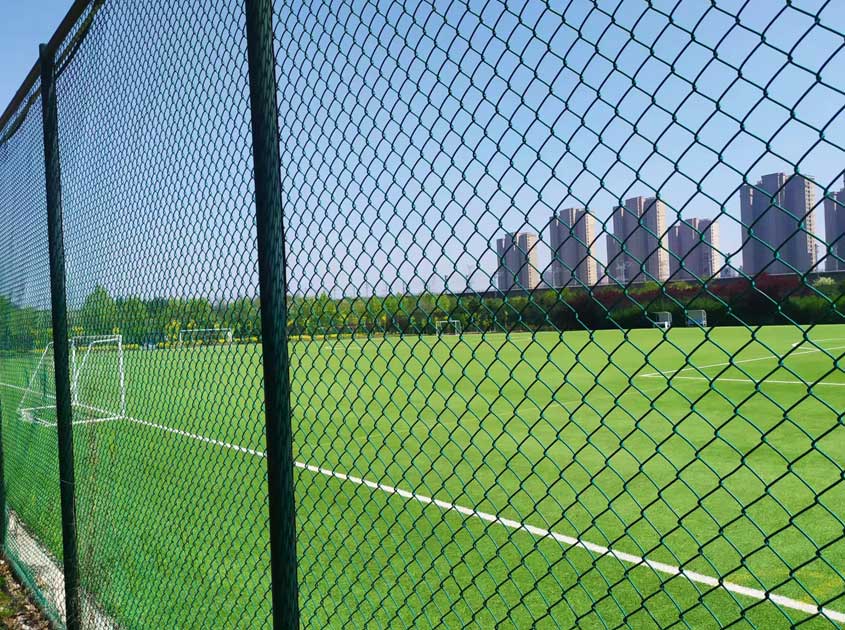
1. A Security Boundary Without Blocking the Entire View
One of the main reasons chain link wire mesh is used for perimeter fencing is its open structure.
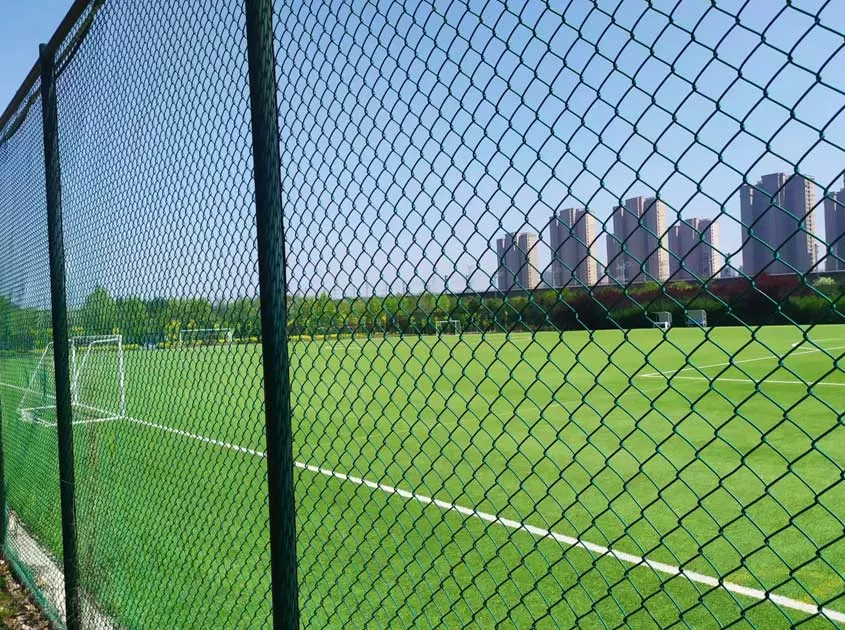
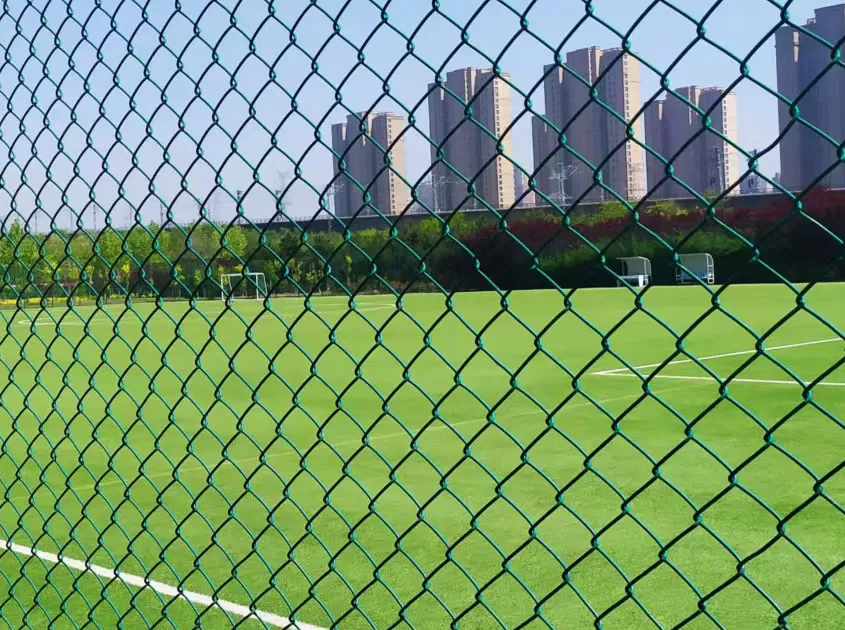
Unlike a solid wall or opaque panel fence, chain link mesh allows people to see through the boundary. This can be valuable at sites where staff need to monitor the surrounding area, vehicle movements, entrances, or activity near the fence line.
Typical applications include:
Warehouses and distribution centers
Industrial yards and manufacturing facilities
Commercial property boundaries
School and sports facility perimeters
Agricultural properties and storage areas
Utility compounds and selected infrastructure sites
Visibility can also make it easier for security personnel to identify activity on the other side of the fence. The actual level of visibility depends on the mesh opening, wire diameter, viewing angle, lighting, and any additional screening material.
The security advantage is not that the mesh makes a site impossible to enter. Rather, it creates a defined physical boundary while preserving visual access to the surrounding area.
Where privacy is important, chain link mesh can be combined with suitable screening materials. However, privacy screens may increase wind loading and should be considered when specifying the posts, foundations, and supporting system.
2. Practical for Long Perimeters and Large Properties
Many commercial and industrial sites need fencing around substantial areas. A distribution center, storage yard, farm, or factory may require hundreds of meters of boundary protection.
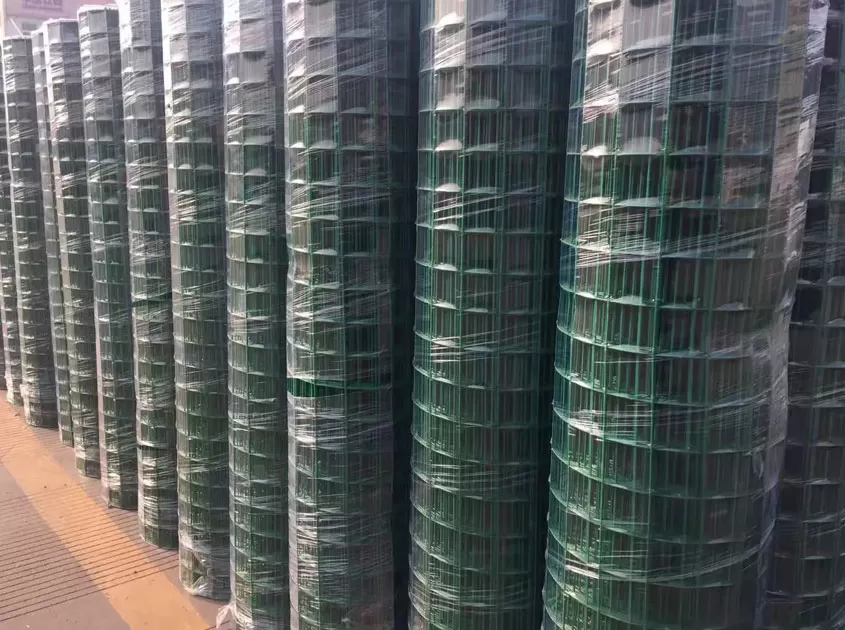
Chain link wire mesh is well suited to many long-perimeter projects because it can be supplied in rolls and installed along a sequence of posts and supporting components.
This format offers several practical advantages:
Mesh rolls can cover extended fence runs.
The fencing layout can follow many site boundaries and changes in direction.
Openings, corners, and access points can be incorporated into the overall layout.
Standard components may simplify procurement and future repairs.
Damaged sections can often be repaired locally, depending on the extent of the damage.
The complete system still requires careful planning. Post spacing, corner bracing, terminal posts, tensioning components, gates, and ground conditions all influence the final result.
For a long boundary, a quotation should therefore cover more than the price of the mesh alone. Posts, fittings, gates, installation labor, transport, and site preparation can make a significant difference to the total project cost.
3. A Flexible Balance Between Security and Project Budget
Chain link fencing is often considered for projects that need a clearly defined perimeter without the cost or visual weight of a more substantial barrier.
Its relatively simple construction can make it economical for many general-purpose applications. However, the lowest material price does not always produce the lowest installed cost.
A proper comparison should consider:
Required fence height and total perimeter length
Wire diameter and mesh opening
Galvanized or coated finish
Post material, dimensions, and spacing
Ground conditions and foundation requirements
Gate quantity and access-control arrangements
Labor, transport, maintenance, and expected repairs
For example, a warehouse may need a long boundary fence that discourages casual entry while allowing staff to observe activity around the site. A correctly specified chain link system may satisfy these requirements without the expense of a more specialized security fence.
By contrast, a site facing a high risk of climbing, cutting, or targeted intrusion may require additional security features or a different fence design. In that case, selecting chain link mesh solely because it is inexpensive may be a false economy.
4. Galvanized and PVC-Coated Options for Different Environments
The coating and wire material influence how chain link mesh performs in outdoor conditions.
Two common options are galvanized chain link mesh and PVC-coated chain link mesh. Each can be suitable for different project requirements, but their specifications should be evaluated carefully.
Galvanized chain link wire mesh
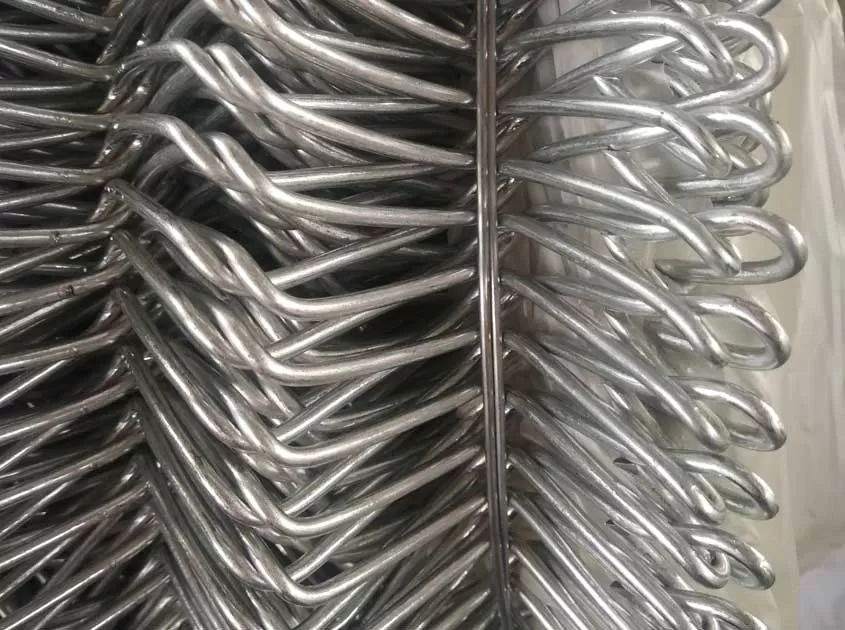
Galvanized mesh uses a zinc coating to protect the underlying steel against corrosion. It is widely used for industrial, commercial, agricultural, and general outdoor fencing.
When evaluating a galvanized product, buyers should confirm the galvanizing route, coating specification, wire diameter, and whether the quoted diameter refers to the steel wire before coating or the finished coated wire.
Environmental exposure matters as well. Coastal air, industrial pollutants, standing moisture, damaged coatings, and contact with soil can affect corrosion behavior.
PVC-coated chain link wire mesh
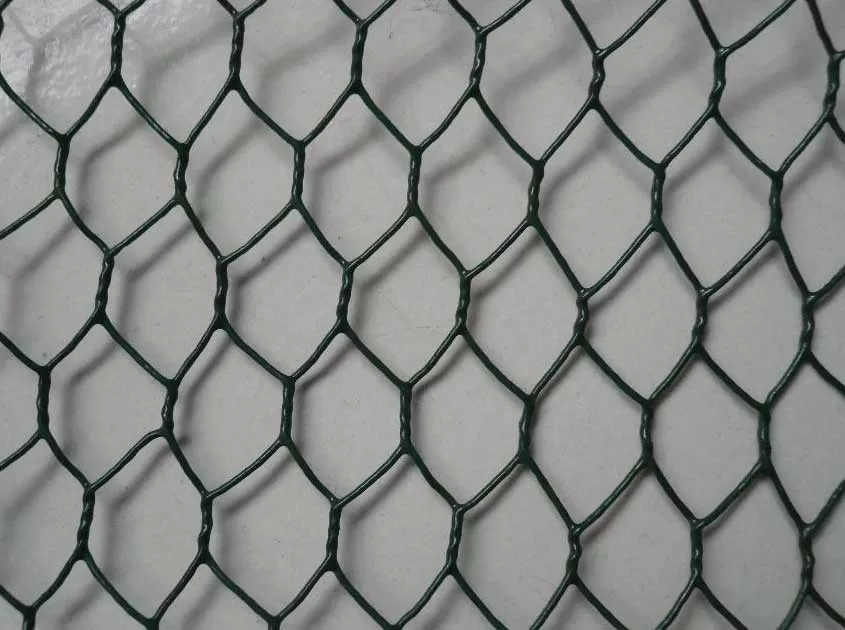
PVC-coated mesh adds a polymer coating over the wire, providing a colored finish and an additional protective layer when properly manufactured and used in suitable conditions.
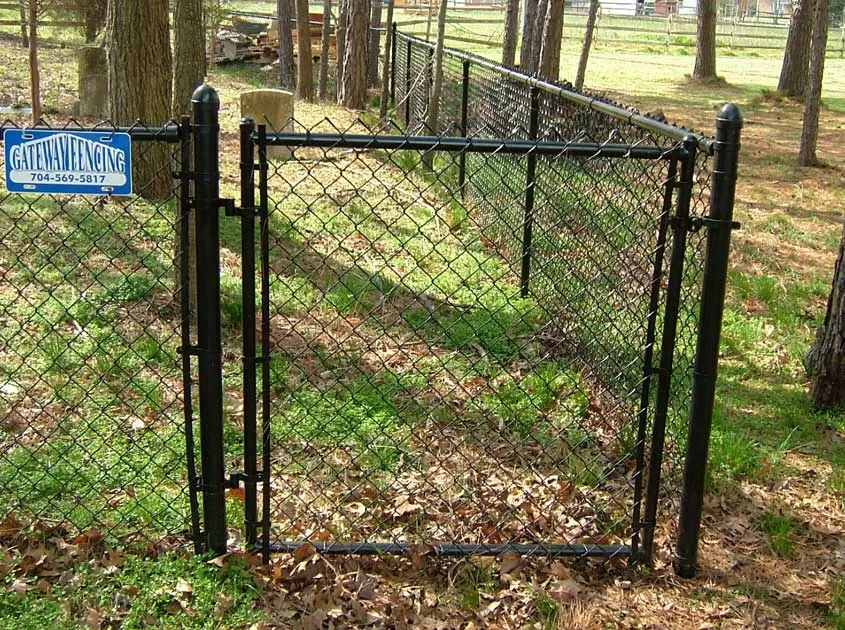
Green and black are common choices for projects where the fence should blend into landscaping or have a more uniform appearance. Other colors may be available depending on the supplier.
Buyers should clarify the core wire diameter, finished diameter, coating quality, color, and relevant exposure requirements. A thicker finished diameter does not necessarily mean the steel core is thicker.
Which finish should you choose?
Galvanized mesh may be appropriate where a straightforward metallic finish and corrosion protection meet the project's needs. PVC-coated mesh may be preferred when color, visual integration, or an additional coating layer is desirable.
Neither option guarantees a fixed service life in every environment. The right specification depends on the exposure conditions, coating quality, installation details, and maintenance plan.
5. Adaptable to Different Fence Heights and Site Layouts
Chain link fencing is available in different mesh openings, wire diameters, heights, and configurations. This allows the fence specification to be adapted to the site's intended use.
A low boundary fence around a recreational area has different requirements from a taller perimeter around an industrial yard.
When selecting a configuration, consider the following.
Fence height: Height should reflect the site's risk assessment, applicable regulations, and the type of access that needs to be discouraged.
Mesh opening: Opening dimensions affect visibility, appearance, and the ability to pass objects through the fence. The opening should be selected for the application rather than by price alone.
Wire diameter: Wire diameter influences the mesh's mass and mechanical characteristics. A heavier wire may be appropriate for more demanding applications, but performance also depends on the weaving construction and the complete fence assembly.
Post and rail arrangement: The supporting structure affects stability and resistance to applied loads. Corners, ends, gates, and changes in direction may require additional bracing or different post arrangements.
Ground conditions: Sloping ground, uneven surfaces, soft soil, and concrete foundations can change installation requirements. The layout should be planned before ordering the mesh.
A supplier should be given the intended fence height, perimeter dimensions, site conditions, and desired finish so that the mesh and supporting components can be specified consistently.
6. Repairability and Maintenance Can Reduce Long-Term Disruption
A fence around an active facility may be damaged by vehicles, falling objects, weather, or routine site operations. The ability to inspect and repair localized damage can be an important consideration.
With chain link fencing, a limited damaged section may sometimes be repaired or replaced without removing the entire fence line. The exact repair method depends on the damage, mesh construction, coating, and supporting system.
Maintenance planning should include periodic checks of:
Loose or damaged mesh sections
Tensioning and attachment components
Posts, rails, braces, and foundations
Corrosion or coating damage
Gates, hinges, and locking hardware
Vegetation or stored materials pressing against the fence
For galvanized and PVC-coated products, damaged areas should be assessed and repaired using a method compatible with the original protection system.
Maintenance requirements vary with the environment. A fence in a mild inland climate may need different attention from one exposed to coastal salt, industrial pollution, or persistent moisture.
The practical benefit is not that chain link fencing requires no maintenance, but that its relatively straightforward construction can make inspection and localized repair manageable.
7. Security Depends on the Complete System, Not the Mesh Alone
A common mistake is to evaluate security fencing by mesh specification alone. In reality, the mesh is only one part of the perimeter system.
The final level of protection depends on the combined design of the fence, its supports, access points, and the surrounding site.
Posts and foundations
Posts must be suitable for the fence height, site conditions, and expected loads. Foundation depth and design depend on the soil, wind exposure, local requirements, and the configuration of the fence.
A high-quality mesh attached to weak or poorly installed posts may not provide the intended performance.
Tensioning and connections
Correct tensioning helps maintain the intended shape and alignment of chain link mesh. Suitable attachment components and bracing are important at terminal posts, corners, and gate openings.
Installation methods should follow the selected system's requirements rather than relying on a one-size-fits-all arrangement.
Gates and access points
A perimeter is only as effective as its access points. Gate dimensions, hinges, locks, latches, and access-control arrangements should be compatible with the security needs of the site.
For facilities requiring controlled entry, gate planning should be considered at the same time as the fence layout.
Additional security features
Depending on the risk assessment, a chain link fence may be combined with lighting, surveillance, access control, suitable top protection, or other measures permitted by local regulations.
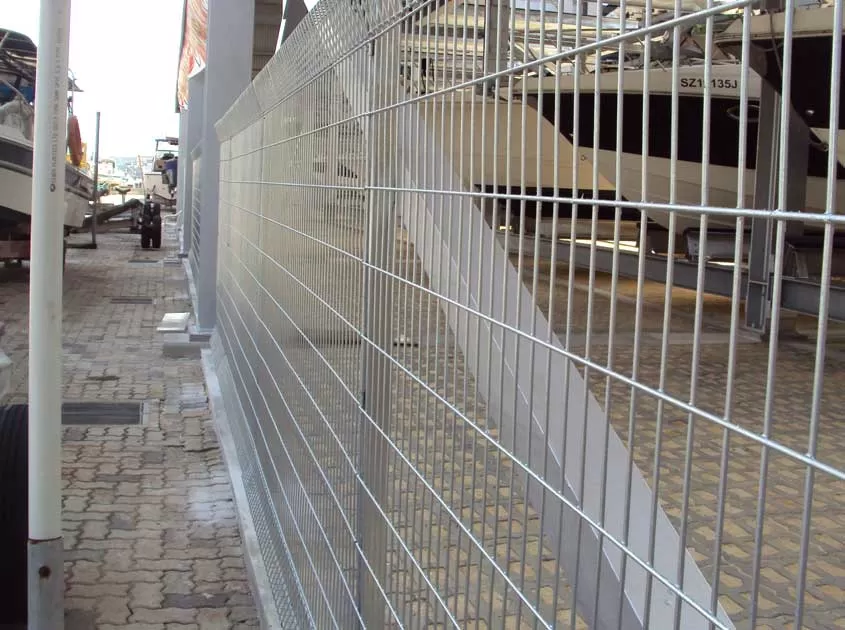
These features do not make every chain link system suitable for high-security applications. Facilities facing substantial intrusion risks should evaluate whether a specialized security fence, such as a narrow-aperture anti-climb system, is more appropriate.
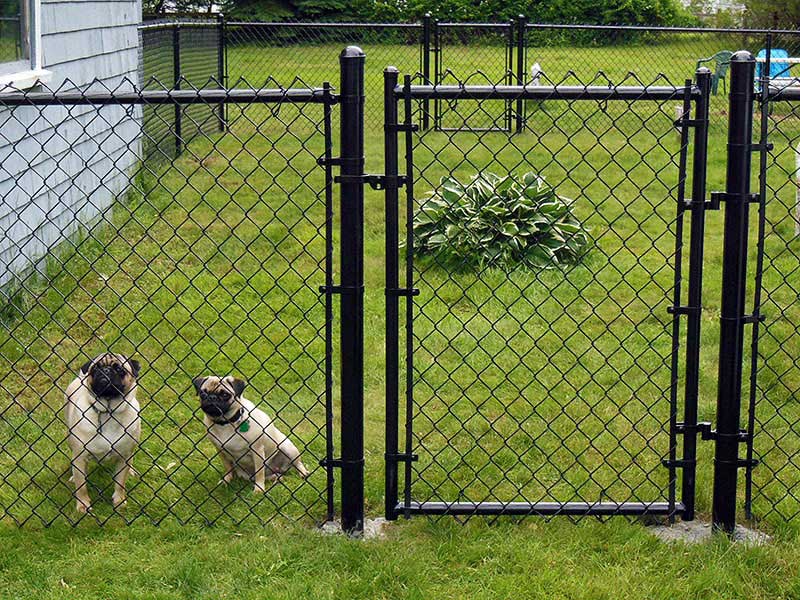
8. When Chain Link Fencing May Not Be the Best Choice
A useful purchasing decision includes understanding the limitations of the product.
Chain link mesh may be less suitable when a project requires:
High levels of visual privacy without additional screening
A specialized anti-climb or anti-cut barrier
A solid acoustic barrier
A continuous opaque architectural appearance
A safety-rated guard or fall-protection system without further design verification
For these requirements, a different fence construction or a combined system may be more appropriate.
For example, a facility with a high risk of deliberate intrusion may need to compare chain link fencing with 358 anti-climb fencing or another engineered perimeter solution. A residential property that prioritizes privacy may favor a solid or screened fence instead.
The objective is not to use the most expensive fence everywhere. It is to match the protection level to the actual risk and operating environment.
9. How to Specify Chain Link Wire Mesh for a Security Project
Before requesting a quotation, prepare a clear specification that allows different suppliers to quote comparable products.
Specification item
Information to confirm
Application Warehouse, factory, commercial property, farm, sports facility, or another use
Fence height Required finished height
Perimeter length Total length and layout, including corners and openings
Mesh opening Agreed nominal dimensions and measurement method
Wire diameter Core or finished coated diameter, clearly identified
Material and finish Galvanized, PVC-coated, or another specified construction
Posts and supports Material, dimensions, spacing, rails, and bracing requirements
Gates Quantity, width, frame, hinges, and locking requirements
Installation conditions Ground slope, soil type, concrete, and local exposure
Documentation Drawings, samples, inspection requirements, and agreed tolerances
Delivery Required quantities, packaging, destination, and delivery schedule
For projects where security performance is critical, also identify the applicable local standards, risk requirements, and any engineering calculations needed.
A detailed specification helps prevent quotations from appearing comparable when they actually describe different wire diameters, coatings, heights, or supporting systems.
Frequently Asked Questions
Why is chain link wire mesh widely used for security fencing?
It offers a practical combination of open visibility, flexible layout options, repairability, and cost control for many general-purpose perimeter applications. Its suitability still depends on the site's security risk and the quality of the complete installation.
Is galvanized chain link mesh better than PVC-coated mesh?
Neither is universally better. Galvanized mesh may suit projects that prefer a metallic finish, while PVC-coated mesh offers color options and an additional polymer layer. The right choice depends on the environment, coating specification, appearance, and maintenance requirements.
Can chain link fencing protect an industrial warehouse?
It can define and protect a warehouse perimeter against unauthorized access in many general-purpose settings. Where intrusion risk is high, the design may need stronger components, controlled access, surveillance, or a specialized security fence.
Does thicker wire always provide better security?
Not necessarily. Wire diameter is important, but security performance also depends on mesh opening, material, weaving construction, fence height, posts, attachments, installation quality, and the nature of the threat.
Is chain link fencing suitable for coastal locations?
It may be suitable when the material and corrosion-protection system are selected for the actual coastal exposure. Salt deposits, moisture, connection details, and maintenance should all be considered before specifying the product.
What should I provide when requesting a chain link fence quotation?
Provide the intended application, fence height, total perimeter length, mesh opening, wire diameter, coating, site conditions, gate requirements, and delivery destination. Drawings or photographs of the site can help the supplier understand the project more accurately.
Conclusion
Chain link wire mesh remains a practical security fencing option because it combines visibility, adaptability, repairability, and cost-conscious perimeter coverage. Its value is particularly clear on large commercial, industrial, agricultural, and recreational sites where a defined boundary is needed without completely blocking the view.
However, the mesh itself does not determine the security level. The right wire specification, coating, posts, connections, gates, and installation design must work together to meet the project's requirements.
Qunkun Metal supplies chain link wire mesh and fencing products for commercial, industrial, agricultural, and other applications. Share your required fence height, mesh opening, wire diameter, finish, perimeter length, and project location with our team to discuss suitable specifications for your security fencing project.
-
-
 What Is Galvanized Wire Mesh and Why Is It Popular? Aug 26, 2026



- Tel.: +86 311 83077076
- E-mail: sales@qunkunmetal.com
- Skype: qunkunsales01
- WhatsApp: 8618032412189
- Add.: No.69 The Filter Industrial Park of Anping, Hebei, China


