


Chain Link Wire Mesh: Types, Specifications and Applications Guide
Chain link wire mesh is one of the most widely used fencing materials for residential, commercial, industrial, agricultural, sports, and security applications.
Also known as chain link fence fabric, chain link fencing, diamond mesh fencing, or wire mesh fence, it is manufactured by weaving steel wire into a continuous diamond-shaped mesh.
Its combination of flexibility, strength, visibility, relatively simple installation, and competitive cost makes chain link fencing suitable for everything from backyard boundaries to large industrial and infrastructure projects.
For buyers in the United States, Canada, the Middle East, and other international markets, choosing the right chain link fence involves more than selecting a mesh size. Wire diameter, coating, fence height, selvage, post system, fittings, and site conditions all affect the final performance of the fence.
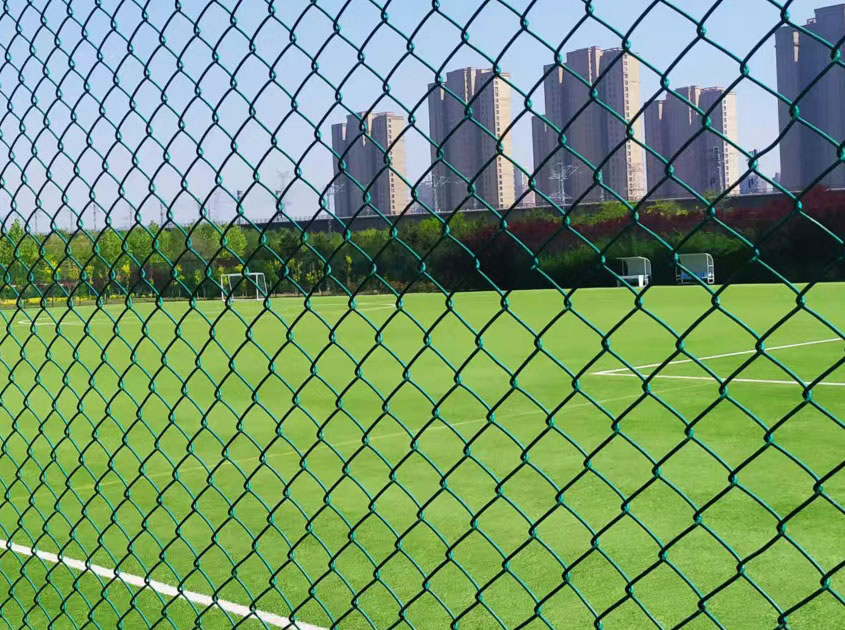
What Is Chain Link Wire Mesh?
Chain link wire mesh is a woven fencing material made by forming steel wire into interconnected diamond-shaped openings.
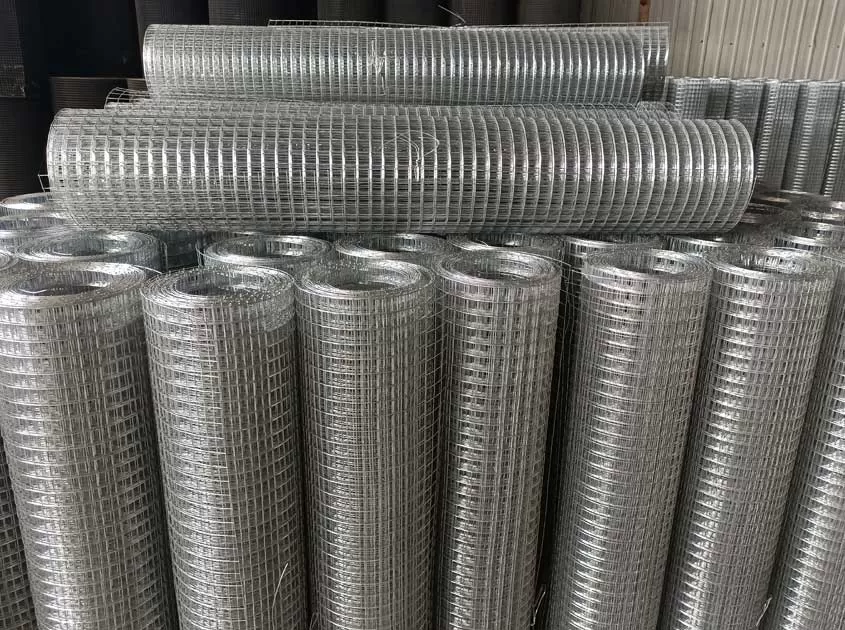
Unlike welded wire mesh, where individual wires are welded together, chain link mesh is continuously woven. This gives the fabric a degree of flexibility that makes it easy to roll, transport, handle, and install.
A complete chain link fencing system normally consists of more than the mesh fabric itself.
Depending on the project, it may include:
Chain link fence fabric
Line posts
Terminal posts
Top rails
Tension wire
Tension bars
Brace bands
Tension bands
Post caps
Rail ends
Gates
Hinges and latches
Barbed wire arms
Barbed wire or razor wire
Privacy slats
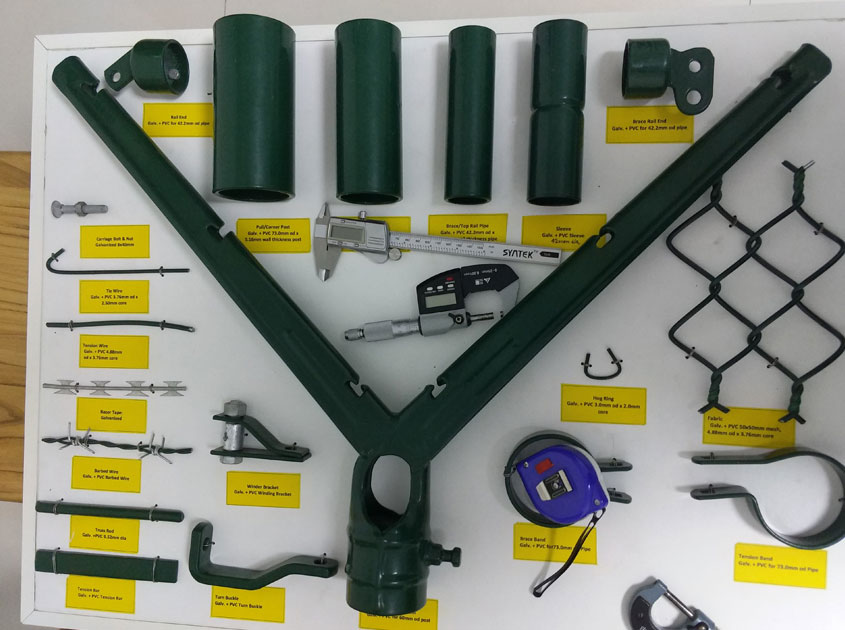
This is why professional buyers should normally specify the complete chain link fence system, rather than purchasing only the wire mesh roll.
Why Is Chain Link Fencing So Popular?
Chain link fencing has remained popular because it provides a practical balance between security, visibility, durability, installation efficiency, and cost.
The open diamond structure allows people to see through the fence while still creating a physical boundary.
This is particularly useful for:
Residential properties
Commercial buildings
Warehouses
Factories
Construction sites
Schools
Sports facilities
Parks
Parking lots
Utility facilities
Agricultural properties
Industrial compounds
For larger projects, chain link fencing can also be combined with additional security systems.
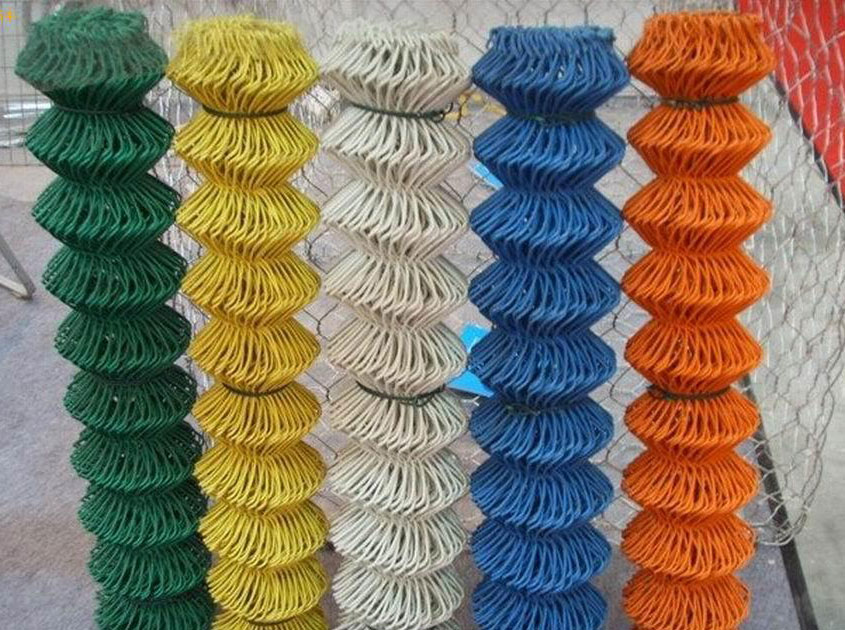
Main Types of Chain Link Wire Mesh
Chain link fencing can be classified according to material, coating, wire diameter, mesh opening, and application.
The most common categories include:
Galvanized chain link fence
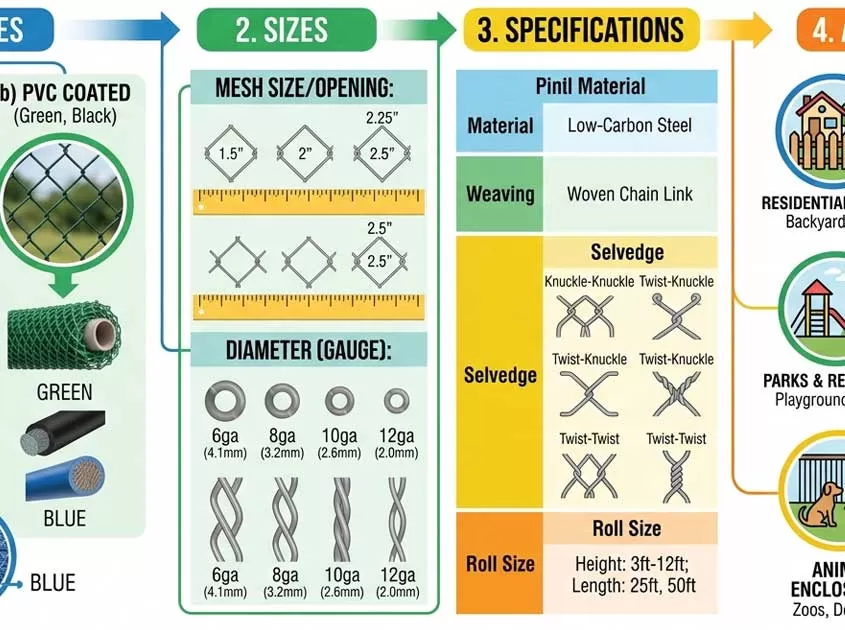
PVC coated chain link fence
Black chain link fence
Green chain link fence
Heavy-duty chain link fence
Residential chain link fence
Commercial chain link fence
Industrial chain link fence
Security chain link fence
Temporary chain link fencing
1. Galvanized Chain Link Fence
Galvanized chain link fence is manufactured from steel wire protected with a zinc coating.
It is one of the most widely used options for general fencing applications.
The galvanized surface provides corrosion protection while maintaining the familiar silver metallic appearance.
Typical applications include:
Industrial properties
Warehouses
Construction sites
Agricultural facilities
Residential boundaries
Utility facilities
Roads and infrastructure
General perimeter fencing
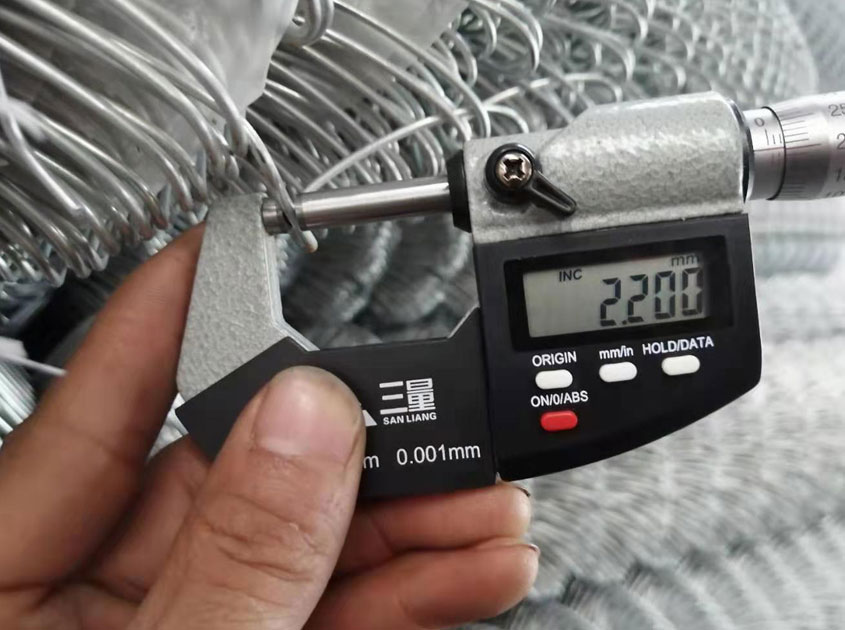
Galvanized Before Weaving vs Galvanized After Weaving
Two common manufacturing approaches are:
GBW — Galvanized Before Weaving
The steel wire is galvanized before it is woven into chain link fabric.
GAW — Galvanized After Weaving
The wire is first woven into chain link fabric and then galvanized.
The coating process can affect the zinc coverage and the way the finished product performs in different environments. North American chain link specifications commonly distinguish between these coating methods.
For projects where coating performance is important, buyers should request the actual zinc coating specification instead of comparing products only by the word "galvanized."
2. PVC Coated Chain Link Fence
PVC coated chain link fencing combines a steel wire core with a polymer coating.
The coating provides an additional protective layer while allowing the fence to blend into the surrounding environment.
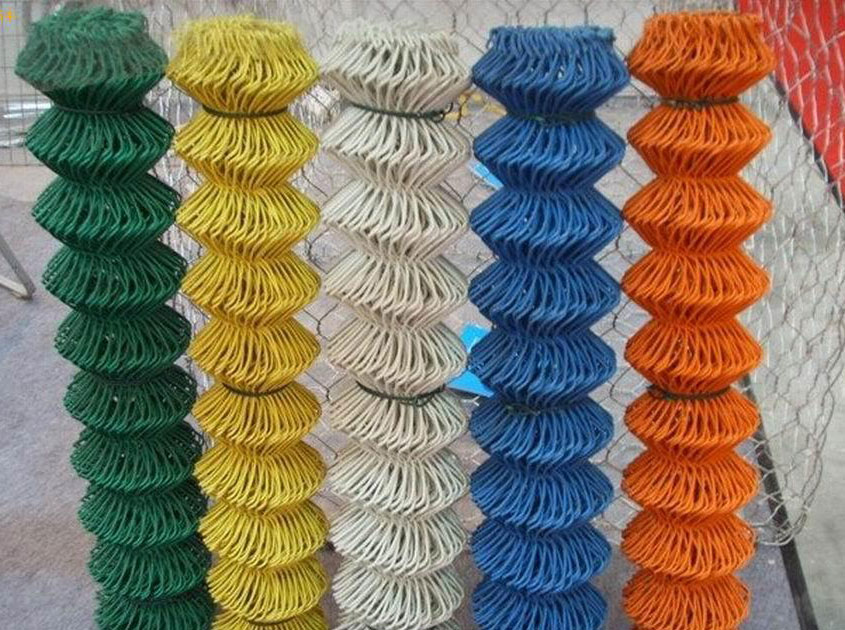
Common colors include:
Black
Green
Brown
White
Dark green
Custom colors
PVC coated chain link fencing is particularly popular for residential, recreational, landscaping, and selected commercial applications.
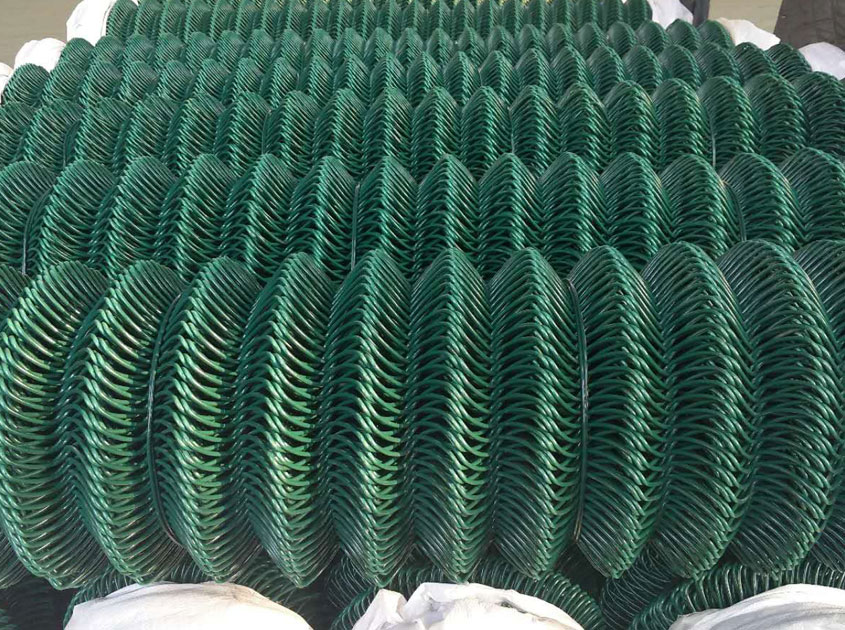
For coastal or humid environments, the complete coating system should be evaluated carefully because corrosion resistance depends on both the steel core and the quality of the protective coating.
In Middle Eastern coastal markets such as the UAE and Oman, PVC-coated chain link fencing can be considered where additional environmental protection and color matching are required.
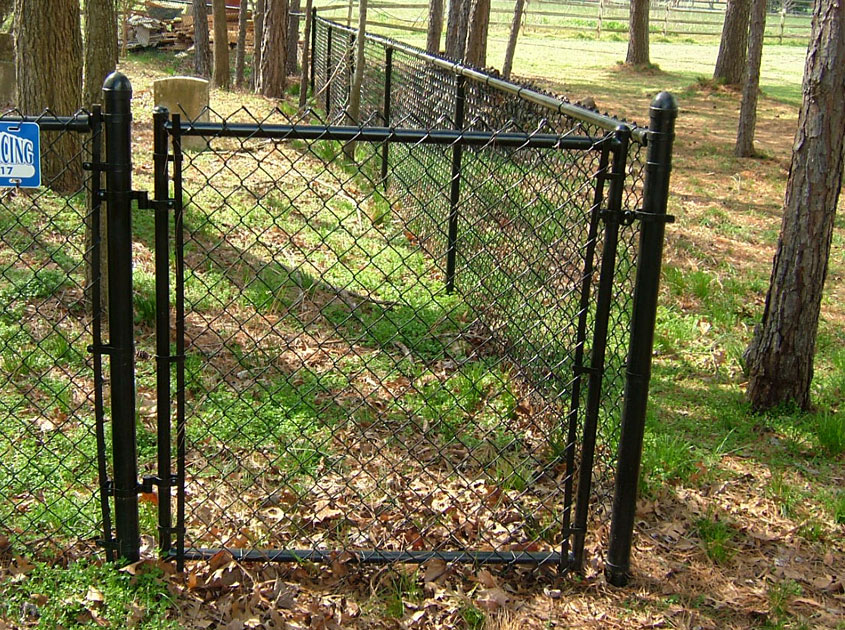
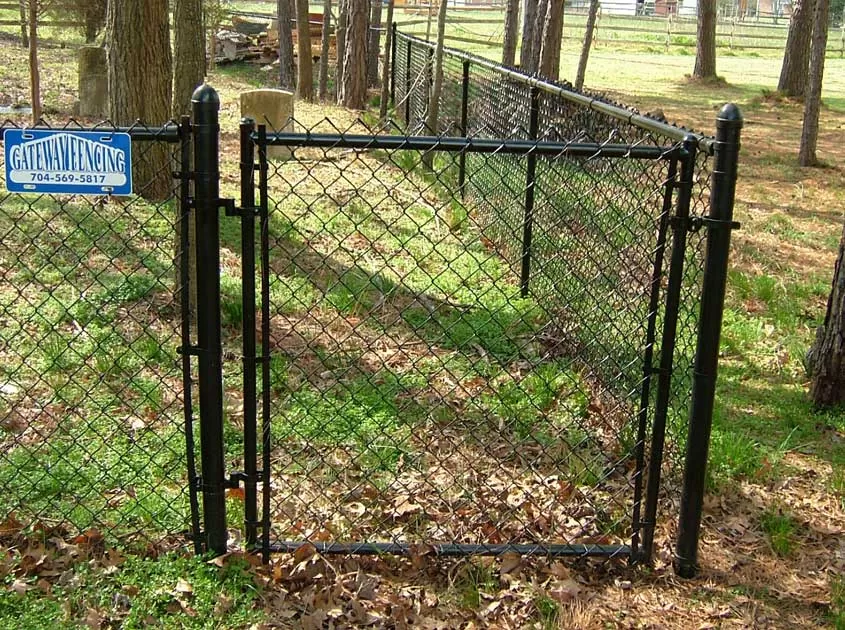
3. Black Chain Link Fence
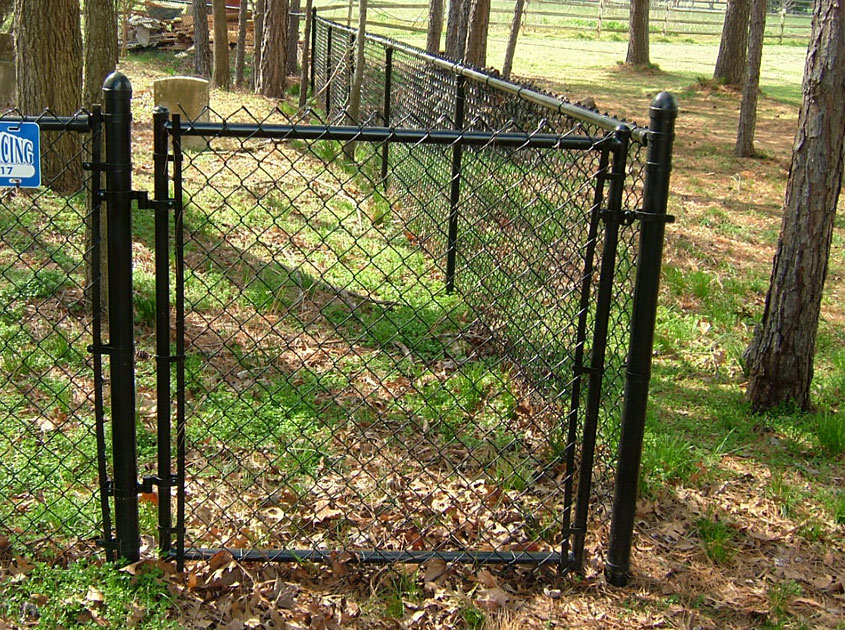
Black chain link fence is one of the most recognizable decorative versions of chain link fencing.
It combines the functional structure of chain link mesh with a darker appearance that can blend more naturally with:
Residential landscaping
Gardens
Parks
Pools
Modern homes
Commercial properties
Black vinyl-coated chain link is particularly useful when appearance is more important than the industrial silver appearance of standard galvanized fencing.
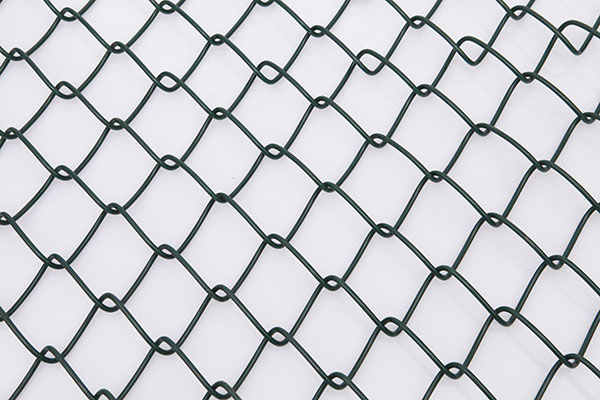
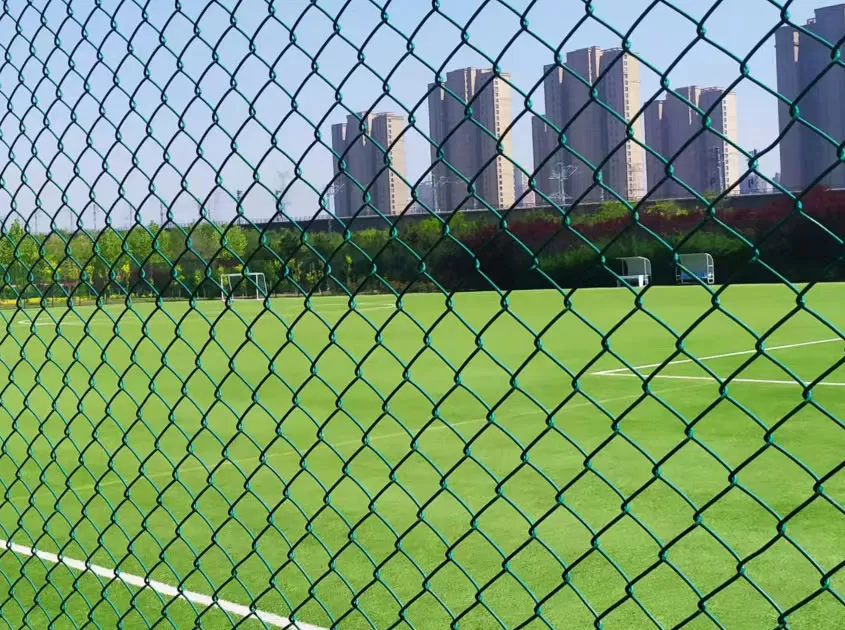
4. Green Chain Link Fence
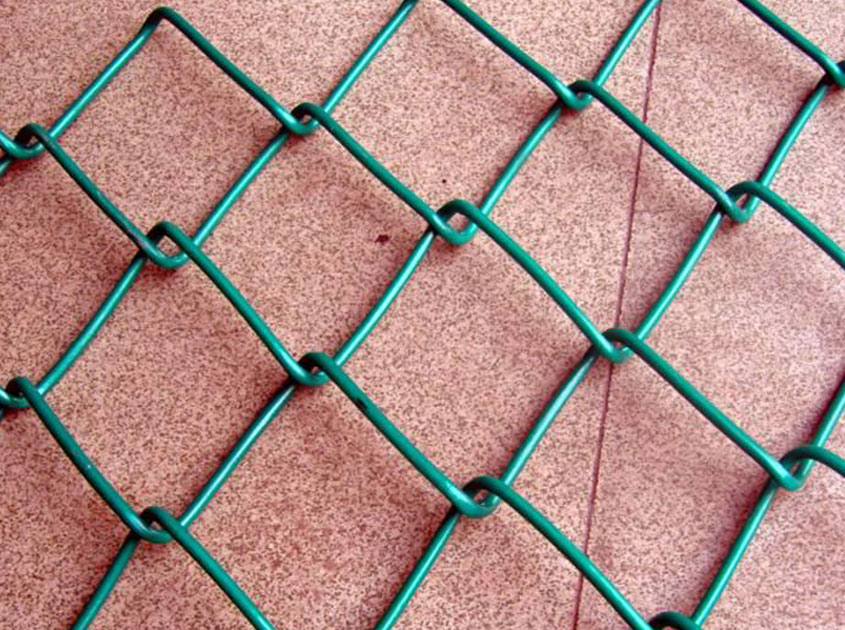
Green chain link fencing is commonly selected for landscaping, parks, gardens, sports facilities, and residential applications.
The green coating can visually blend with grass, trees, and other landscape elements.
It is also frequently used around:
Tennis courts
Baseball fields
Parks
Schools
Playgrounds
Garden areas
Chain Link Fence Mesh Sizes
Mesh size refers to the distance between two parallel wires forming the diamond opening.
Common North American specifications include approximately:
3/8"
1/2"
5/8"
1"
1-1/4"
1-1/2"
1-3/4"
2"
2-1/4"
Larger openings provide a more open appearance, while smaller openings provide a denser mesh structure.
A 2" opening is widely encountered in residential and general-purpose chain link fencing, while smaller openings can be selected for applications requiring tighter mesh.
How to Choose the Mesh Size
The correct mesh size depends on the purpose of the fence.
2" Mesh
Suitable for many general-purpose applications such as:
Residential fencing
Commercial fencing
Property boundaries
General industrial fencing
1-3/4" Mesh
Often considered for:
Tennis courts
Sports facilities
Residential applications
Applications requiring a slightly tighter opening
1" or Smaller Mesh
More suitable when a tighter barrier is required, such as selected security, animal containment, or specialized applications.
The exact specification should always be determined by the project requirements rather than choosing a mesh size based only on price.
Chain Link Fence Wire Gauge
Wire diameter is one of the most important factors affecting the strength and weight of chain link fabric.
In the United States and Canada, chain link fence is commonly specified using gauge, although suppliers should also provide the actual wire diameter because gauge terminology can become confusing when coatings are involved.
For example, commercial products may use heavier wire than typical residential fencing.
Typical North American market specifications include approximately:
Application
Typical Wire Gauge
Typical Mesh
Light residential 11.5–12.5 gauge 2"–2-3/8"
Residential 11–11.5 gauge 1-3/4"–2-3/8"
Light commercial 9–11 gauge 1-3/4"–2"
Commercial 8–11 gauge 1"–2"
Industrial/security 6–9 gauge 1"–2"
These are general market ranges rather than universal specifications. Actual requirements vary by project and local standards.
Important: Ask for Core Wire Diameter
For PVC-coated chain link fence, buyers should pay particular attention to the difference between:
Finished coated diameter
and
Steel core wire diameter
A product can have a relatively large finished diameter because of its coating while using a lighter steel core.
For serious commercial or industrial purchasing, comparing only the finished diameter can therefore produce misleading results.
Chain Link Fence Heights
Chain link fencing can be manufactured in many different heights.
Common North American residential heights include:
3 ft
4 ft
5 ft
6 ft
Commercial and industrial projects may require:
6 ft
8 ft
10 ft
12 ft
Higher custom heights
Some suppliers provide chain link fabric in heights extending from roughly 3 ft to 12 ft, with custom heights available for specific projects.
The appropriate height depends on the intended purpose.
For example:
4–5 ft: residential boundaries, gardens and landscaping
6 ft: common general-purpose property fencing
8 ft and above: commercial, industrial and security applications
Higher fences may also require stronger posts, rails, braces, foundations, and additional security accessories.
Chain Link Fence Selvage
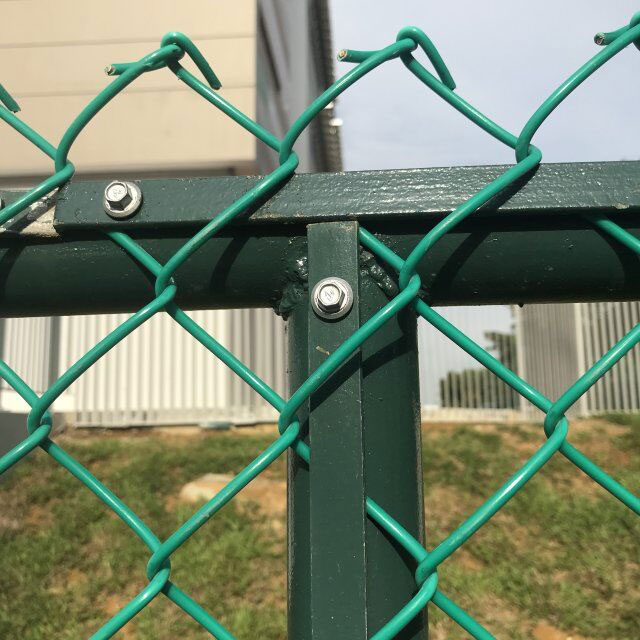
The top and bottom edges of chain link fabric are called the selvage.
Common options include:
Knuckle-Knuckle
Both edges are formed with smooth knuckled ends.
This is often selected where safety and appearance are important.
Knuckle-Barbed
One edge is knuckled while the other has twisted or barbed ends.
This configuration may be used for taller security-oriented fencing.
The appropriate selvage depends on fence height, safety requirements, security objectives, and local specifications.
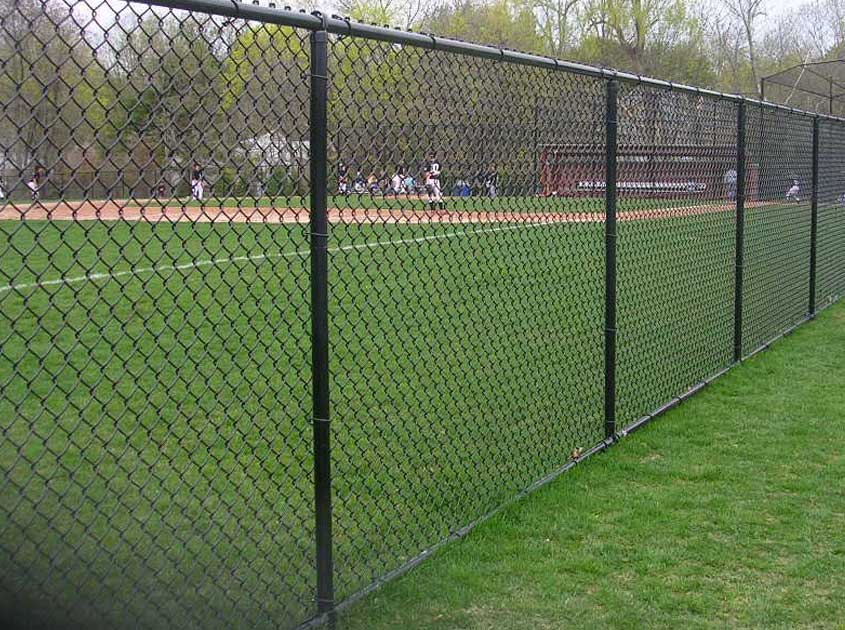
Residential Chain Link Fence
Residential chain link fencing is commonly used for:
Backyards
Side yards
Gardens
Pet areas
Pool enclosures
Driveways
Property boundaries
Children's play areas
Homeowners often choose chain link because it provides a physical boundary without completely blocking visibility.
Black or green PVC-coated finishes can provide a more decorative appearance than standard galvanized mesh.
In Canada, chain link fencing is also commonly used for residential yards, pools, pets, gardens, and property boundaries.
Commercial Chain Link Fence
Commercial chain link fencing is generally heavier than basic residential fencing.
Typical applications include:
Warehouses
Parking lots
Office properties
Retail facilities
Apartment complexes
Construction sites
Schools
Commercial storage yards
Commercial projects may use heavier wire, stronger framework, larger posts, and additional security accessories.
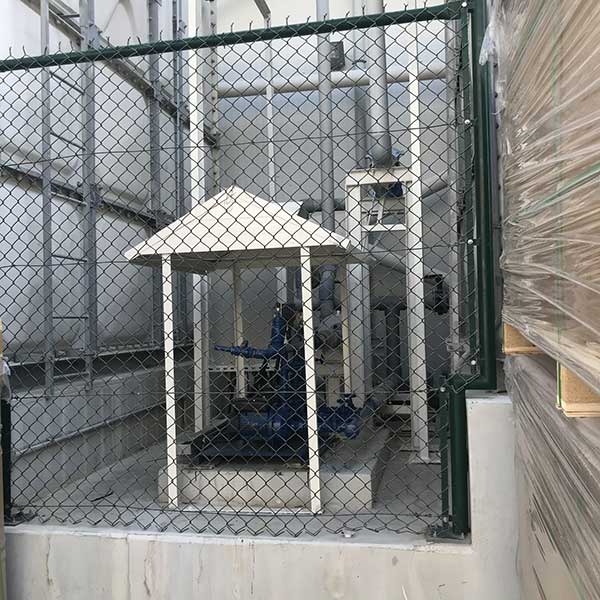
Industrial Chain Link Fence
Industrial facilities often require a stronger complete fencing system.
Applications include:
Factories
Manufacturing plants
Logistics centers
Distribution warehouses
Power facilities
Utility infrastructure
Industrial parks
Oil and gas facilities
Industrial chain link fencing can be combined with:
Heavy-duty posts
Top rails
Barbed wire
Razor wire
Security gates
Privacy slats
Anti-climb configurations
Industrial and commercial chain link systems are commonly specified with heavier fabric and framework than residential systems.
Chain Link Fence for Construction Sites
Temporary fencing is another important application.
Construction contractors use chain link fencing to establish temporary boundaries around:
Building sites
Road projects
Infrastructure projects
Demolition sites
Utility work
Temporary storage areas
Temporary chain link systems can be designed for relatively fast installation and removal.
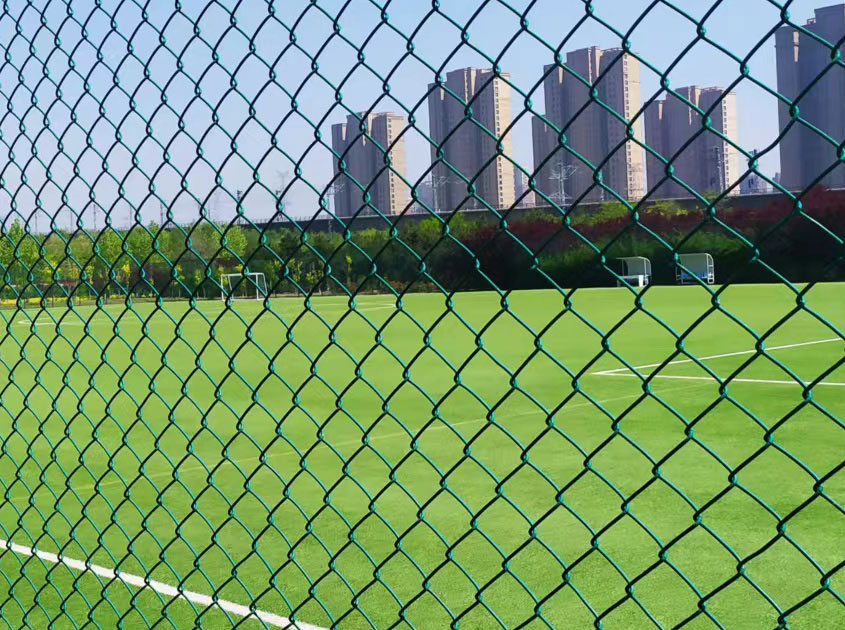
Chain Link Fence for Sports Facilities
Chain link fencing is widely used around sports areas because it provides visibility while creating a physical boundary.
Applications include:
Tennis courts
Baseball fields
Soccer fields
Basketball courts
Hockey facilities
Multi-purpose sports complexes
For sports applications, mesh size, wire diameter, fence height, framework, and local requirements should be considered together.
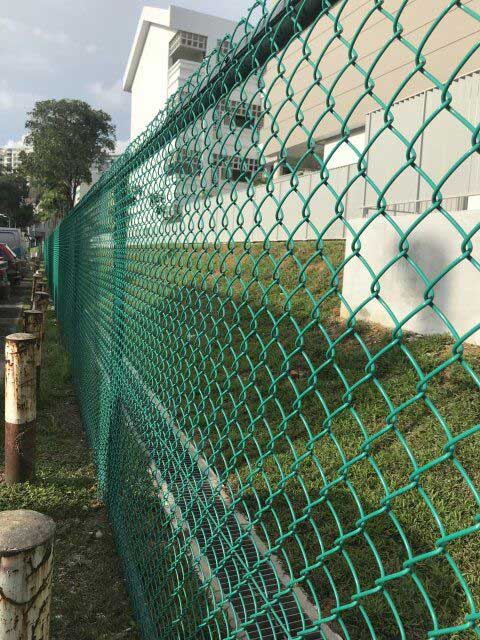
Chain Link Fence for Agriculture
Chain link mesh can also be used in selected agricultural and animal-control applications.
Possible uses include:
Farm boundaries
Animal enclosures
Poultry areas
Garden protection
Equipment storage
Small livestock areas
However, chain link fence should be selected according to the animal species and required containment level.
For large agricultural areas, other fencing products such as field fence or welded wire fence may sometimes be more economical.
Chain Link Fencing for Middle East Projects
The Middle East represents a different chain link fencing market from North America.
Large-scale applications often include:
Residential compounds
Villas
Construction projects
Industrial estates
Oil and gas facilities
Airports
Utilities
Highways
Power stations
Warehouses
Perimeter security
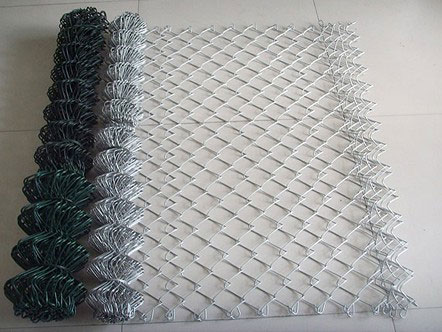
Chain link fencing is particularly useful for large perimeters because the flexible roll format allows efficient transportation and installation.
Regional suppliers in the UAE market, for example, offer galvanized, galvanized + PVC, Galfan and Galfan + PVC options for applications ranging from housing and industrial facilities to oil and gas, roads, railways, utilities and security areas.
Chain Link Fence for Hot and Dry Climates
For Middle Eastern projects, environmental conditions should be considered before selecting the coating.
Important factors include:
High temperatures
Strong sunlight
Dust
Humidity
Coastal salt exposure
Sand
Long-term outdoor exposure
For inland applications, galvanized chain link may be suitable for many general-purpose projects.
For coastal or high-humidity locations, a suitable PVC-coated or enhanced corrosion-resistant system may be preferred.
The correct specification depends on the actual site conditions.
Chain Link Fence for Coastal Areas
Coastal environments can be particularly demanding because salt and humidity can accelerate corrosion.
This applies to locations such as:
Florida
California coastal areas
British Columbia coastal areas
UAE coastal cities
Oman
Qatar
Saudi coastal regions
For these projects, buyers should pay attention to:
Steel core quality
Zinc coating
PVC coating
Coating adhesion
Post and fitting protection
Fastener material
Maintenance requirements
The fence should be evaluated as a complete system rather than selecting the fabric alone.
Chain Link Fence Accessories
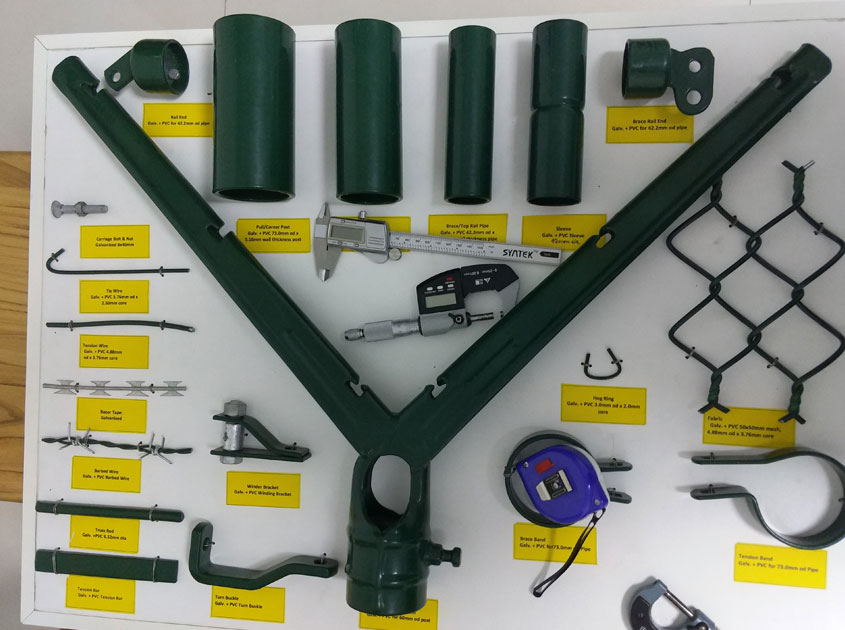
A professional chain link fencing system normally requires more than mesh fabric.
Important components include:
Posts
Posts support the fence fabric and transfer loads to the ground.
Top Rail
The top rail supports and stabilizes the upper section of the fence.
Tension Wire
Tension wire can help support and stabilize the fence fabric.
Tension Bar
A tension bar connects the chain link fabric to terminal posts.
Bands and Fittings
Different fittings connect the fabric, rails, posts, and other components.
Gates
Chain link gates can be manufactured as:
Single swing gates
Double swing gates
Sliding gates
Cantilever gates
Pedestrian gates
Security Accessories
Depending on the application, the system can also include:
Barbed wire
Razor wire
Barbed wire arms
Privacy slats
Security gates
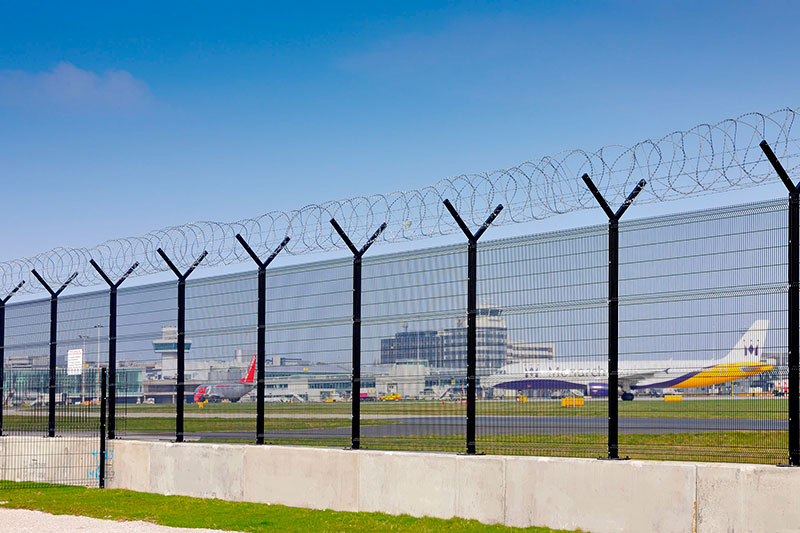
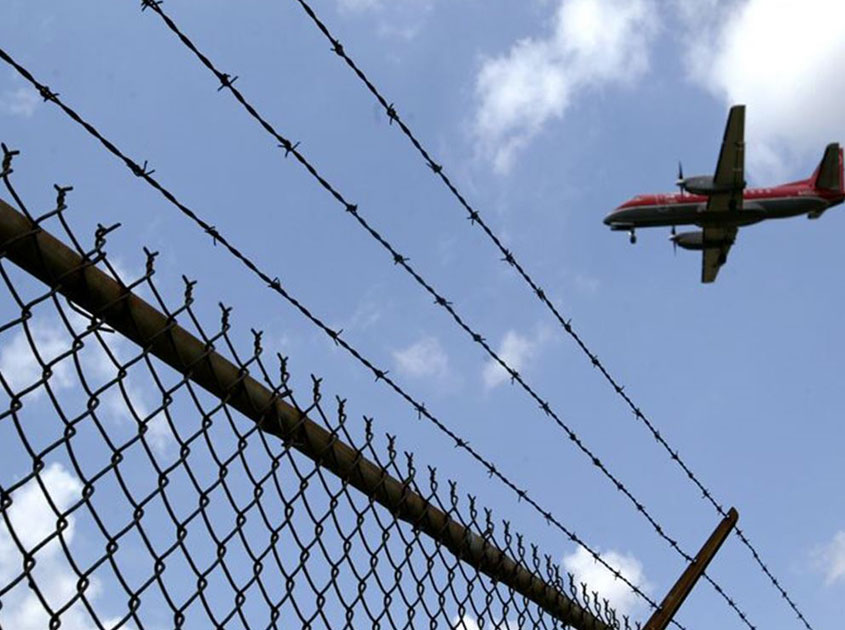
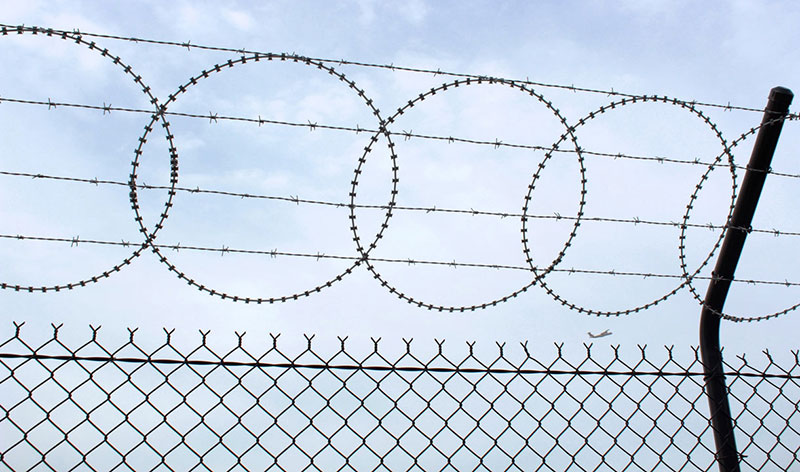
Chain Link Fence with Barbed Wire
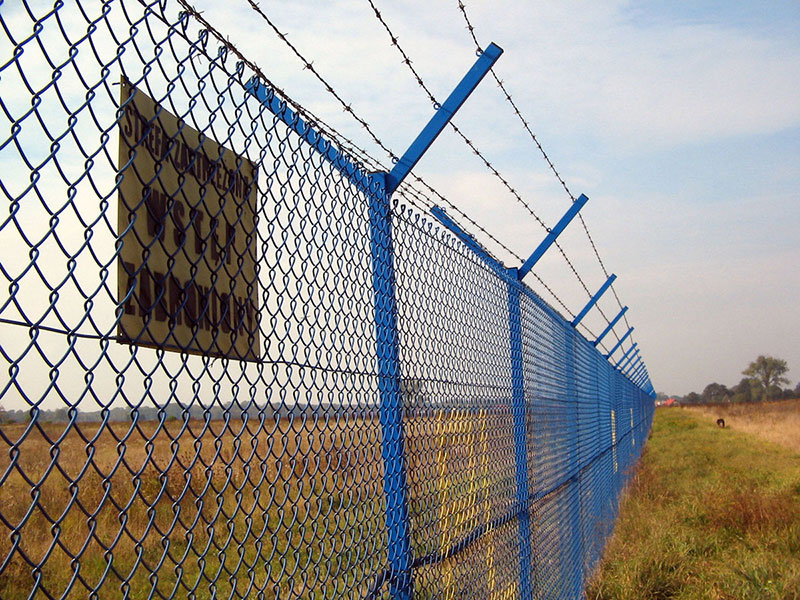
For higher-security applications, barbed wire can be installed above chain link fencing.
The typical configuration includes angled arms mounted on the top of the fence posts.
Several strands of barbed wire can then be installed along the perimeter.
This configuration is commonly considered for:
Industrial facilities
Warehouses
Utilities
Construction compounds
Infrastructure
Restricted areas
For higher-security sites, chain link can also be integrated with other perimeter-security systems.
Chain Link Fence with Privacy Slats
Traditional chain link fencing provides excellent visibility.
However, some property owners want to reduce visibility.
Privacy slats can be inserted vertically through the diamond mesh to create a more visually screened fence.
Potential applications include:
Residential backyards
Swimming pools
Commercial properties
Apartment complexes
Industrial yards
Sports facilities
Chain Link Fence vs Welded Wire Fence
Both products are widely used, but their structures are different.
Feature
Chain Link Fence
Welded Wire Fence
Structure Woven wire Welded intersections
Pattern Diamond Square/rectangular
Flexibility High Lower
Roll format Common Available
Panel format Less common Very common
Installation Flexible Rigid panels or rolls
Visibility High High
Typical use Perimeter fencing Security, animal, residential and construction
Terrain adaptation Very good Depends on panel system
Chain link is particularly useful when flexibility and long continuous runs are important.
Welded wire fencing can be advantageous where a rigid, clean geometric appearance is preferred.
Chain Link Fence vs Solid Metal Fence
Chain link fencing has another important advantage: transparency.
A solid metal fence can provide greater privacy, but it also blocks visibility and can create a visually heavier boundary.
Chain link fencing allows:
Airflow
Natural light
Visibility
Lower visual obstruction
Easier supervision
This makes it especially useful for sports facilities, schools, industrial sites, parking areas, and properties where visibility is desirable.
How to Choose the Right Chain Link Fence
Before ordering chain link fencing, answer these questions.
1. Where will the fence be installed?
Residential?
Commercial?
Industrial?
Agricultural?
Sports?
Security?
2. What fence height is required?
Determine the finished fence height before ordering fabric.
3. What mesh size is required?
Choose according to visibility, containment, security, and local requirements.
4. What wire diameter is required?
Heavier wire generally provides a stronger fabric but also increases material weight and cost.
5. Galvanized or PVC coated?
Choose galvanized when the traditional metallic finish and economical corrosion protection are priorities.
Choose PVC-coated when appearance, color, and an additional protective layer are important.
6. What type of selvage is required?
Select knuckle-knuckle or knuckle-barbed according to the fence height and project requirements.
7. What posts and accessories are required?
Do not quote fabric alone when the customer needs a complete fencing system.
8. What is the project environment?
Consider:
Coastal exposure
Humidity
Rain
Snow
High temperatures
Strong wind
Dust
Chemical exposure
Chain Link Fence Specification Checklist
For a professional quotation, buyers should provide as much of the following information as possible:
Item
Required Information
Product Chain Link Fence / Chain Link Fabric
Material Galvanized steel / PVC coated steel
Wire diameter mm or gauge
Mesh opening inch or mm
Fence height ft/in or mm
Roll length ft or m
Selvage Knuckle-Knuckle / Knuckle-Barbed
Color Galvanized / Black / Green / Brown / Custom
Coating Zinc / PVC / Other
Posts Diameter and wall thickness
Top rail Diameter and thickness
Gates Quantity and dimensions
Security Barbed wire / razor wire / other
Quantity Rolls / linear feet / meters
Destination Port or delivery location
Application Residential / Commercial / Industrial / Security
This information allows a manufacturer to prepare a much more accurate quotation.
Chain Link Fence Measurements: Feet or Metric?
For American and Canadian buyers, dimensions are often discussed in:
Feet
Inches
Gauge
For Middle Eastern and international projects, metric dimensions are more common:
Millimeters
Meters
Kilograms
A professional export supplier should be able to provide both imperial and metric specifications.
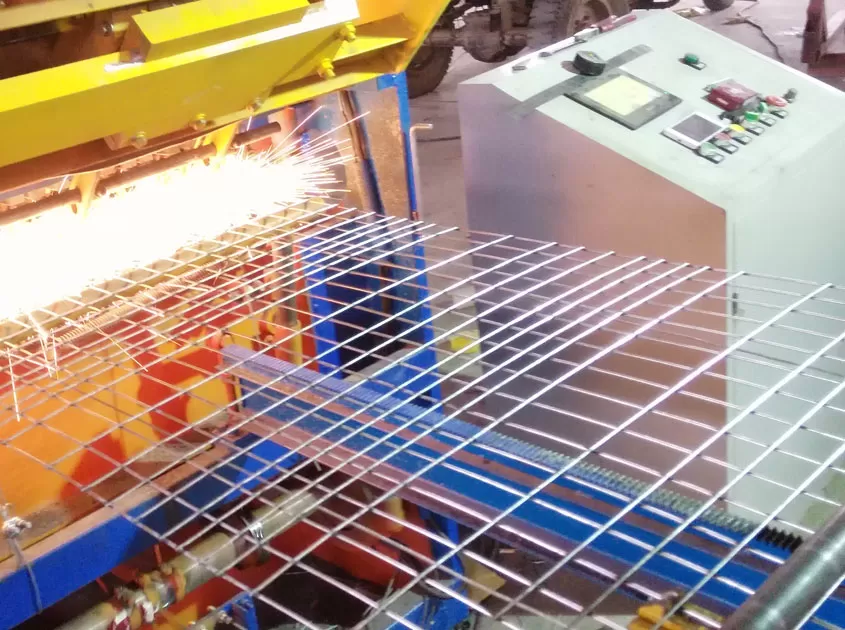
How Chain Link Fence Is Manufactured
The manufacturing process generally includes several stages.
Step 1: Wire Preparation
Steel wire is prepared to the required diameter.
Step 2: Galvanizing or Surface Preparation
Depending on the product, the wire may be galvanized before weaving or the completed mesh may be galvanized after weaving.
Step 3: Wire Forming
The wire is formed into the characteristic zigzag/diamond configuration.
Step 4: Weaving
Individual wires are continuously interlocked to form the chain link fabric.
Step 5: Edge Formation
The edges are finished according to the specified selvage.
Step 6: Cutting and Rolling
The fabric is produced to the specified height and rolled into standard or customized lengths.
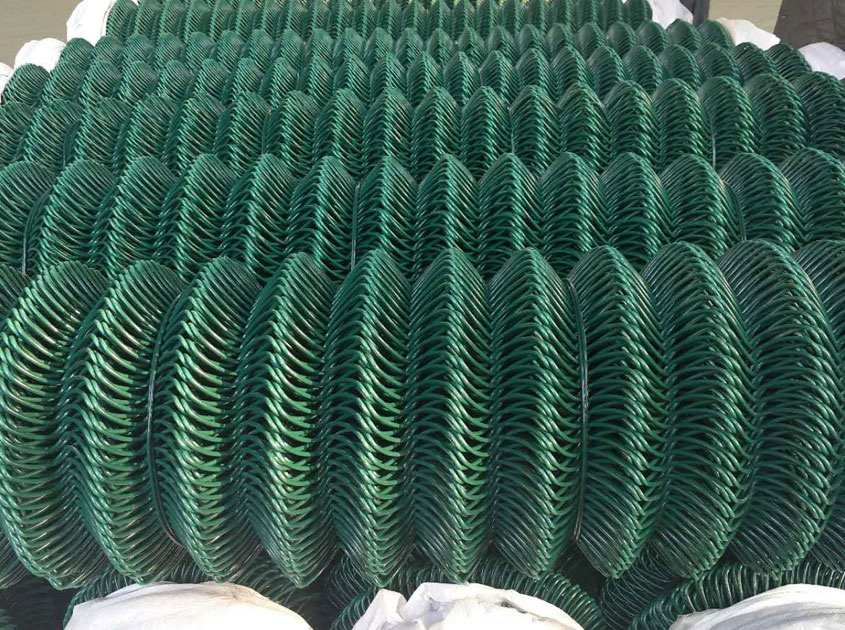
Step 7: PVC Coating
For PVC-coated products, the appropriate coating process is applied according to the product specification.
Step 8: Inspection and Packing
The finished rolls are checked for dimensions, coating, appearance, packaging, and other requirements before shipment.
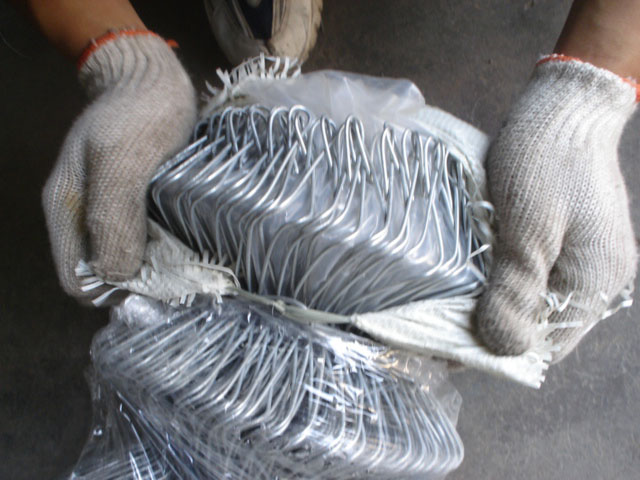
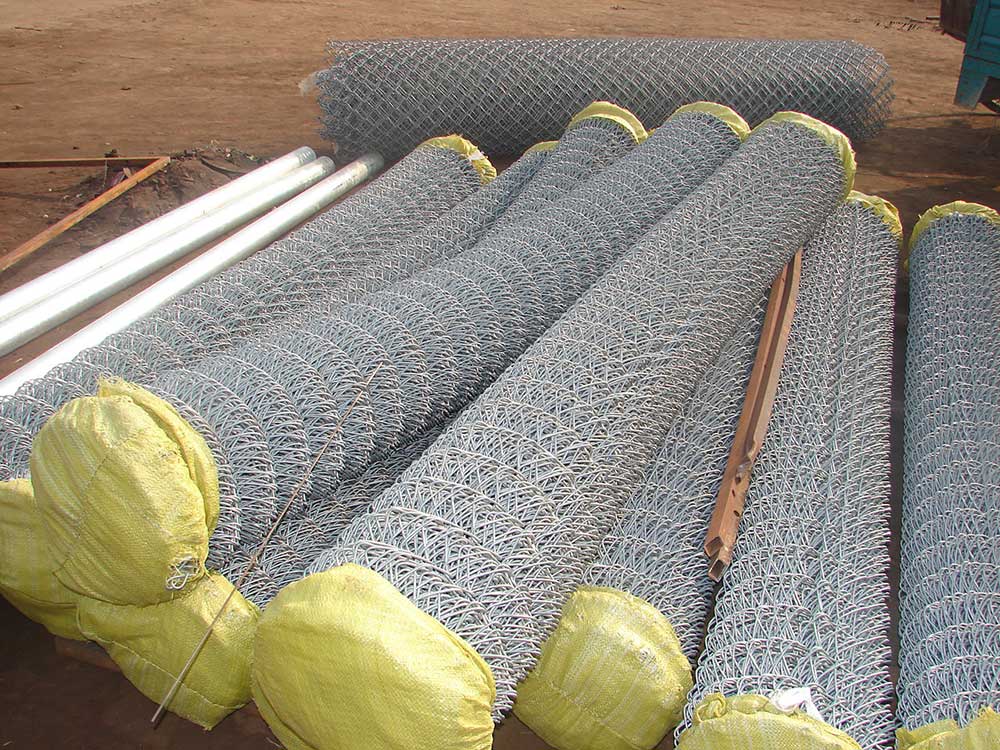
Chain Link Fence Roll Packaging
Because chain link fence is normally supplied in rolls, packaging and transportation efficiency are important for export projects.
Common considerations include:
Roll diameter
Roll weight
Roll length
Protective wrapping
Palletization
Container loading
Moisture protection
For overseas orders, buyers should confirm whether the quoted price includes:
Fence fabric only
Fence fabric + posts
Complete fence system
Accessories
Loading
Export packaging
Custom Chain Link Fence for Large Projects
Large projects often require specifications that are different from standard stock products.
A manufacturer can customize:
Mesh opening
Wire diameter
Fence height
Roll length
Coating
Color
Selvage
Post dimensions
Accessories
Gate dimensions
Security configuration
For large infrastructure or industrial projects, buyers should provide project drawings or a detailed material schedule whenever possible.
Chain Link Fence for Contractors and Distributors
Chain link fence is particularly suitable for B2B distribution because it can be supplied in multiple specifications for different customer groups.
A distributor may stock:
Residential Products
4 ft
5 ft
6 ft
11.5 gauge
2" mesh
Black or green PVC coating
Commercial Products
6 ft
8 ft
9 gauge
11 gauge
1-3/4" or 2" mesh
Industrial Products
8 ft
10 ft
12 ft
Heavy-duty wire
Smaller mesh
Security accessories
The actual stock range should be based on local demand and project requirements.
Why Buy Chain Link Fence Directly from a Manufacturer?
For contractors, distributors, and project buyers, direct factory sourcing can provide several advantages.
Custom Specifications
The manufacturer can produce non-standard wire diameters, mesh sizes, heights, colors, and roll lengths.
Better Control of Quality
The buyer can specify the wire diameter, zinc coating, PVC coating, dimensions, and packaging requirements.
Project-Based Pricing
Large quantities can be quoted according to project volume rather than retail pricing.
Complete Fence System
A manufacturer can potentially supply:
Chain link fabric
Posts
Rails
Gates
Fittings
Barbed wire
Razor wire
Privacy accessories
This can simplify procurement for overseas projects.
Frequently Asked Questions
What is chain link wire mesh called in the USA?
Common terms include chain link fence, chain link fencing, chain link fabric, and chain link fence fabric.
"Chain link fence" is generally the most useful commercial term when targeting American buyers.
Is chain link fence suitable for residential properties?
Yes. It is widely used for backyards, gardens, property boundaries, pets, pools, and other residential applications.
What is the most common chain link mesh size?
2" mesh is a common general-purpose specification in North American markets, although many other mesh sizes are available.
What is the difference between galvanized and PVC-coated chain link fence?
Galvanized chain link uses a zinc coating for corrosion protection.
PVC-coated chain link adds a polymer coating over the steel wire and is available in colors such as black, green, brown, and white.
Is black chain link fence better than galvanized?
Not necessarily.
Black PVC-coated chain link may provide a more attractive appearance and additional coating protection, while galvanized chain link is often selected for its traditional metallic appearance and cost-effective performance.
The better option depends on the application and environment.
Is chain link fence suitable for Canada?
Yes. Chain link fencing is used for residential, commercial, industrial, sports, agricultural, and other applications in Canada. Galvanized and vinyl-coated systems are both available, with specifications selected according to local climate and project requirements.
Is chain link fence suitable for the Middle East?
Yes. It is used for residential compounds, construction sites, industrial facilities, oil and gas facilities, infrastructure, roads, utilities, and perimeter security.
Can chain link fence be used for high-security applications?
Yes, but the fence should be designed as a complete security system.
Possible additions include:
Smaller mesh
Heavier wire
Higher fence
Heavy-duty posts
Barbed wire
Razor wire
Security gates
Additional perimeter-security systems
Can you manufacture custom chain link fence?
Yes. A manufacturer can customize mesh opening, wire diameter, height, roll length, coating, color, selvage, posts, gates, and other accessories according to the project.
Chain Link Fence Manufacturer for USA, Canada and Middle East Projects
Chain link fencing is a simple-looking product, but selecting the right specification requires careful consideration of the application, environment, wire diameter, mesh opening, coating, height, and supporting structure.
For residential projects, appearance, cost, visibility, and ease of installation may be the most important factors.
For commercial and industrial projects, strength, durability, security, posts, gates, and accessories become increasingly important.
For Middle Eastern projects, environmental conditions such as heat, dust, humidity, and coastal exposure should also be considered.
For North American projects, buyers should clearly define the mesh size, wire gauge/core diameter, coating, height, selvage, framework, and applicable project requirements before placing an order.
Request a Chain Link Fence Quote
For a project quotation, provide:
Mesh Size + Wire Diameter/Gauge + Fence Height + Coating + Color + Selvage + Quantity + Accessories + Destination
Our team can then recommend a suitable chain link fencing specification and prepare a factory quotation for your project.
Get a Custom Chain Link Fence Quote →
-
-
 What Is Galvanized Wire Mesh and Why Is It Popular? Aug 26, 2026



- Tel.: +86 311 83077076
- E-mail: sales@qunkunmetal.com
- Skype: qunkunsales01
- WhatsApp: 8618032412189
- Add.: No.69 The Filter Industrial Park of Anping, Hebei, China


