


What Mesh Size Is Suitable for Chicken Wire Mesh? A Practical Selection Guide
Choosing the right mesh size for chicken wire mesh is essential for poultry keeping, garden protection, rabbit enclosures, and other light-duty fencing applications. If the openings are too large, small birds or animals may pass through them. If the mesh is unnecessarily fine, you may pay for a product that offers more than your application requires.
But mesh size is only part of the decision. Wire diameter, galvanizing, roll dimensions, installation, and the type of animal you want to contain all affect the suitability of chicken wire mesh.
So, what mesh size should you choose?
For many general poultry and garden applications, common hexagonal wire mesh openings include approximately 13 mm (1/2 inch), 25 mm (1 inch), and 50 mm (2 inches). The best option depends on the size of the animals, the purpose of the enclosure, and whether you need simple separation or protection against predators.
This guide explains how to select the right chicken wire mesh size, compare common specifications, and avoid mistakes when buying from a wire mesh manufacturer.
1. Quick Answer: Which Chicken Wire Mesh Size Should You Choose?
Start with the intended application rather than selecting a mesh opening based on price alone.
Application
Mesh size to consider
Important consideration
Small chicks Approximately 13 mm (1/2 inch) or another suitably small opening Check whether the smallest birds can pass through the openings
Adult chickens in a basic enclosure Approximately 25 mm (1 inch) or 50 mm (2 inches), depending on the birds and design Consider bird size, containment needs, and predator risks
General poultry runs Approximately 25 mm (1 inch) as a starting point Evaluate the wire diameter, installation, and required security
Garden plant protection Approximately 13–25 mm (1/2–1 inch) for many small-animal exclusion uses Match the opening to the animal you are trying to deter
Rabbit enclosures Smaller openings may be appropriate, depending on the rabbit's size and the enclosure design Consider chewing, escape, digging, and predator protection
Decorative garden borders Approximately 25–50 mm (1–2 inches), depending on appearance and function Prioritize the intended visual effect and physical separation
These are starting points, not universal animal-safety specifications. Mesh-opening measurements can differ between manufacturers, and a nominal size does not always describe the same clear opening in every product.
Important: Traditional chicken wire is generally designed for light containment and separation. It should not automatically be treated as predator-proof fencing. Where protection against rats, snakes, raccoons, foxes, or other predators is required, a more robust welded wire mesh or hardware cloth system may be necessary, depending on the threat and installation.
2. Understanding Chicken Wire Mesh Size
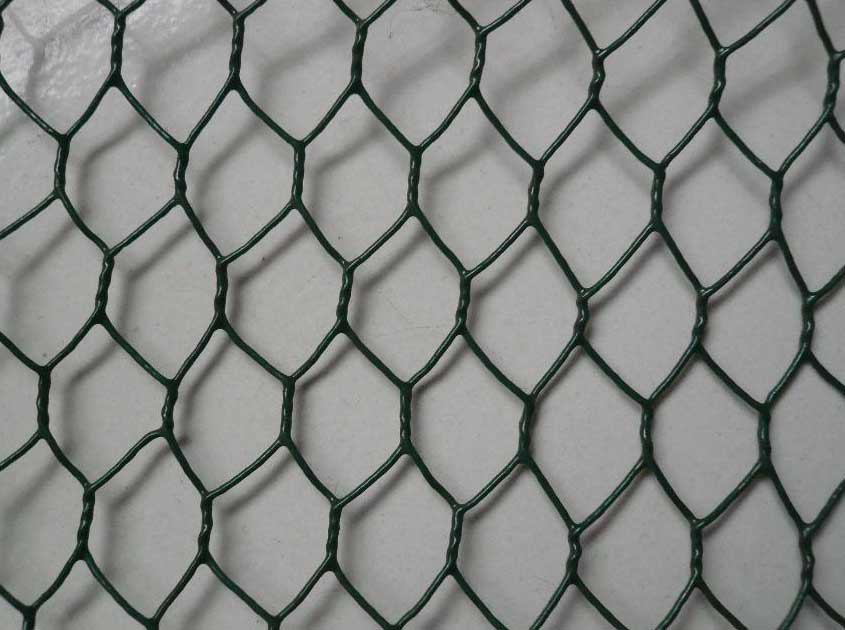
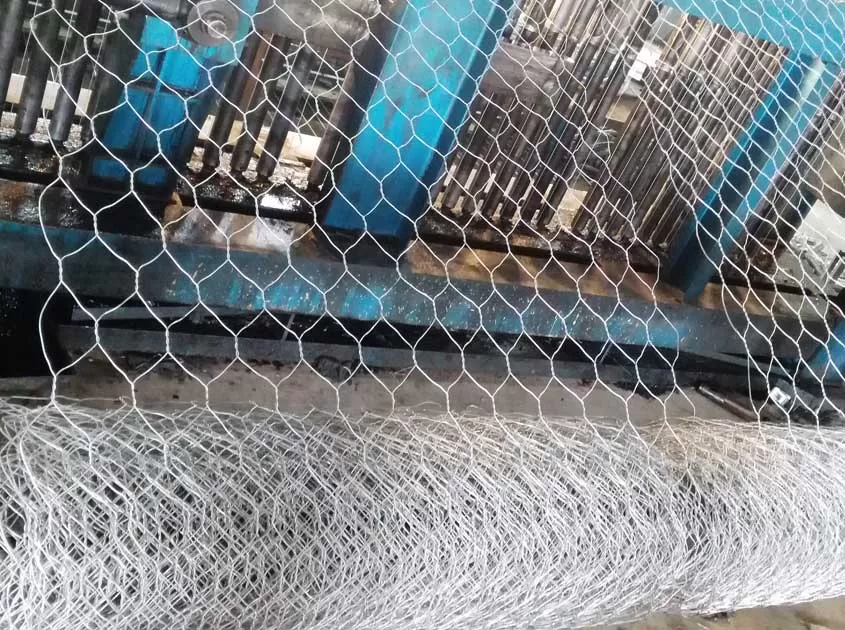
Chicken wire mesh is commonly manufactured as hexagonal wire mesh, with wires woven or twisted together to create a series of hexagonal openings.
When suppliers describe mesh size, they are referring to the dimensions of these openings—not the diameter of the wire and not the width of the roll.
Three specifications are particularly important.
Mesh opening
The mesh opening describes the size of each hexagonal opening. Common nominal sizes include 1/2 inch, 1 inch, and 2 inches.
A smaller opening generally makes it harder for small animals to pass through, but it does not automatically provide better resistance to predators or stronger fencing.
Wire diameter
Wire diameter refers to the thickness of the wire used to make the mesh. It is commonly expressed in millimeters or wire gauge.
A thicker wire generally provides greater resistance to bending under otherwise comparable conditions, but overall performance also depends on the mesh construction, wire material, coating, and installation.
Roll dimensions
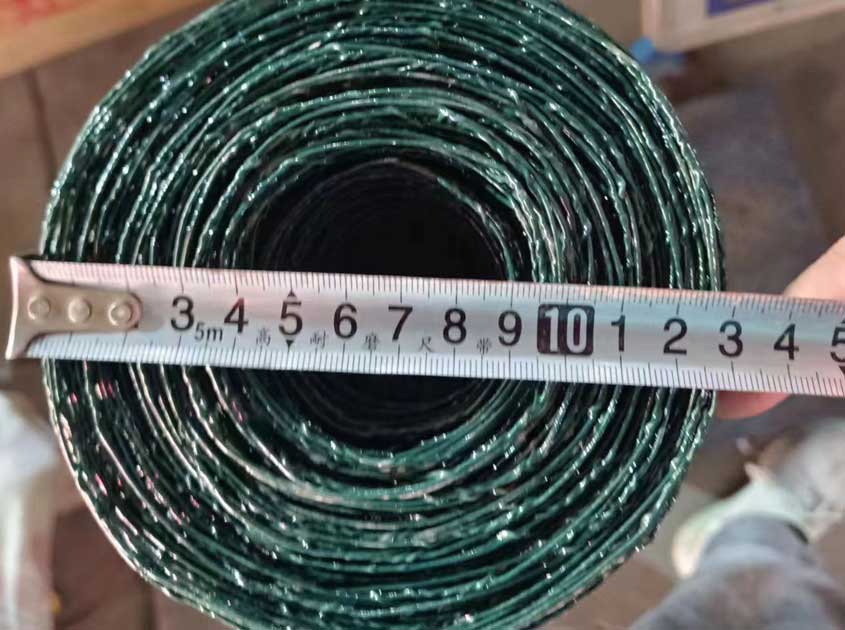
Roll dimensions describe the finished product's width and length. For example, a manufacturer may supply chicken wire mesh in rolls approximately 0.9 m or 1.2 m wide, with different roll lengths depending on the product.
Roll size affects how much material you need and how many joints or overlaps will be required during installation. It does not determine the size of the mesh openings.
When requesting a quotation, specify all three parameters separately. This makes it much easier to compare products from different suppliers accurately.
3. What Is the Difference Between 1/2-Inch, 1-Inch, and 2-Inch Chicken Wire?
These are common nominal mesh sizes, but their practical uses differ.
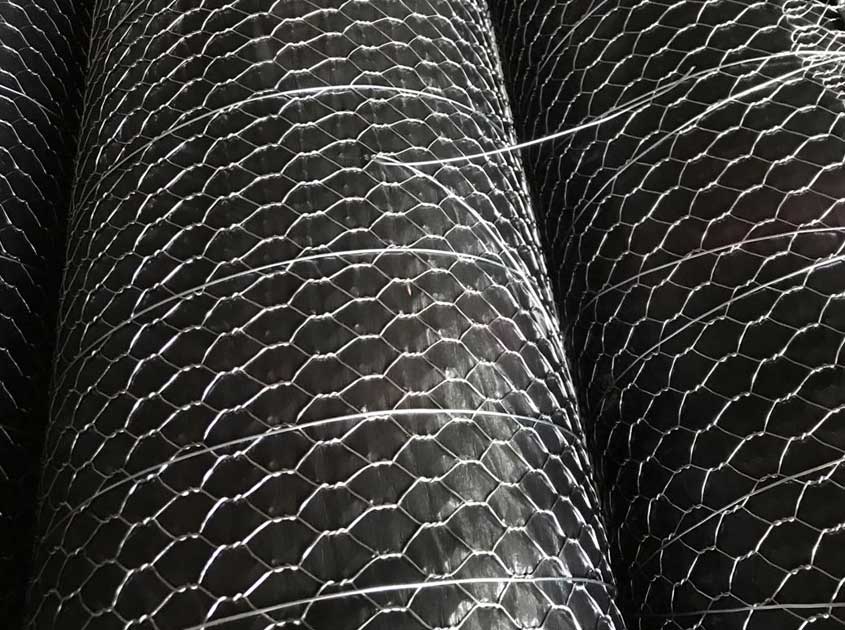
The metric conversions above are approximate: 1/2 inch equals 12.7 mm, 1 inch equals 25.4 mm, and 2 inches equals 50.8 mm.
When ordering internationally, ask the manufacturer to confirm how the opening is measured and what tolerance applies. Hexagonal mesh dimensions may be specified differently by different manufacturers or standards.
4. Which Mesh Size Is Best for Different Animals?
The right opening depends on the animal's body size, age, behavior, and ability to squeeze through or damage the mesh.
For adult chickens
For a basic adult chicken enclosure, 25 mm or 50 mm openings may be considered, depending on the bird size and the purpose of the enclosure.
However, if the enclosure must keep out predators, the opening size alone is not enough. The wire strength, attachment points, lower perimeter, doors, and roof or overhead protection may all matter.
For chicks
Young chicks are smaller and more vulnerable than adult birds. A finer opening, such as approximately 13 mm, may be a better starting point when evaluating containment.
Check the actual opening and the size of the smallest birds. Do not assume that a nominal mesh size will be suitable for every breed or age.
For rabbits
Rabbits may squeeze through unsuitable openings and can chew wire or other enclosure materials. A finer mesh may help with containment, but chicken wire is not automatically an appropriate long-term rabbit enclosure material.
For rabbit housing, consider stronger welded mesh designed for the application, as well as floor protection, safe edges, and the animal's ability to dig or chew.
For garden protection
The correct size depends on what you want to keep away from the plants. A small opening may help with some smaller animals, while a larger opening may be sufficient for simple separation or support.
If the target animal can chew through, climb over, dig under, or push through the fence, changing the opening size alone may not solve the problem.
5. Is Smaller Mesh Always Better?
No. Smaller openings solve some problems but introduce trade-offs.
A finer mesh can help contain smaller animals and may be more suitable where a smaller opening is required. However, it can also increase material usage, weight, handling requirements, and cost, depending on the wire diameter and roll dimensions.
A larger opening can be economical for applications where small-animal containment is not essential. It may also provide a more open appearance.
The important question is not simply, “Which mesh is the smallest?” It is, “What opening is sufficient for the animal, application, and expected risks?”
Consider these examples:
If you are separating adult chickens in a low-risk garden area, an unnecessarily fine mesh may not provide meaningful additional value.
If you are containing small chicks, a large opening may create an obvious escape risk.
If you are trying to protect poultry against determined predators, even a small hexagonal opening may not provide sufficient mechanical strength.
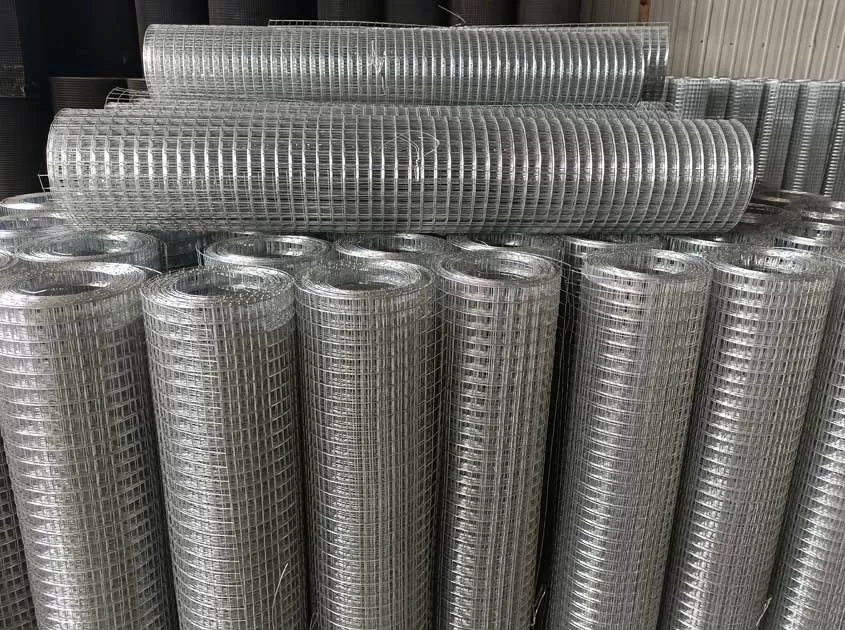
For predator protection, consider purpose-designed welded wire mesh or hardware cloth with appropriate openings and wire diameter, combined with secure fixing and suitable perimeter protection.
6. How Does Wire Diameter Affect Chicken Wire Mesh Performance?
Mesh opening and wire diameter should always be evaluated together.
Two rolls can have the same nominal opening but use different wire diameters. The products may therefore differ in weight, stiffness, handling, and resistance to deformation.
A thicker wire can improve resistance to bending under comparable conditions, but it does not make every mesh system predator-proof. Construction quality, wire joints, installation, and the strength of the supporting structure remain important.
When comparing specifications, ask for the actual wire diameter in millimeters rather than relying exclusively on a gauge number.
Wire gauge systems can vary, and the same gauge designation may not correspond to the same diameter across every specification system.
For example, a purchase specification should clearly distinguish between:
Mesh opening: the nominal hexagonal opening size
Wire diameter: the thickness of the wire
Coating: galvanized, PVC-coated, or another specified finish
Roll dimensions: finished width and length
These details allow buyers to compare like-for-like products rather than choosing the cheapest quotation based on an incomplete description.
7. Galvanized vs. PVC-Coated Chicken Wire Mesh
After selecting the opening and wire diameter, the next decision is often the surface protection.
Galvanized chicken wire mesh
Galvanized mesh has a zinc coating intended to protect the underlying steel from corrosion. Its durability depends on the coating specification and the environment.
It is commonly considered for poultry enclosures, garden use, and general outdoor applications where a zinc-coated steel product is suitable.
PVC-coated chicken wire mesh
PVC-coated mesh has a polymer coating over the underlying wire, which may also have a metallic protective coating. It can offer a colored finish and an additional protective layer when properly manufactured.
However, PVC coating quality, adhesion, UV exposure, temperature, and physical damage affect its performance. The coating should not be assumed to make the mesh maintenance-free.
Factor
Galvanized mesh
PVC-coated mesh
Appearance Metallic finish Colored or polymer-coated finish
Corrosion protection Depends on zinc coating and exposure Depends on the underlying wire protection and PVC coating integrity
Visual integration Often suits utilitarian installations May suit garden or landscape designs
Selection priority Zinc coating and environmental suitability Core wire, finished diameter, coating quality, and environment
For PVC-coated products, clarify whether the stated wire diameter refers to the steel core or the finished diameter including the PVC layer.
For either type, avoid making a service-life decision based on appearance alone. The coating specification and actual environmental exposure are more useful indicators.
8. How to Measure Chicken Wire Mesh Before Buying
If you already have a sample or an existing installation, measuring the mesh can help you identify the approximate specification.
Step 1: Measure the opening
Measure a representative hexagonal opening and record how the dimension is taken. Depending on the supplier's specification, the measurement may refer to the distance between opposite sides or another defined dimension.
Do not assume that a measurement taken in one direction is directly comparable to a manufacturer's nominal opening unless the measurement convention is the same.
Step 2: Measure the wire diameter
Use a suitable measuring instrument, such as a micrometer or caliper, where the wire condition allows an accurate reading.
Coatings can affect the measured outside diameter. If the distinction matters, ask the supplier to clarify whether the specified diameter refers to the core wire or the finished coated wire.
Step 3: Measure the roll
Record the roll's width and length. For a partially used roll, measure the remaining material and estimate the quantity required for the project.
Step 4: Check the coating and construction
Inspect the surface for visible damage, uneven coating, loose weaving, broken wires, and irregular openings. Visual inspection is useful but does not replace any coating tests or product documentation required by the project.
For repeat purchases, keep a reference sample and record the full specification instead of relying only on a product photograph.
9. How Much Chicken Wire Mesh Do You Need?
Once you have chosen the mesh size, calculate the total area before ordering.
For a rectangular enclosure:
Required perimeter = 2 × (length + width)
Approximate mesh area = perimeter × required mesh height
For example, consider a rectangular chicken run that is 4 m long and 3 m wide, with a planned mesh height of 1.5 m.
Perimeter: 2 × (4 + 3) = 14 m
Mesh area for the sides: 14 × 1.5 = 21 m²
This calculation covers only the sides. It does not include a roof, gate, extra overlap, ground skirt, cutting waste, or additional material required by the installation design.
For a more realistic purchase quantity, account for the actual layout and how the roll width fits the enclosure height. If the mesh must be overlapped or cut around posts and openings, allow for additional material.
When ordering multiple rolls, ask the supplier to confirm the finished roll width, length, and packaging dimensions so you can plan installation and transportation.
10. A Practical Specification Checklist for Buyers
Before requesting a quotation from a chicken wire mesh manufacturer, prepare the following details.
Specification
Example of what to provide
Product type Hexagonal chicken wire mesh
Mesh opening 13 mm, 25 mm, or 50 mm nominal, subject to confirmation
Wire diameter Required diameter in millimeters
Surface treatment Galvanized or PVC-coated
Galvanizing requirement Required coating specification or applicable standard
Roll width Required finished width
Roll length Required finished length
Quantity Number of rolls or total square meters
Application Poultry enclosure, garden protection, rabbit enclosure, etc.
Destination Delivery country or port
Special requirements Predators, soil contact, coastal exposure, color, or other conditions
If you are unsure which opening to choose, tell the manufacturer what you intend to contain or protect. A supplier can then suggest suitable standard sizes for further evaluation.
For large orders, distributors, and importers, specifying the mesh opening, wire diameter, coating, and roll dimensions clearly also helps prevent differences between samples, quotations, and delivered goods.
11. Frequently Asked Questions
What is the most common chicken wire mesh size?
Common nominal openings include 13 mm (1/2 inch), 25 mm (1 inch), and 50 mm (2 inches). Availability depends on the manufacturer and product range. The best size depends on the animals, the application, and the required level of containment.
Is 1-inch chicken wire suitable for chickens?
It may be suitable for many general adult-poultry applications, but it is not automatically suitable for every bird or enclosure. Consider the smallest bird, the wire diameter, installation, and whether predator protection is required.
Is 1/2-inch chicken wire better than 1-inch mesh?
A 1/2-inch opening is smaller and may be more suitable where smaller animals must be contained. However, a smaller opening does not automatically mean stronger or predator-resistant fencing. Wire diameter and construction must also be considered.
Can chicken wire keep snakes and rats out?
Not reliably in every situation. Suitability depends on the species, its size and behavior, the opening dimensions, the strength of the wire, and the details of the enclosure. For a higher level of protection, evaluate purpose-designed welded wire mesh or hardware cloth and secure the enclosure's perimeter.
What wire diameter should I choose for chicken wire mesh?
There is no single correct diameter for all uses. Consider the required stiffness, handling, exposure, expected mechanical loads, and animal behavior. Ask the supplier for the actual diameter in millimeters and compare it together with the opening size and coating specification.
Is galvanized chicken wire suitable for outdoor use?
Galvanized mesh is commonly used outdoors, but the actual durability depends on its zinc coating and exposure conditions. Coastal air, persistent moisture, soil contact, and chemicals can accelerate corrosion. Specify the coating requirement according to the application.
Conclusion: Choose Mesh Size Based on the Job, Not Just the Number
The most suitable chicken wire mesh size depends on what you need the mesh to do. Smaller openings may be useful for chicks and smaller animals, while larger openings may be adequate for some adult-poultry enclosures and general garden applications.
But opening size is only one part of the specification. Wire diameter, galvanizing, mesh construction, roll dimensions, installation, and predator risks all influence the final choice.
Before purchasing, confirm the nominal mesh opening, how that opening is measured, the wire diameter, the surface treatment, and the required roll dimensions. For applications involving vulnerable animals or predator protection, evaluate the complete enclosure rather than relying on mesh size alone.
Need chicken wire mesh for your market or project? Share your required opening size, wire diameter, coating, roll dimensions, quantity, and application with the manufacturer. A clear specification makes it easier to compare products, plan shipments, and obtain a quotation that matches your actual requirements.
-
-
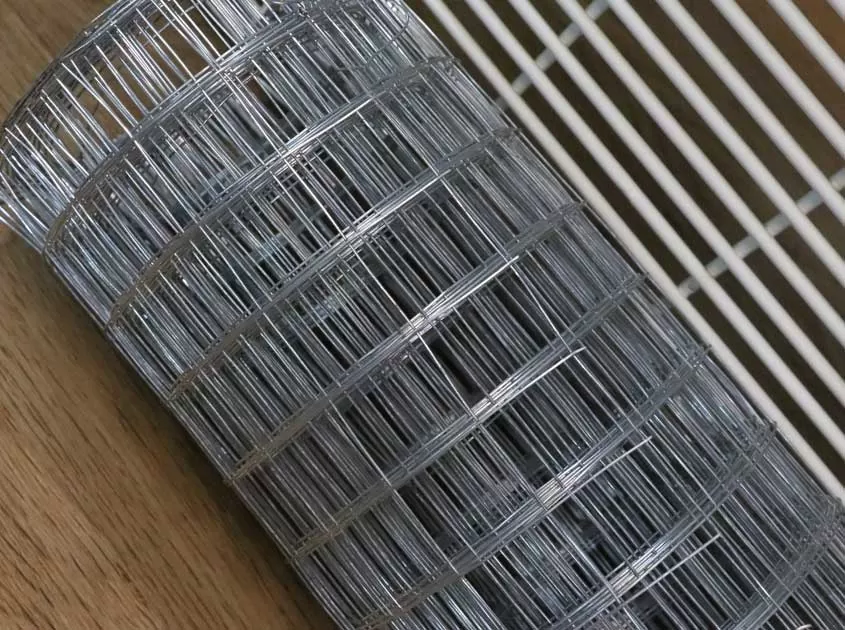 What Is Galvanized Wire Mesh and Why Is It Popular? Aug 26, 2026




- Tel.: +86 311 83077076
- E-mail: sales@qunkunmetal.com
- Skype: qunkunsales01
- WhatsApp: 8618032412189
- Add.: No.69 The Filter Industrial Park of Anping, Hebei, China


