


How to Choose Welded Wire Mesh Size: Wire Diameter and Mesh Opening Guide
Choosing welded wire mesh is not simply a matter of selecting the cheapest roll or panel. Two specifications have a particularly important influence on the finished product: wire diameter and mesh opening.
A welded wire mesh with a small opening and thin wire can behave very differently from one with the same opening but much thicker wire. Likewise, increasing the mesh opening can reduce material usage while changing the rigidity, containment, visibility, and suitability of the mesh for a particular application.
For distributors, contractors, agricultural buyers, construction companies, and project purchasers, understanding the relationship between wire diameter and mesh opening makes it much easier to select the right welded mesh.
This guide explains how these two specifications work together and how to choose a suitable combination for different applications.
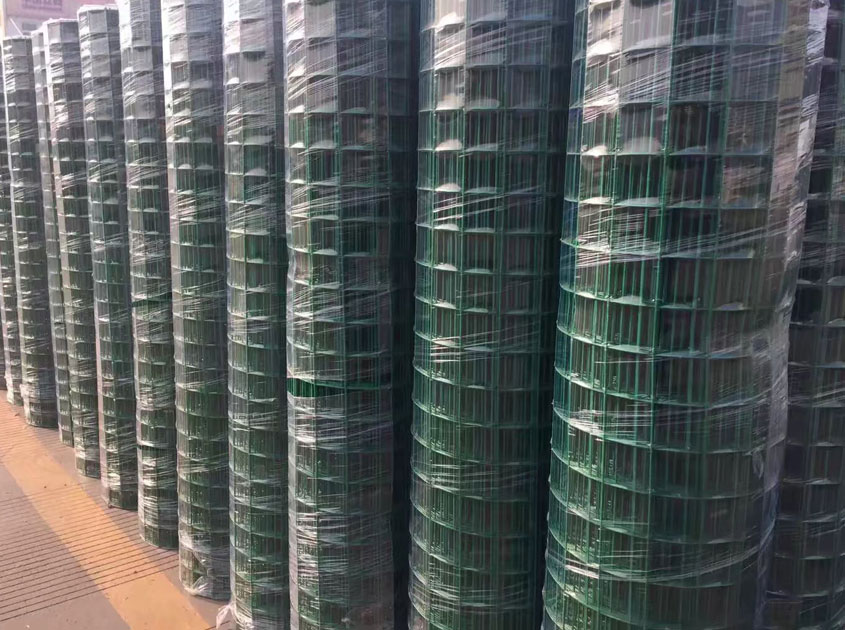
What Do Wire Diameter and Mesh Opening Mean?
Before choosing a welded wire mesh specification, it is important to understand the two basic dimensions.
Wire Diameter
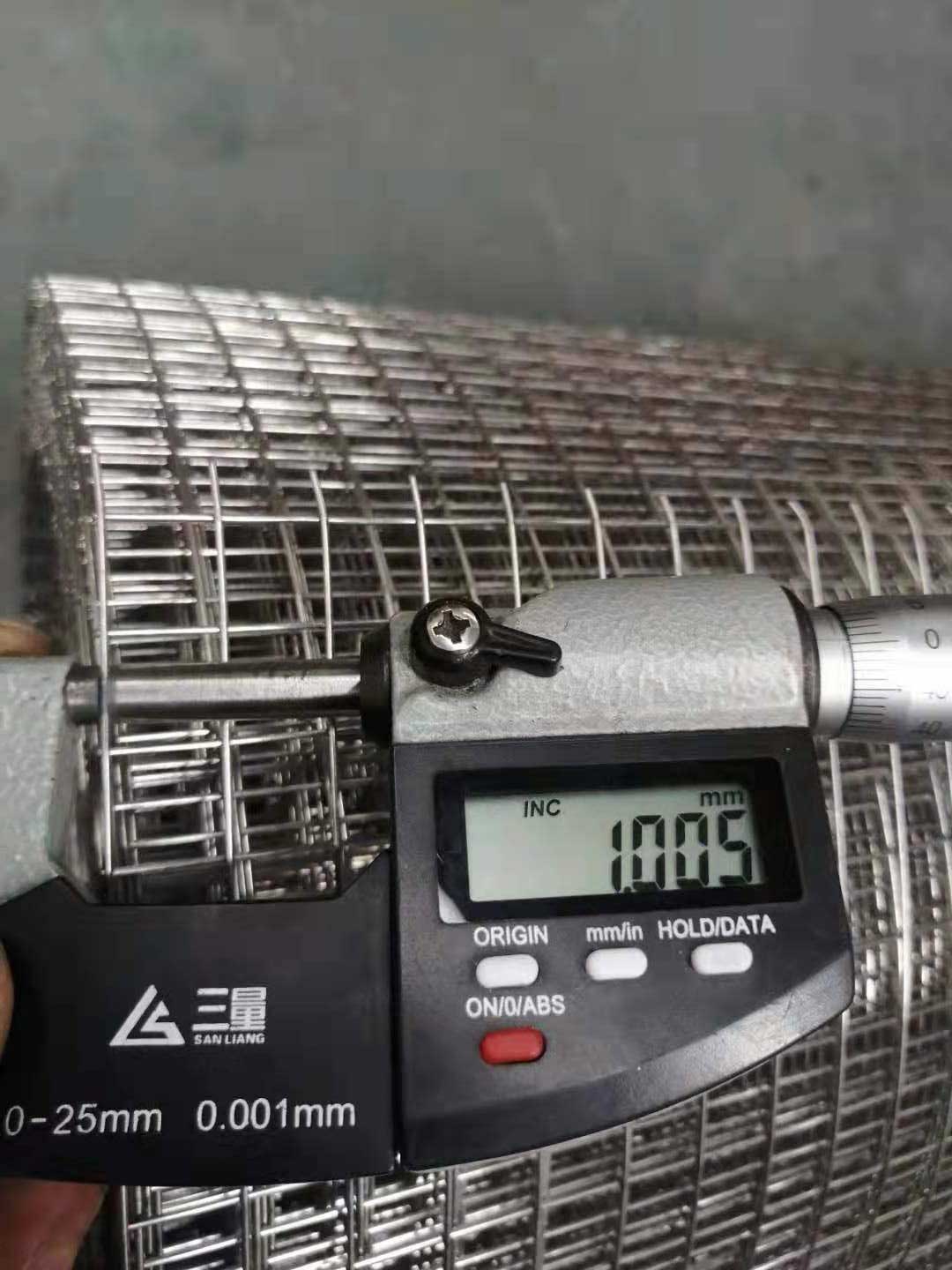
Wire diameter refers to the thickness of each individual wire used to manufacture the mesh.
It is commonly specified in:
Millimeters
Inches
Wire gauge
For international purchasing, millimeters are generally clearer because gauge systems can differ.
Common wire diameters may include approximately:
1.6 mm
2.0 mm
2.5 mm
3.0 mm
3.5 mm
4.0 mm
5.0 mm
6.0 mm
The available sizes depend on the manufacturer's production equipment and product range.
Mesh Opening
Mesh opening is the distance between the wires.
Common welded mesh openings include:
1/2" × 1/2"
1" × 1"
1" × 2"
2" × 2"
2" × 3"
2" × 4"
50 × 50 mm
50 × 100 mm
75 × 100 mm
100 × 100 mm
100 × 150 mm
150 × 150 mm
The exact available combinations vary by manufacturer.
Why Do Wire Diameter and Mesh Opening Matter?
These two specifications influence several characteristics of welded wire mesh at the same time.
Specification
Increasing It Generally Means
Wire diameter More material, greater rigidity and higher mesh weight
Smaller mesh opening More wires per area, denser structure
Larger mesh opening More open area, lower material usage
Thicker wire + small opening Heavier and more rigid mesh
Thin wire + large opening Lighter and generally more flexible mesh
However, these relationships should not be interpreted as universal performance guarantees.
The actual behavior of a welded mesh also depends on steel grade, welding quality, panel or roll dimensions, surface treatment, support spacing, and installation.
Start With the Application, Not the Wire Diameter
One of the most common purchasing mistakes is starting with a number such as "3 mm wire" before deciding what the mesh needs to do.
A better approach is:
Application → required opening → required rigidity/strength → wire diameter → surface treatment → roll or panel format
For example, a mesh used to contain small poultry may require a much smaller opening than mesh used as a general property fence.
Similarly, a reinforcement mesh for concrete is selected according to engineering requirements rather than simply choosing the thickest available wire.
Choosing Mesh Opening
The mesh opening determines how much space exists between the wires.
Small Mesh Openings
Small openings are useful when you need to prevent relatively small objects or animals from passing through the mesh.
Typical applications include:
Poultry enclosures
Small animal cages
Garden protection
Storage cages
Machine guards
Certain screening applications
For example, 1/2" × 1/2" welded mesh provides a much denser grid than 2" × 2" mesh.
Medium Mesh Openings
Medium openings provide a balance between material usage, visibility, airflow, and containment.
Common applications include:
Garden fencing
Residential fencing
Animal enclosures
Warehouse partitions
Equipment areas
Landscaping
1" × 1" and 2" × 2" are examples of commonly requested mesh dimensions, although the appropriate size depends on the application.
Large Mesh Openings
Larger openings reduce the number of wires per square meter and can provide greater visibility and airflow.
Typical applications include:
General fencing
Farm fencing
Property boundaries
Large animal enclosures
Temporary barriers
Construction applications
For general fencing, 2" × 4" or similar rectangular openings may be considered when the project does not require a dense mesh.
How Does Wire Diameter Affect Welded Mesh?
Wire diameter has a direct effect on the amount of steel used in the mesh.
A thicker wire generally produces a heavier and more rigid product when other specifications remain comparable.
For example:
2.0 mm wire
will normally produce a substantially lighter mesh than:
4.0 mm wire
when the mesh opening and dimensions are otherwise similar.
This difference affects:
Mesh weight
Rigidity
Handling
Cutting
Installation
Transportation cost
Material cost
Therefore, when comparing two supplier quotations, always check the actual wire diameter.
Wire Diameter and Mesh Opening Must Be Considered Together
This is the most important principle when buying welded wire mesh.
Consider these two specifications:
Option A:
50 × 50 mm opening + 2.0 mm wire
Option B:
50 × 50 mm opening + 4.0 mm wire
The mesh opening is identical, but the wire diameter is very different.
Now consider:
Option C:
100 × 100 mm opening + 2.0 mm wire
The wire diameter is the same as Option A, but the opening is larger.
These products cannot be treated as equivalent simply because one specification matches.
A proper quotation should therefore state both dimensions clearly.
A Practical Specification Guide by Application
There is no single wire diameter and mesh opening that is correct for every application.
The following table can be used as a starting point rather than a universal specification.
Application
Typical Mesh Direction
General Selection Consideration
Poultry enclosure Small opening Small opening to improve containment
Garden fence Small to medium Balance visibility and containment
Rabbit enclosure Small opening Opening should suit the animal size
Pet enclosure Small to medium Consider animal size and behavior
Residential fence Medium opening Balance appearance, cost and rigidity
Warehouse partition Medium opening Consider visibility and required rigidity
Construction barrier Medium to large Focus on project dimensions and handling
Farm enclosure Medium to large Match opening to livestock and application
Concrete reinforcement Engineering-based Follow project structural requirements
Machine guard Small to medium Consider opening and safety requirements
For construction reinforcement or safety-critical applications, the mesh should be specified according to the applicable engineering requirements rather than relying on a general application table.
Welded Mesh for Animal Enclosures
Animal enclosure applications require special attention to mesh opening.
The opening should be small enough for the intended animal and should also account for the possibility of animals pushing, biting, or attempting to escape.
For example:
Poultry
Smaller openings are generally preferred for chickens and other small birds.
Rabbits
A relatively small opening helps prevent rabbits from passing through or becoming trapped.
Dogs
Mesh opening and wire diameter should be selected according to the dog's size, behavior, and enclosure height.
Larger Farm Animals
For larger animals, the opening can often be larger, but the wire diameter and overall fence structure may need to be increased depending on the expected load.
Welded Mesh for Garden and Landscaping
Garden fencing usually requires a different balance.
The mesh should provide enough containment while maintaining visibility and allowing light and airflow through the fence.
Common considerations include:
Mesh opening
Wire diameter
Fence height
Galvanized or PVC coated surface
Green, black, or other colors
Roll or panel format
For decorative garden fencing, appearance may be almost as important as mechanical properties.
A smaller opening creates a denser visual pattern, while a larger opening gives the fence a more open appearance.
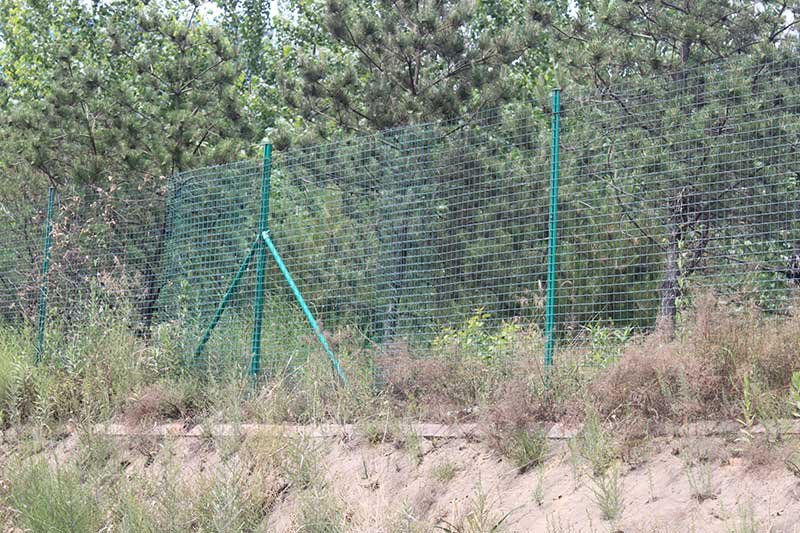
Welded Mesh for Fencing
For general fencing applications, buyers usually need to balance:
Security + rigidity + visibility + cost
A thicker wire does not automatically make every fence system the right solution.
For example, if the mesh opening is too large for the intended application, increasing the wire diameter may not solve the containment problem.
Conversely, selecting an extremely small opening may increase material consumption without providing a meaningful benefit for a simple boundary fence.
The complete fence system should therefore be considered, including:
Mesh
Posts
Gates
Fixings
Support spacing
Fence height
Installation method
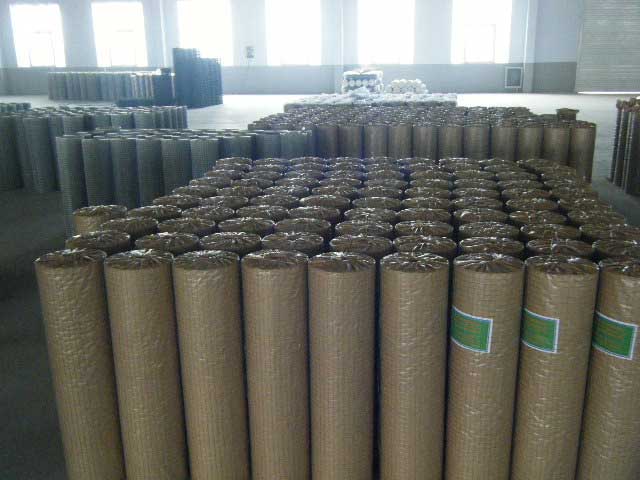
Welded Wire Mesh Rolls vs Panels
Wire diameter and opening are not the only specifications that matter.
You should also decide whether you need rolls or panels.
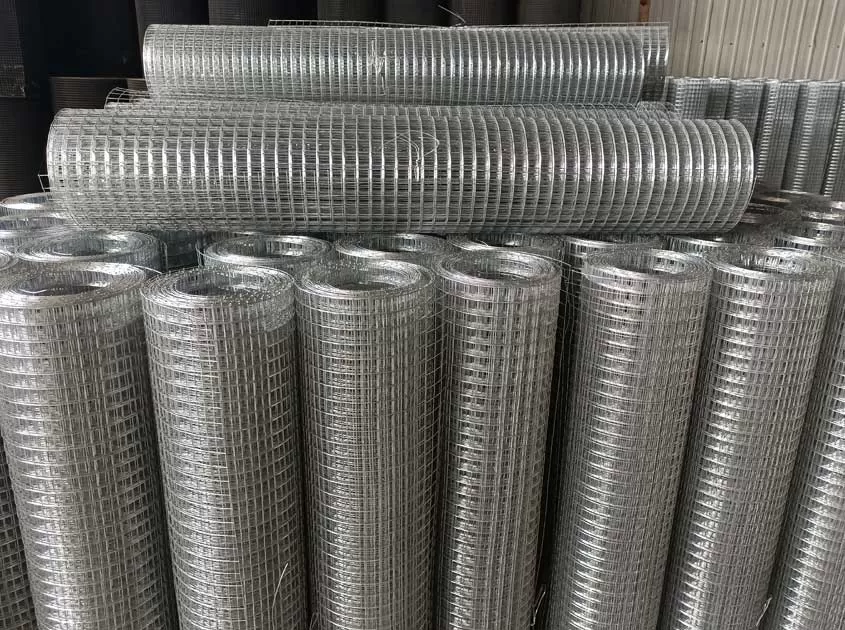
Welded Wire Mesh Rolls
Rolls are convenient when:
Long continuous sections are required
The mesh needs some flexibility
Installation follows uneven ground
The product is used for agriculture or gardening
Easy transportation is important
Welded Wire Mesh Panels
Panels are more rigid and are commonly used for:
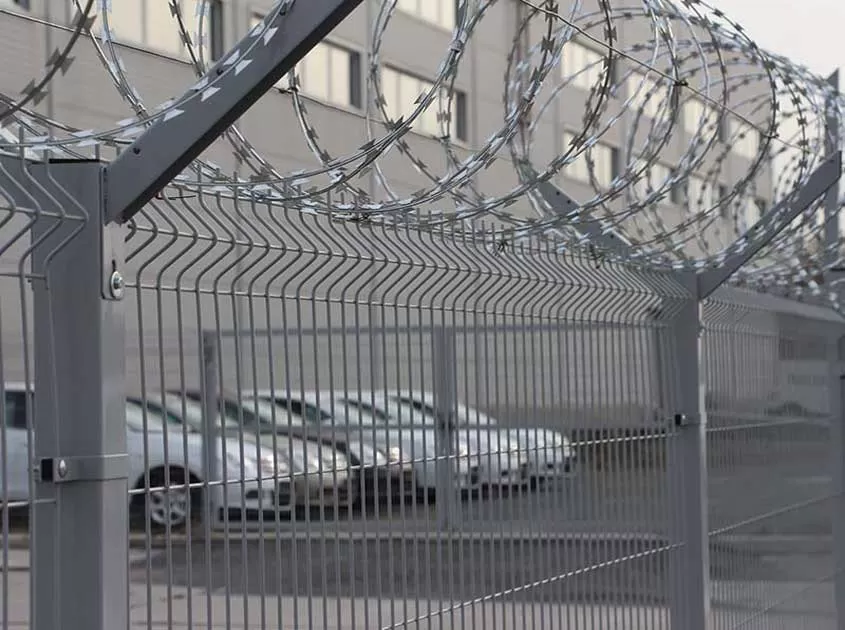
Security fencing
Industrial fencing
Warehouse partitions
Animal enclosures
Construction projects
Decorative applications
Panel dimensions should be considered together with wire diameter and opening because a large panel made from relatively thin wire may behave differently from a smaller panel with the same mesh specification.
Galvanized or PVC Coated Welded Mesh?
After choosing the basic mesh dimensions, consider the surface treatment.
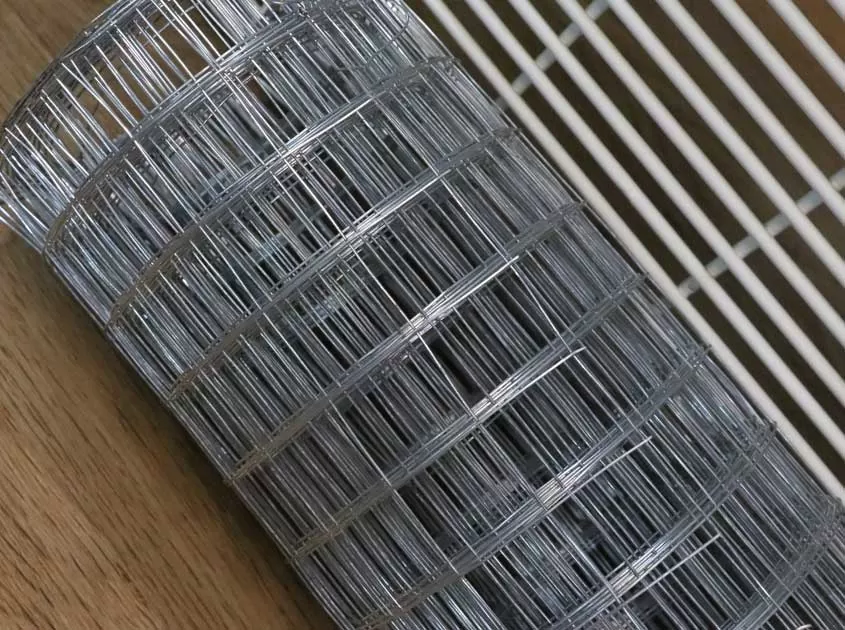
Galvanized Welded Wire Mesh
Galvanized wire mesh uses a zinc coating to help protect the steel from environmental exposure.
It is commonly used for:
Outdoor fencing
Agriculture
Gardens
Construction
General industrial applications
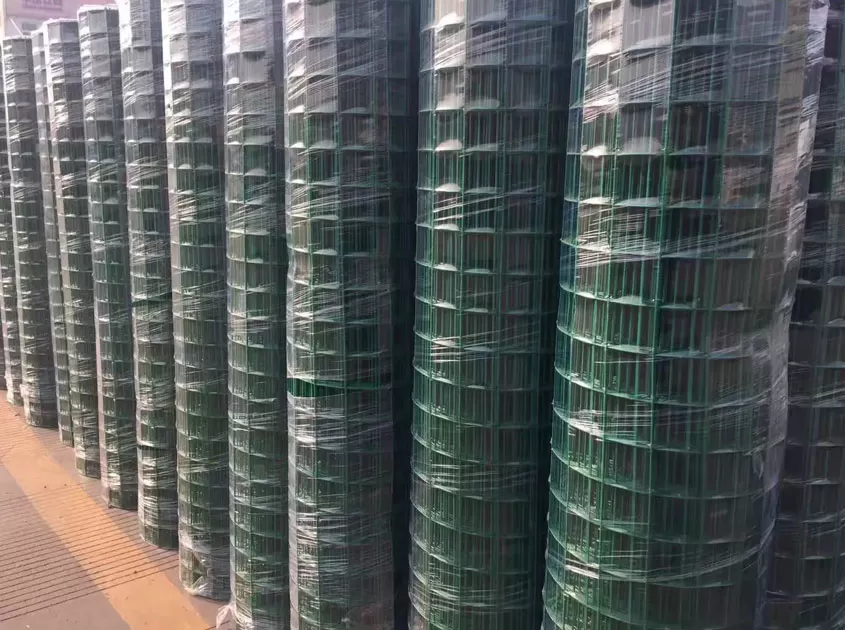
PVC Coated Welded Wire Mesh
PVC coated mesh adds a polymer coating over the steel wire.
It can provide:
A colored appearance
Additional environmental protection
A smoother surface
Different design options
Green PVC coated welded mesh is particularly common in garden and landscaping applications.
For either product, the expected environment should be considered before selecting the coating specification.
Don't Compare Welded Mesh by Weight Alone
Weight is useful, but it does not tell the whole story.
Two products with similar weights can have different combinations of:
Wire diameter
Mesh opening
Roll length
Mesh width
Material
Coating
For example, a supplier may quote:
25 m × 1.8 m roll, 2.5 mm wire, 50 × 50 mm opening
while another supplier quotes:
20 m × 1.8 m roll, 3.0 mm wire, 50 × 50 mm opening
The second product may have thicker wire, but the first roll contains a different total amount of mesh.
Always compare the complete specification and total quantity, not one number.
How to Write a Clear Welded Mesh Specification
For international purchasing, use a specification format that leaves little room for misunderstanding.
A typical inquiry could look like this:
Product: Galvanized welded wire mesh
Wire diameter: 3.0 mm
Mesh opening: 50 × 50 mm
Width: 1.8 m
Roll length: 25 m
Surface: Galvanized
Edge: Standard
Quantity: 500 rolls
Packaging: Export standard
For panels:
Product: Welded wire mesh panel
Wire diameter: 5.0 mm
Mesh opening: 50 × 100 mm
Panel size: 2.0 × 2.5 m
Surface: Hot-dip galvanized
Quantity: 1 × 40HQ
This format makes it much easier for factories to calculate material requirements and provide comparable quotations.
What Should Distributors Ask Their Supplier?
If you are buying welded mesh for resale, do not only ask for the lowest price.
Ask the manufacturer to confirm:
Actual wire diameter
Mesh opening
Wire material
Galvanizing method
Zinc coating specification
PVC coating details if applicable
Roll or panel dimensions
Weight per roll or panel
Production tolerance
Packaging
Loading quantity
Available customization
If you are buying multiple specifications, request a product specification sheet so that each item can be compared consistently.
Common Mistakes When Choosing Welded Wire Mesh
Mistake 1: Choosing by Price Only
A lower price may be associated with a lighter wire, smaller roll, different coating, or different material specification.
Mistake 2: Giving Only the Mesh Opening
"50 × 50 welded mesh" is incomplete.
You should also specify the wire diameter.
Mistake 3: Using Gauge Without Clarification
Gauge can be confusing because different standards may use different gauge references.
For international orders, specify the actual diameter in millimeters.
Mistake 4: Ignoring Roll Length
Two rolls with the same width and mesh specification can contain different quantities of material if their lengths are different.
Mistake 5: Selecting the Thickest Wire Automatically
A thicker wire can increase weight and cost. It should be selected according to the actual application rather than simply choosing the maximum available diameter.
Mistake 6: Ignoring the Installation System
For fencing, mesh alone does not determine the performance of the finished fence. Posts, fixing methods, support spacing, gates, and installation quality also matter.
How a Factory Can Help You Select the Specification
A professional welded wire mesh manufacturer should be able to work from your application requirements rather than simply asking you to choose a product number.
For example, tell the supplier:
"We need welded mesh for poultry fencing, 1.5 m high, approximately 2,000 rolls."
The manufacturer can then discuss suitable mesh openings, wire diameters, coating options, roll lengths, and packaging.
For a construction project, provide drawings or engineering specifications when available.
For distributors, it can also be useful to establish several standard specifications for different market segments instead of selling only one mesh size.
Frequently Asked Questions
What is the most common welded wire mesh opening?
Common openings include 1/2", 1", 2", and various metric combinations such as 50 × 50 mm and 50 × 100 mm. The most suitable size depends on the application.
What wire diameter should I use for welded wire mesh?
There is no universal wire diameter. The correct choice depends on the application, mesh opening, required rigidity, dimensions, installation system, and budget.
Is thicker welded wire mesh always stronger?
A larger wire diameter generally increases the amount of steel in the mesh and can increase rigidity when other factors are comparable. However, overall performance also depends on material properties, welding quality, dimensions, and installation.
Should I use millimeters or gauge?
For international purchasing, millimeters are generally easier to communicate. If gauge is used, confirm the exact standard and equivalent diameter.
Is smaller mesh opening better?
Not necessarily. Smaller openings can provide denser containment, but they also require more wires per unit area and may increase material cost and weight.
Should I buy welded wire mesh in rolls or panels?
Choose rolls when flexibility and long continuous lengths are useful. Choose panels when a more rigid structure is required. The application and installation method should determine the format.
How do I request a welded wire mesh quotation?
Provide the wire diameter, mesh opening, width or panel size, roll length if applicable, surface treatment, quantity, packaging requirements, and destination.
Final Buying Checklist
Before placing an order, confirm these specifications:
Wire diameter
Mesh opening
Wire material
Galvanized or PVC coated
Zinc coating specification if required
Roll or panel
Width or panel dimensions
Roll length
Edge configuration
Quantity
Packaging
Delivery requirements
The most important point is simple: wire diameter and mesh opening should always be specified together.
Once the application is clear, you can select an opening that provides the required containment or spacing, then choose a wire diameter that provides an appropriate balance of rigidity, weight, cost, and handling.
For distributors, contractors, and project buyers, a complete specification also makes supplier quotations much easier to compare and reduces misunderstandings before production begins.
Looking for welded wire mesh from China? Qunkun Metal can supply welded wire mesh rolls and panels in different wire diameters, mesh openings, surface treatments, dimensions, and packaging configurations for international wholesale and project orders.
-
 What Is Galvanized Wire Mesh and Why Is It Popular? Aug 26, 2026
 -
 Galvanized Welded Wire Mesh Roll Manufacturer China Jul 21, 2026




- Tel.: +86 311 83077076
- E-mail: sales@qunkunmetal.com
- Skype: qunkunsales01
- WhatsApp: 8618032412189
- Add.: No.69 The Filter Industrial Part of Anping, Hebei, China


