


Chain Link Wire Mesh Opening Size Guide: How to Select the Right Mesh
Choosing the right chain link wire mesh opening size is an important step when purchasing fencing materials for residential, commercial, industrial, agricultural, and sports applications.
A mesh opening that is too large may not provide the level of containment or screening a project requires. A smaller opening may improve containment or create a denser appearance, but it can also increase material consumption and affect the overall cost.
The challenge is that chain link mesh specifications are not always presented consistently. Buyers may encounter opening sizes in inches or millimeters, different wire diameters, and product descriptions that do not clearly explain how the mesh is measured.
This guide explains how chain link wire mesh opening size works, how to select the right specification for different applications, and what to confirm with a manufacturer before placing an order.
1. What Is Chain Link Wire Mesh Opening Size?
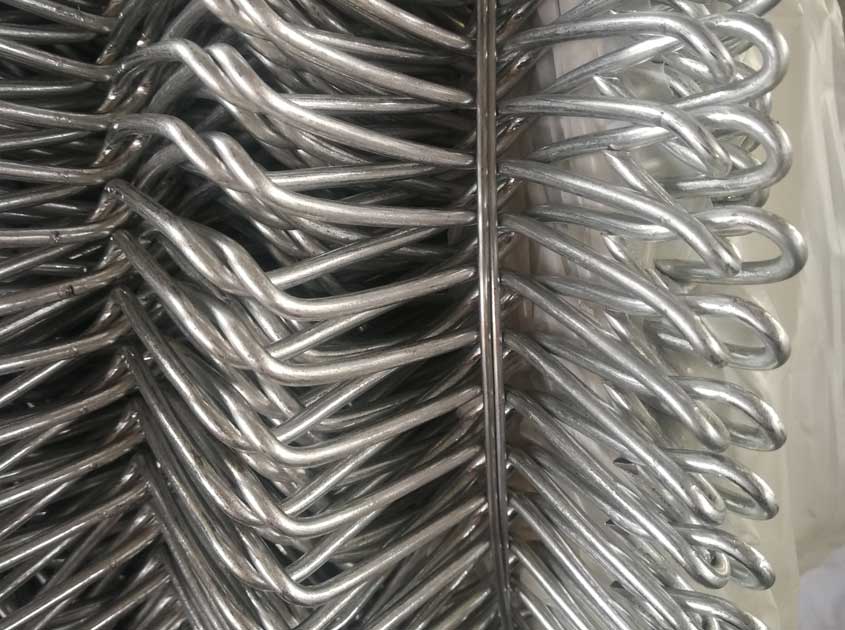
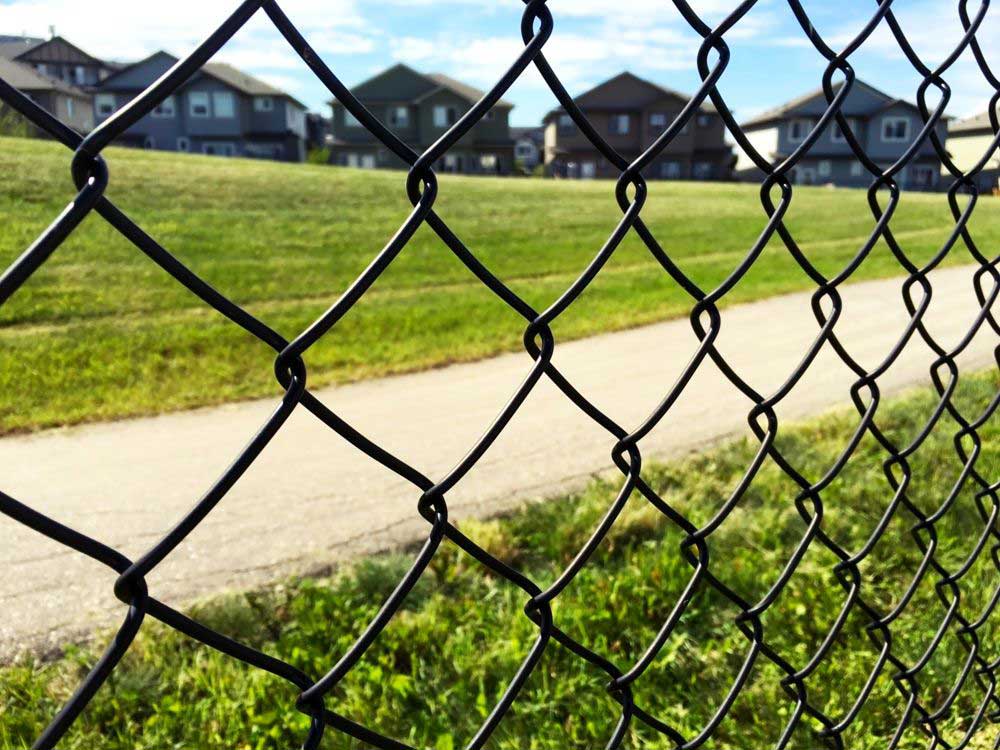
Chain link wire mesh is formed by weaving steel wires into a series of interconnected diamond-shaped openings.
The opening size describes the dimensions of these diamond-shaped spaces. It is one of the main specifications used to identify chain link mesh, along with wire diameter, mesh height, roll length, and coating.
Common nominal chain link mesh sizes include:
Nominal opening size
Approximate metric equivalent
1 inch 25.4 mm
1-1/4 inches 31.75 mm
1-1/2 inches 38.1 mm
1-3/4 inches 44.45 mm
2 inches 50.8 mm
2-1/4 inches 57.15 mm
2-3/8 inches 60.3 mm
2-1/2 inches 63.5 mm
3 inches 76.2 mm
How is the diamond opening measured?
This is an important point when comparing quotations.
Chain link mesh is diamond-shaped, so its appearance can be described by measurements taken in different directions. Industry specifications commonly identify mesh size by the distance between the centers of the wires forming opposite sides of the diamond, but measurement conventions and commercial descriptions should be confirmed for the product being purchased.
Do not assume that a measurement taken diagonally across the full diamond is the same as the nominal mesh size.
When requesting a quotation, ask the supplier to confirm the nominal mesh size, how it is measured, and the permitted tolerance. If you have a sample or project specification, provide it as a reference.
2. How Does Opening Size Affect Chain Link Mesh Performance?
Opening size influences several practical characteristics of chain link wire mesh.
Visibility and openness
Larger openings generally allow a clearer view through the fence and create a more open appearance. This can be useful for property boundaries, sports fields, and large perimeter areas where maintaining visibility is important.
Smaller openings create a denser mesh pattern. Depending on the wire diameter and installation conditions, this may make it more difficult to pass certain objects through the fence.
However, smaller mesh does not automatically provide high security. Security also depends on wire strength, fence height, tension, posts, fittings, gates, and the overall installation.
Containment
The appropriate opening size depends on what the fence needs to contain.
For larger animals, a relatively large opening may be sufficient in some applications. For poultry, smaller animals, or areas where young animals could pass through the mesh, a smaller opening may be necessary.
The animal's size and behavior matter, not just its body width. Consider whether the animal can push its head through, become trapped, climb the fence, or dig underneath it.
For applications requiring protection against small predators, a conventional chain link fence may not be sufficient by itself.
Material consumption and cost
For a given wire diameter and fence area, smaller openings generally require more wire because the diamond pattern becomes denser.
More wire can increase the material weight per square meter and affect the product price, transportation weight, and handling requirements.
That said, opening size is only one cost factor. Wire diameter, coating, fence height, roll dimensions, and the complete fencing system can be equally important.
Appearance and screening
Mesh size changes the visual density of a fence.
A larger opening tends to look lighter and more transparent, while a smaller opening creates a tighter pattern. Neither is automatically better: the choice depends on the desired appearance, viewing distance, surrounding architecture, and functional requirements.
3. Which Chain Link Mesh Opening Size Is Best for Different Applications?
There is no single opening size suitable for every fence. The following guidance provides a starting point for selecting a specification.
Application
Opening sizes to consider
Main selection priority
Residential property boundaries Around 2 inches or other project-specified sizes Appearance, visibility, and budget
Commercial and industrial perimeters Around 2 inches or a specified security mesh size Durability, wire diameter, fence height, and access control
Warehouses and factory grounds Commonly 2 inches, subject to the site design Perimeter definition, visibility, and system strength
Tennis courts and sports facilities Often 1-3/4 inches or 2 inches, depending on the specification Ball containment, visibility, and impact conditions
Gardens and small-animal enclosures Smaller openings may be appropriate Containment, animal size, and protection needs
Poultry and farm applications Selected according to the species and enclosure design Animal containment and predator protection
Temporary construction fencing Often larger, standard openings where permitted Handling, visibility, and project requirements
Residential fencing
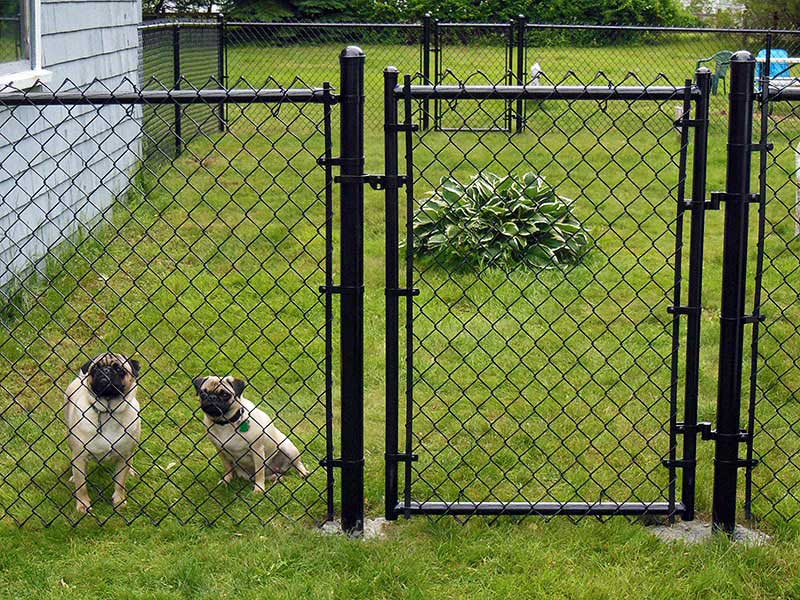
For many residential boundaries, a 2-inch nominal opening is a common option because it provides a familiar balance of visibility, appearance, and material use.
Smaller openings may be considered when the project requires a denser visual pattern or additional containment. Before choosing, consider whether children, pets, or small animals could pass through the openings or climb the fence.
If privacy is the main objective, changing the mesh opening alone may not provide the desired result. Privacy slats, screening, landscaping, or another fence system may be more appropriate.
Commercial and industrial fencing
Factories, warehouses, and commercial properties often prioritize perimeter definition, long-term durability, and manageable installation costs.
A 2-inch opening may be a suitable starting point for many standard chain link applications, but security requirements should determine the final specification.
Where access control or intrusion resistance matters, evaluate the entire system rather than choosing a smaller opening in isolation. Fence height, wire diameter, tension, post spacing, top protection, gates, and fittings all influence performance.
Sports courts
Sports facilities require particular attention to ball containment, visibility, and the type of activity.
Tennis courts, for example, may use 1-3/4-inch or 2-inch nominal mesh, depending on the design and governing specification. Other sports may have different requirements based on ball size, rebound behavior, and facility layout.
Do not choose a mesh opening solely because it is commonly used for another sport. Check the project's drawings and applicable requirements before ordering.
Poultry and small-animal enclosures
For chickens, rabbits, and other small animals, the main question is whether the animal can pass through or become trapped in the opening.
Smaller openings can improve containment, but the correct choice depends on the animal's age, size, behavior, and the enclosure's purpose.
If the enclosure also needs to exclude predators, consider the complete protection strategy, including the lower fence edge, buried barriers where appropriate, gates, and roof or overhead protection. Standard chain link mesh alone may not prevent every type of predator entry.
4. Opening Size and Wire Diameter: Why You Must Specify Both
One of the most common purchasing mistakes is comparing chain link mesh by opening size alone.
Two products may have the same nominal opening but use different wire diameters. Their weight, stiffness, material cost, and resistance to deformation can therefore differ.
For example, consider two chain link mesh products with a nominal opening of 2 inches:
Product A uses 2.0 mm wire.
Product B uses 3.0 mm wire.
Although the nominal opening is the same, Product B uses thicker wire and generally contains substantially more steel per unit area.
Wire diameter must also be described clearly for coated products. With PVC-coated chain link mesh, the supplier may state the steel core diameter and the finished diameter after coating. These are not interchangeable measurements.
When comparing quotations, confirm:
Nominal mesh opening and measurement convention
Steel wire core diameter
Finished diameter, if the wire is coated
Galvanized or PVC-coated finish
Zinc coating requirements, where applicable
Fence height and roll length
Applicable dimensional tolerances
A complete specification makes it much easier to compare equivalent products and identify why two quotations differ.
5. How Does Mesh Opening Affect Weight and Material Cost?
The relationship is straightforward: for the same wire diameter and mesh area, smaller openings generally require more wire.
A simplified way to understand this is to compare the number of wire sections in a given area. As the mesh spacing decreases, more wire is required to form the diamond pattern.
This means that a smaller opening may increase:
Steel consumption per square meter
Finished mesh weight
Material cost
Total shipment weight
Handling requirements for large orders
However, an accurate chain link mesh weight calculation is more complicated than simply dividing the area by the opening size. The wire follows a zigzag path through the diamond pattern, and the result depends on the mesh geometry, wire diameter, and actual measurement convention.
For an accurate quotation, the manufacturer should calculate weight using the specified mesh size, wire diameter, roll dimensions, and coating.
A practical way to compare two quotations
Suppose two suppliers quote chain link mesh with the same nominal opening and roll dimensions, but the prices differ noticeably.
Before choosing the lower price, check the following:
Are both suppliers using the same steel core wire diameter?
Are the opening sizes measured and specified on the same basis?
Do both products have equivalent galvanizing or PVC coating requirements?
Are the roll widths and lengths identical?
Is the price for mesh only, or does it include fence posts, rails, fittings, or other accessories?
Are the quoted weights net product weights or gross packed weights?
This comparison often reveals whether the price difference comes from a genuine supplier advantage or from different product specifications.
6. Galvanized vs. PVC-Coated Chain Link Mesh: Does Opening Size Change?
The basic selection principle is the same for galvanized and PVC-coated chain link mesh: choose the opening according to the application, then select the wire diameter and coating to meet the environmental and performance requirements.
Galvanized chain link mesh
Galvanized mesh uses a zinc coating to protect the underlying steel. It is commonly considered for residential, commercial, industrial, and agricultural fencing.
The suitability of a galvanized product depends on the coating specification, manufacturing process, exposure conditions, and maintenance requirements.
PVC-coated chain link mesh
PVC-coated mesh adds a polymer layer over the steel wire and offers additional color options. It may be selected when the project requires a particular appearance or a coated finish.
For this product, buyers should distinguish the steel core diameter from the finished coated diameter. The coating adds to the overall wire size and affects the finished product's appearance and weight.
Neither coating automatically makes every product suitable for every environment. Confirm the material, coating specification, and expected exposure conditions before ordering.
7. How to Measure Chain Link Mesh Opening Size Correctly
If you already have a sample of chain link mesh, measuring it can help you identify the approximate specification. However, a quick measurement should not replace the manufacturer's agreed dimensional standard.
Follow these steps:
Step 1: Lay the mesh flat. Place the sample on a flat surface and avoid pulling or stretching it excessively.
Step 2: Identify the diamond orientation. Make sure you are measuring the same dimension used in the product specification.
Step 3: Measure several openings. Measuring multiple adjacent diamonds can reduce the effect of small measurement errors. Divide the total measured distance by the number of intervals if appropriate for the measurement method.
Step 4: Record the wire diameter separately. Do not use the outside dimension of a coated wire as the steel core diameter unless that is the specified measurement.
Step 5: Confirm the nominal size with the supplier. Provide photographs, measurements, and the sample if available. Ask the manufacturer to confirm the nominal mesh size and applicable tolerance.
For existing fences, deformation, tension, coating, and installation can make field measurements less reliable. If the mesh must match an existing installation, send a representative sample or detailed measurements before production.
8. Common Mistakes When Selecting Chain Link Mesh Opening Size
Choosing the smallest opening automatically
A smaller opening is not always necessary. It can increase material consumption and cost without solving the actual problem. Start with the application's requirements.
Ignoring wire diameter
Opening size and wire diameter serve different purposes. Both should be specified to ensure the supplier quotes the correct product.
Assuming smaller mesh means higher security
Security depends on the entire fencing system, including height, wire construction, posts, fixings, gates, and site design. Mesh opening alone does not establish a security rating.
Forgetting the actual containment requirement
For pets, livestock, and poultry, consider whether the mesh can contain the intended animal safely. The appropriate size depends on animal behavior and the overall enclosure design.
Comparing prices without checking the specifications
Different opening sizes, wire diameters, coatings, and roll dimensions can make apparently similar products very different. Compare complete specifications rather than price alone.
Not confirming the measurement convention
Ask the manufacturer how the nominal mesh size is defined. This is particularly important when converting between inches and millimeters or matching an existing fence.
9. Chain Link Mesh Specification Checklist for Buyers
Before requesting a quotation, prepare as many of the following details as possible.
Specification
What to confirm
Mesh opening Nominal size and measurement convention
Wire diameter Steel core diameter and tolerance
Finished diameter Required for coated wire, where applicable
Material and finish Galvanized, PVC-coated, or another specified construction
Coating requirements Zinc coating or PVC finish requirements
Mesh height Finished fence or mesh height
Roll length Required length per roll
Quantity Number of rolls or total area
Application Residential, industrial, sports, agriculture, or another use
Accessories Posts, rails, tension wire, ties, gates, and fittings if required
Packaging Bundling, wrapping, pallets, or export packing
Destination Delivery location and project schedule
If you are unsure which mesh opening is suitable, provide the application, required fence height, expected use, and any project drawings. A manufacturer can help compare available options before the final specification is confirmed.
Frequently Asked Questions
What is the most common chain link mesh opening size?
A nominal 2-inch opening is commonly used in many standard chain link fencing applications. However, the appropriate size depends on the intended use, wire diameter, local requirements, and project specification.
Is a 1-inch chain link mesh opening better than a 2-inch opening?
Not necessarily. A 1-inch opening creates a denser mesh pattern and may be more suitable for certain containment or screening requirements. A 2-inch opening may offer a more open appearance and lower material consumption for otherwise comparable specifications. The right choice depends on the application.
Does smaller chain link mesh cost more?
It often does when wire diameter and other specifications are the same, because smaller openings generally require more wire per unit area. Actual prices also depend on material, coating, roll dimensions, quantity, and manufacturing requirements.
Can chain link mesh opening size be customized?
Many manufacturers can produce different nominal opening sizes within their available production range. Confirm the required size, wire diameter, tolerances, and order quantity before placing a custom order.
What is the difference between mesh opening and wire diameter?
Mesh opening describes the size of the diamond-shaped space, according to the specified measurement convention. Wire diameter describes the thickness of the wire used to form the mesh. Both affect the final product, but they measure different characteristics.
How do I choose chain link mesh for a high-security fence?
Begin with the required security objective and applicable project specifications. Evaluate the mesh opening alongside wire diameter, fence height, post and fixing design, gates, top protection, and the overall installation. A smaller opening by itself does not guarantee high-security performance.
Conclusion: Choose Mesh Opening Size Based on the Job
Selecting the right chain link wire mesh opening size starts with understanding what the fence needs to do.
Larger openings may suit applications that prioritize visibility and material economy. Smaller openings may be more appropriate when a denser mesh pattern or tighter containment is needed. In both cases, the wire diameter, coating, dimensions, and complete fencing design remain essential.
For distributors, contractors, and project buyers, the most reliable approach is to define the application first, confirm the measurement convention, and compare suppliers using the same complete specification.
Looking for chain link wire mesh for your next project? Share your required opening size, wire diameter, mesh height, roll length, coating, and order quantity to request a comparable quotation from a manufacturer.
-
-
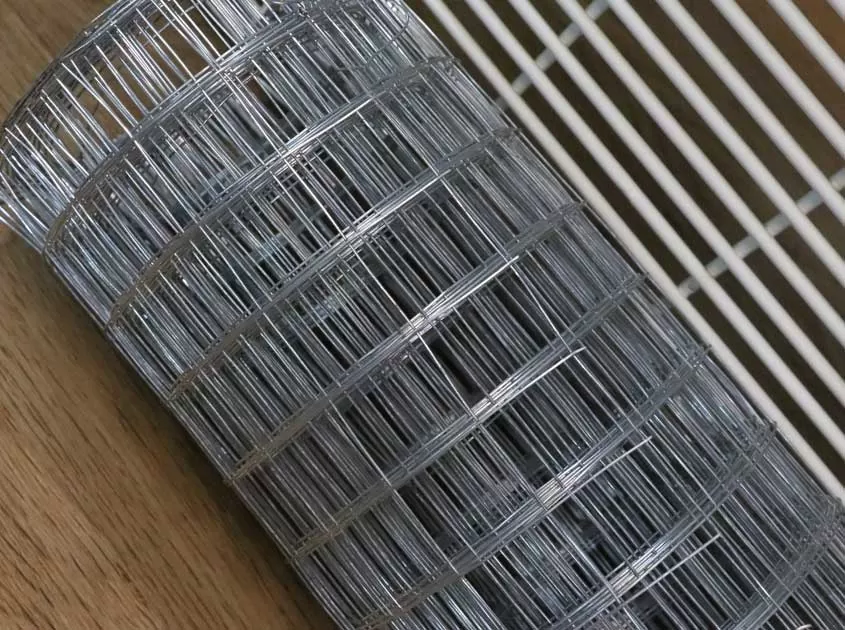 What Is Galvanized Wire Mesh and Why Is It Popular? Aug 26, 2026




- Tel.: +86 311 83077076
- E-mail: sales@qunkunmetal.com
- Skype: qunkunsales01
- WhatsApp: 8618032412189
- Add.: No.69 The Filter Industrial Park of Anping, Hebei, China


