


Welded Wire Mesh Rolls for Agriculture and Construction: Applications and Selection Guide
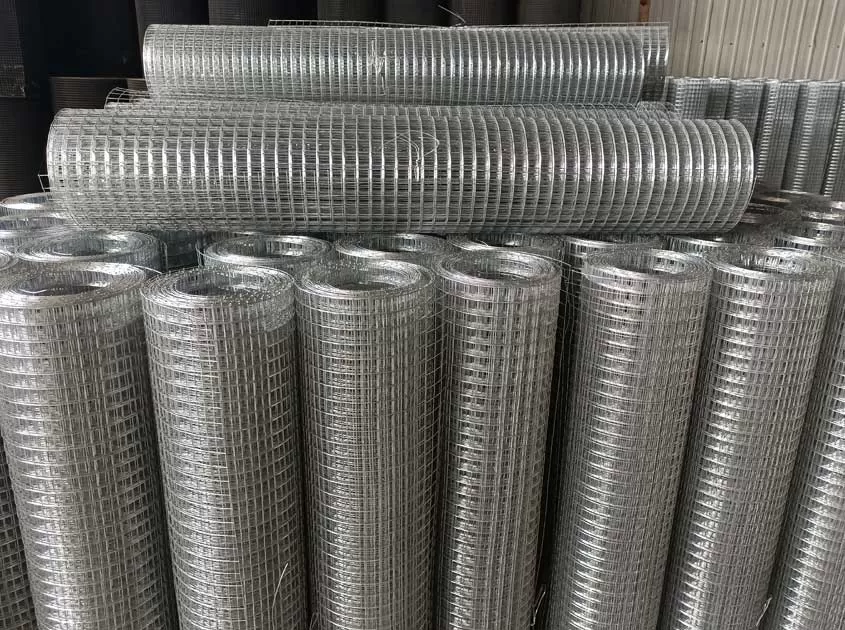
Welded wire mesh rolls are widely used in agricultural and construction projects where a consistent grid structure, convenient handling, and adaptable dimensions are important. Made by welding intersecting steel wires together, this mesh provides a regular pattern that can be cut and installed for a variety of practical purposes.
In agriculture, welded wire mesh rolls can help protect crops, enclose gardens, separate small-animal areas, and support selected plant-protection applications. In construction, they may be used for partitioning, concrete-related work where the product is specifically designed and approved for that purpose, and various site applications.
However, welded wire mesh rolls are not a universal solution. A lightweight garden mesh cannot replace a structural reinforcement product, and a general-purpose mesh roll may not meet the safety requirements of a livestock enclosure or construction project.
This guide explores how welded wire mesh rolls are used in agriculture and construction, what specifications buyers should compare, and how to choose the right product for the intended application.
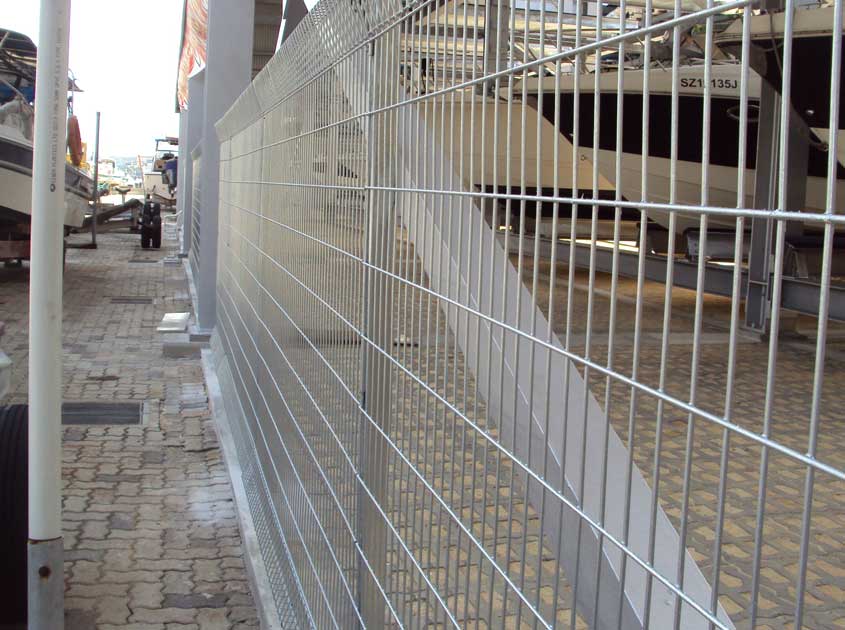
What Are Welded Wire Mesh Rolls?
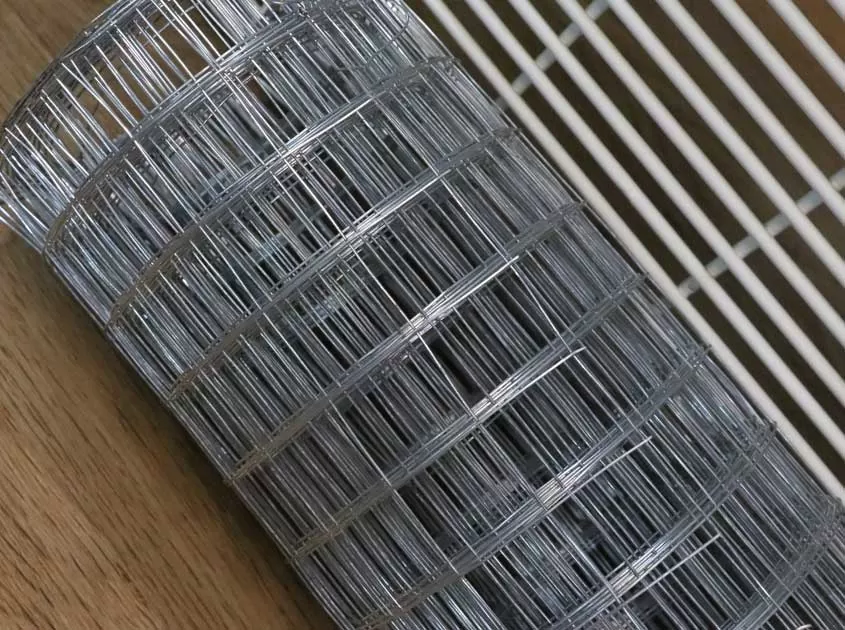
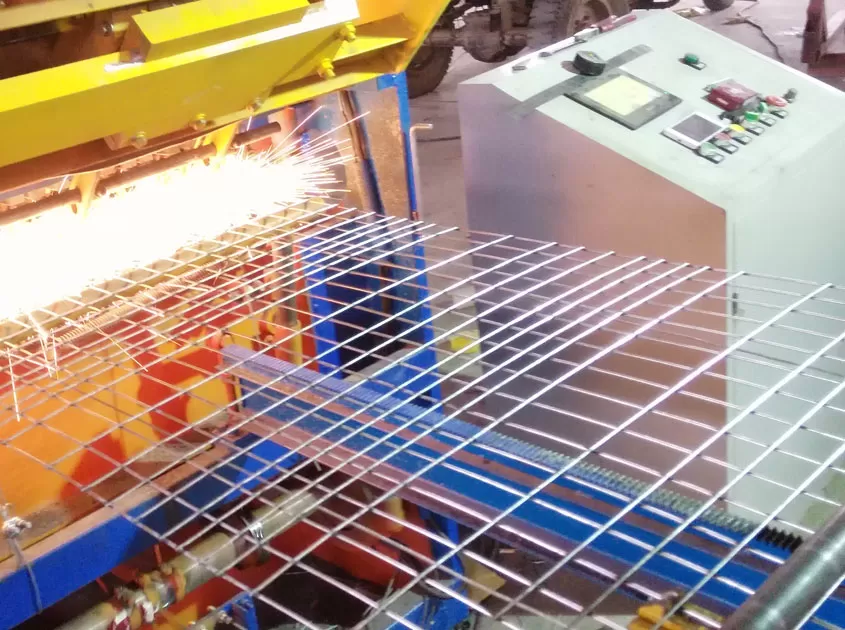
Welded wire mesh rolls are manufactured by arranging longitudinal and cross wires into a grid and joining their intersections through resistance welding or another suitable welding process.
Unlike woven wire mesh, which is formed by interlacing wires, welded mesh has fixed intersections. This creates a regular grid pattern that is useful when consistent openings and relatively stable geometry are required.
Typical product specifications include:
Wire diameter
Mesh opening
Roll width and length
Material grade
Galvanizing method
PVC coating, if required
Wire and opening tolerances
Packaging and quantity
Depending on the product design, welded wire mesh rolls may be manufactured from galvanized steel wire, low-carbon steel wire, or PVC-coated wire.
The correct specification depends on the application, expected loading, environmental exposure, and relevant project requirements.
Part 1: Welded Wire Mesh Roll Applications in Agriculture
Agricultural buyers often need mesh that is easy to handle, practical to install, and suitable for outdoor exposure. Welded wire mesh rolls can serve several purposes, particularly in gardens, crop areas, and selected light-duty enclosures.
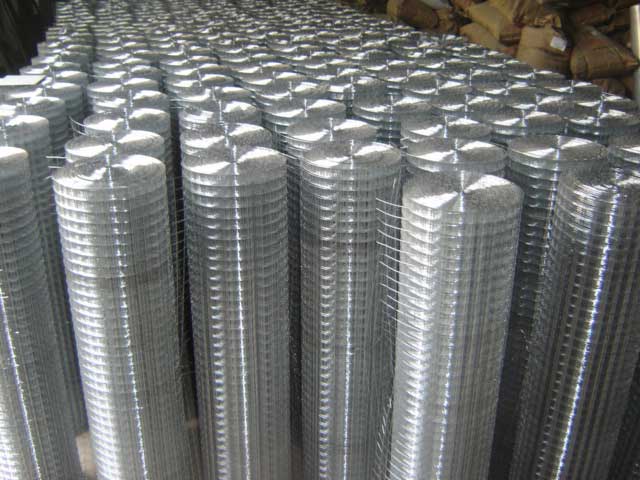
1. Garden and Vegetable Plot Protection
One common use is creating boundaries around vegetable gardens and cultivated plots.
Welded wire mesh can help separate planted areas from surrounding spaces and can be attached to suitable posts or frames.
Potential applications include:
Vegetable garden boundaries
Community gardens
Small crop plots
Raised garden areas
Planting beds
Garden access restrictions
The mesh opening should be selected according to the intended purpose. If the main objective is to keep out small animals, a large opening may not provide adequate protection.
Buyers should also consider the height of the enclosure, the possibility of animals digging underneath, and the strength of the supporting posts.
Buying tip: For garden projects, compare opening size and wire diameter first, then select a suitable corrosion-protection system for the outdoor environment.
2. Poultry Runs and Small-Animal Enclosures
Welded wire mesh rolls may be used to construct enclosures for chickens, rabbits, and other small animals when the selected mesh design is suitable.
The fixed grid can make it easier to fabricate rectangular enclosure sections or attach mesh to a timber or metal frame.
Before purchasing, check:
Whether the openings are small enough for the intended animals
Whether the wire is sufficiently robust for the enclosure
Whether the animals can chew, climb, push, or dig through vulnerable sections
Whether the edges need additional protection
Whether predators are a concern
Not every welded wire mesh product is suitable for poultry or small animals. Lightweight mesh may be inappropriate where stronger containment or predator protection is required.
For specialist animal housing, consider animal-welfare requirements and local regulations before finalizing the specification.
3. Crop Protection and Plant Support
In some agricultural and horticultural settings, welded wire mesh can be incorporated into support frames or protective structures.
Potential uses include:
Supporting climbing plants
Separating planting zones
Protecting young plants
Creating trellis-style structures
Supporting selected garden netting systems
The suitability of the mesh depends on plant type, growth pattern, installation design, and the expected weight placed on the structure.
A roll intended for light garden use should not automatically be treated as a structural trellis material for heavy or mature plants. Confirm the wire diameter, span, fixing points, and support arrangement.
For applications involving direct contact with edible crops, also consider the material and coating suitability for the intended environment.
4. Farmyard Dividers and Storage Areas
Welded wire mesh can also be used to divide selected farmyard spaces, organize storage areas, or create boundaries around tools and agricultural supplies.
Examples include:
Feed and equipment storage
Small farm workshops
Garden tool areas
Non-structural internal partitions
Storage cages
Its regular grid can make it easy to see through an enclosure while keeping items separated.
However, the required strength varies considerably. A partition for tools is different from an enclosure intended to contain large livestock.
For cattle, horses, and other powerful animals, compare purpose-designed livestock fencing before selecting general-purpose welded wire mesh.
5. Tree Guards and Young Plant Protection
Welded wire mesh can be cut and formed into guards around young trees or selected plants.
The purpose is generally to create a physical barrier against animal contact or accidental damage.
When designing tree guards, consider:
Guard diameter and height
Opening size
Wire flexibility and cutting method
Distance between the mesh and the trunk
Ground fixing
Corrosion resistance
Whether the guard can be removed as the tree grows
Avoid fastening a rigid guard so tightly that it restricts trunk growth. Inspect the guard periodically and adjust or replace it when necessary.
Part 2: Welded Wire Mesh Roll Applications in Construction
Construction projects use several types of welded wire products, but it is important to distinguish general-purpose mesh rolls from engineered reinforcement mesh and prefabricated building products.
6. Construction Site Separation and Temporary Enclosures
Welded wire mesh rolls may be used in selected temporary boundaries, internal partitions, and site enclosures when the product and support system are suitable.
Possible uses include:
Separating material storage areas
Creating temporary internal boundaries
Enclosing selected equipment areas
Organizing work zones
Fabricating mesh panels for site use
The mesh may be fixed to timber or metal posts, or incorporated into a purpose-designed frame.
Before using it on a construction site, determine whether the application requires impact resistance, controlled access, fall protection, or another specific safety function. General-purpose mesh alone should not be assumed to satisfy those requirements.
For procurement, contractors should clarify whether they need rolls for on-site fabrication or prefabricated welded mesh panels.
7. Concrete Reinforcement Applications: Use the Correct Product
Welded wire reinforcement is used in some concrete applications, including certain slabs, pavements, and other engineered elements.
However, general-purpose welded wire mesh rolls are not automatically suitable for structural concrete reinforcement.
Structural reinforcement products must meet the project's engineering design, applicable standards, material requirements, and inspection criteria. In many markets, reinforcement mesh is supplied as purpose-made sheets or engineered products rather than ordinary lightweight rolls.
Before purchasing reinforcement mesh, confirm:
Required wire diameter or bar size
Mesh spacing
Steel grade
Design strength and applicable standards
Sheet or roll format permitted by the design
Lap, anchorage, and placement requirements
Inspection and documentation requirements
The engineer responsible for the structure should approve the reinforcement specification. Do not substitute a general-purpose agricultural or construction mesh roll for designed reinforcement solely because the openings appear similar.
8. Wall and Partition-Related Applications
Welded wire mesh may be incorporated into selected non-load-bearing partition systems, backing arrangements, or other construction assemblies where the design specifically calls for it.
Its role depends on the complete assembly. The mesh may serve as a backing, a support component, or a physical divider, but it does not independently provide every function associated with a finished wall.
For these applications, confirm:
Whether the mesh is embedded, fixed, or exposed
Compatibility with the surrounding materials
Required opening size and wire diameter
Corrosion protection
Fixing method and support spacing
Any fire, durability, or building-code requirements
Where plaster, mortar, or another finish is involved, the specified mesh type must be compatible with the system. Some applications require specialized lath or reinforcement products rather than ordinary welded wire mesh.
9. Drainage, Landscaping, and Ground-Related Projects
Welded wire mesh can be incorporated into certain landscaping and ground-related projects, including selected framed structures, plant-protection systems, and non-structural enclosures.
Its suitability depends on the design and environmental exposure.
For outdoor or ground-contact applications, buyers should consider:
Soil moisture
Fertilizers and chemicals
Contact with dissimilar metals
Mechanical loads
Expected maintenance
The required service environment
Ordinary welded wire mesh should not be assumed to function as a retaining structure or engineered erosion-control system without a design that specifically supports that use.
Where the mesh will be buried, exposed to aggressive soil, or used in a load-bearing assembly, consult the project engineer about material, coating, and structural requirements.
Agriculture vs. Construction: How Do the Requirements Differ?
Although the same product category may appear in both industries, the purchasing priorities can be very different.
Factor
Agriculture and Horticulture
Construction
Main purpose Plant protection, enclosures, dividers Site separation, building assemblies, specified reinforcement
Opening size Based on animal, plant, or containment needs Based on design and application requirements
Wire diameter Based on enclosure strength and handling Based on specified loads and intended function
Corrosion protection Important for outdoor and farm exposure Depends on exposure and the building assembly
Product format Rolls are often convenient Rolls or sheets, depending on application
Installation Posts, frames, clips, or ties Project-specific fixing or engineered placement
Documentation Product specification and quality checks May require formal standards, certificates, and engineering approval
The most important distinction is that agricultural mesh is often selected around practical containment and environmental needs, while construction applications may require compliance with a defined technical design.
How to Choose the Right Welded Wire Mesh Roll
A practical buying process starts with the application and works toward the exact specification.
1. Define the Intended Use
Describe what the mesh needs to do: enclose poultry, protect a garden, divide a storage area, or serve a specific construction function.
Avoid ordering solely by the general name "welded wire mesh."
2. Select the Mesh Opening
Opening size influences containment, visibility, and the mesh's overall structure.
For animal enclosures, consider the animal's size and behavior. For construction applications, follow the specified design rather than choosing an opening based on appearance alone.
3. Confirm the Wire Diameter
Wire diameter affects product weight and physical characteristics.
When comparing quotations, confirm the specified diameter and any applicable tolerance. For coated mesh, clarify whether the dimension refers to the steel core or the finished coated wire.
4. Choose the Material and Coating
Common options include:
Galvanized steel wire
PVC-coated galvanized wire
Other specified steel materials or finishes
Outdoor agricultural use may involve moisture, soil contact, fertilizers, or cleaning chemicals. Construction use may involve a different exposure profile.
Choose the coating according to the actual conditions, not just the product name.
5. Confirm Roll Dimensions
Specify:
Roll width
Roll length
Mesh opening
Wire diameter
Quantity
Packaging requirements
For large orders, roll dimensions also influence handling, transport, and material planning.
6. Review the Installation Method
Consider whether the mesh will be fixed to timber posts, metal frames, concrete supports, or another structure.
Confirm whether the order includes only the mesh or also includes accessories such as clips, ties, posts, and frames.
7. Request Technical Details Before Ordering
For routine applications, a clear specification and sample may be sufficient. For construction products with engineering or compliance requirements, request the relevant technical documents and confirm that the product meets the project specification.
What Should Buyers Include in a Welded Wire Mesh Inquiry?
A complete inquiry helps suppliers provide more accurate quotations and reduces misunderstandings.
Item
Information to Provide
Application Garden enclosure, poultry run, site partition, or specified construction use
Mesh opening Required width × height
Wire diameter Required diameter and tolerance
Material Steel type or specified grade
Surface treatment Galvanized, PVC-coated, or other requirement
Roll dimensions Width and length
Quantity Rolls, square meters, or other agreed unit
Installation Posts, frame, embedded use, or other method
Standards Required standard or project specification, if applicable
Destination Country or delivery port
Packaging Bundle, pallet, or other requirement
If the final specification has not yet been decided, provide a project description, photographs, approximate dimensions, and the intended application. The supplier can then help identify suitable options for further evaluation.
Common Mistakes When Buying Welded Wire Mesh Rolls
Choosing Mesh Only by Price
Two products may have the same roll dimensions but different wire diameters, openings, coatings, and material specifications. Compare the complete specification before evaluating price.
Using Lightweight Mesh for a Heavy-Duty Application
Mesh intended for a garden or small-animal enclosure may not provide sufficient strength for heavy livestock, industrial safety, or structural construction.
Ignoring Coating Requirements
Outdoor use, ground contact, and chemical exposure can affect coating performance. Confirm the material and corrosion-protection requirements for the actual environment.
Confusing General-Purpose Mesh with Reinforcement Mesh
Structural reinforcement requires an approved product specification. A similar-looking grid does not necessarily have the same material properties or engineering suitability.
Forgetting Installation Accessories
The mesh roll may be only one component of the finished installation. Posts, frames, fasteners, tensioning arrangements, and foundations can all affect the final result.
Frequently Asked Questions
What is welded wire mesh roll used for in agriculture?
Common uses include garden fencing, crop protection, poultry enclosures, small-animal runs, tree guards, and selected plant-support structures. The mesh must be appropriate for the specific animal, plant, and environmental conditions.
Can welded wire mesh rolls be used in construction?
Yes, for selected site enclosures, partitions, and other applications where the product specification is suitable. Structural or safety-critical applications require the appropriate designed and approved product.
Is galvanized welded wire mesh suitable for outdoor agricultural use?
It can be suitable, depending on the galvanizing specification, environmental exposure, and expected maintenance. Soil contact, fertilizers, humidity, and other local conditions should be considered.
What is the difference between welded wire mesh rolls and welded mesh panels?
Rolls are generally supplied in continuous lengths and are useful where flexible handling or on-site cutting is required. Panels are supplied as separate sheets and may be more convenient for rigid structures or applications requiring defined dimensions. The appropriate format depends on the product and installation.
How do I select the mesh opening and wire diameter?
Start with the application and its containment, strength, or design requirements. Then confirm the opening, wire diameter, material, and coating together. For engineered construction uses, follow the approved specification.
Can welded wire mesh rolls be customized?
Many suppliers offer different wire diameters, openings, roll widths, lengths, materials, and coatings. Availability depends on the manufacturer's production range and the order quantity.
Conclusion: Match the Mesh to the Job
Welded wire mesh rolls offer practical solutions for a range of agricultural and construction applications. They can help create garden enclosures, protect selected crops, organize farm storage, and form suitable site boundaries or other specified construction assemblies.
The key is to recognize that similar-looking mesh products may have very different capabilities.
For agriculture, start with the plant, animal, or enclosure requirement. For construction, begin with the intended function and any applicable engineering or safety specification. Then confirm the mesh opening, wire diameter, material, coating, dimensions, and installation method.
For importers, distributors, contractors, and project buyers, a detailed inquiry makes it easier to compare products accurately and avoid ordering mesh that does not fit the intended use.
Need welded wire mesh rolls for an agricultural or construction project? Share your application, required opening, wire diameter, coating, roll dimensions, quantity, and destination market to help your supplier recommend an appropriate specification.
-
-
 What Is Galvanized Wire Mesh and Why Is It Popular? Aug 26, 2026
 Galvanized Welded Wire Mesh Roll Manufacturer China Jul 21, 2026



- Tel.: +86 311 83077076
- E-mail: sales@qunkunmetal.com
- Skype: qunkunsales01
- WhatsApp: 8618032412189
- Add.: No.69 The Filter Industrial Park of Anping, Hebei, China


