


What Is Galvanized Wire Mesh and Why Is It Popular?
Galvanized wire mesh is a type of steel wire mesh protected by a layer of zinc to improve its resistance to corrosion. It is one of the most widely used wire mesh products for construction, agriculture, fencing, industrial applications, ventilation, filtration, and general-purpose protection.
Its popularity comes from a practical combination of corrosion resistance, strength, versatility, relatively low cost, and easy installation.
Compared with untreated steel mesh, galvanized wire mesh can provide a significantly longer service life in many outdoor and humid environments. At the same time, it is generally more economical than stainless steel mesh, making it a popular choice for projects where both performance and cost matter.
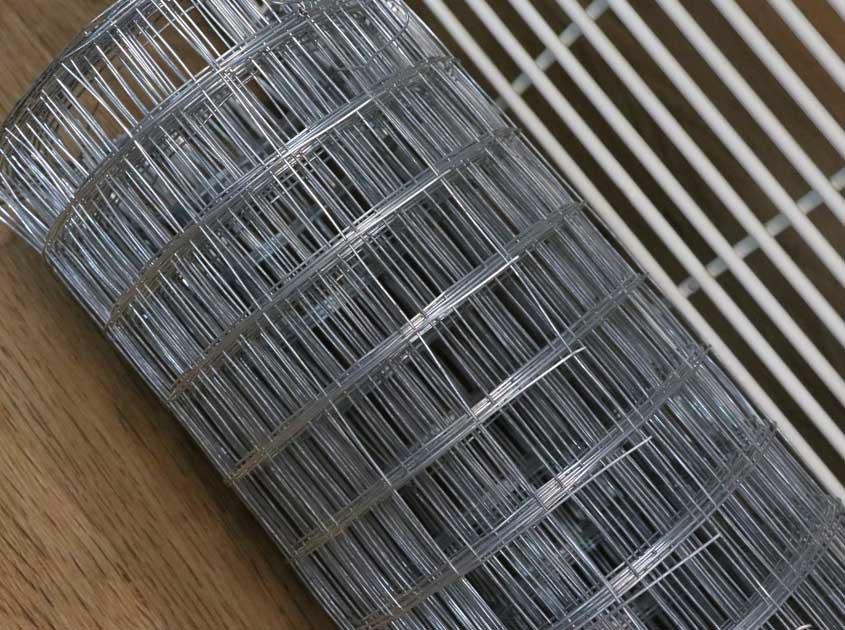
This guide explains what galvanized wire mesh is, how it is made, the different types available, where it is used, and how to choose the right specification.
What Is Galvanized Wire Mesh?
Galvanized wire mesh is manufactured from steel wire that has been coated with zinc to help protect the underlying steel from corrosion.
The mesh itself can have different structures, including:
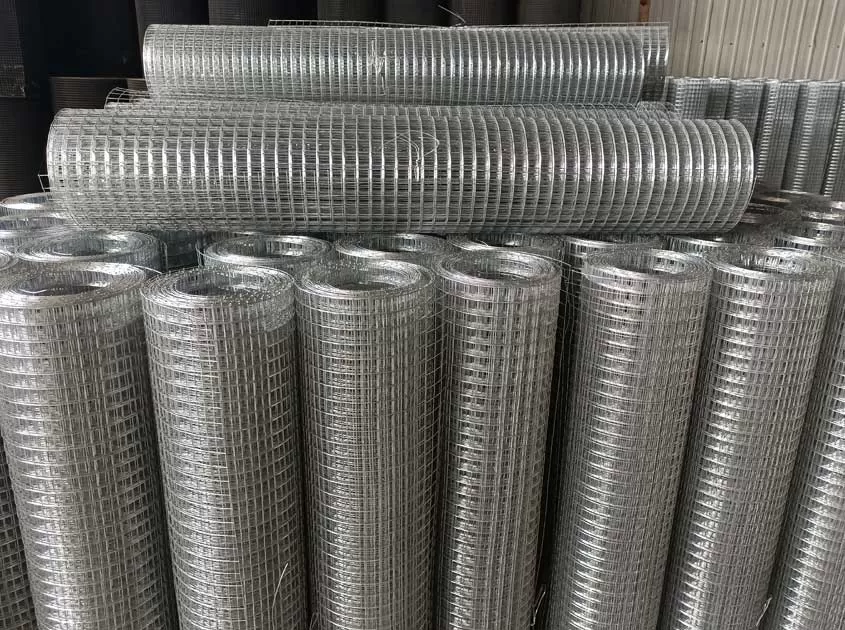
Welded wire mesh
Woven wire mesh
Hexagonal wire mesh
Chain link mesh
Expanded or specialized mesh structures
Therefore, galvanized wire mesh describes the surface treatment and material protection rather than one specific mesh pattern.
The zinc coating acts as a protective barrier between the steel and the surrounding environment.
Why Is Galvanized Wire Mesh Popular?
There are several reasons galvanized wire mesh is widely used.
1. Good Corrosion Resistance
The primary advantage of galvanizing is improved corrosion resistance.
Zinc protects the steel by providing both a physical barrier and sacrificial protection.
This makes galvanized wire mesh suitable for many:
Outdoor applications
Agricultural projects
Construction projects
Industrial environments
However, galvanized mesh is not completely corrosion-proof. Highly corrosive environments may require stainless steel or another specialized material.
2. Cost-Effective
Galvanized steel is generally more affordable than stainless steel.
For large projects involving thousands of square meters of mesh, the material cost can have a significant effect on the total project budget.
Galvanized wire mesh therefore provides a practical balance between:
Performance + Service Life + Cost
3. Good Mechanical Strength
Steel wire provides good tensile and structural strength.
Depending on the mesh type and wire diameter, galvanized wire mesh can be used for:
Fencing
Reinforcement
Animal enclosures
Protective barriers
Construction applications
Heavier wire generally provides greater mechanical strength.
4. Versatile
Galvanized wire mesh is available in many configurations.
You can choose different:
Wire diameters
Mesh openings
Widths
Lengths
Mesh patterns
Coating specifications
This allows the same basic material to serve very different industries.
5. Easy to Handle and Install
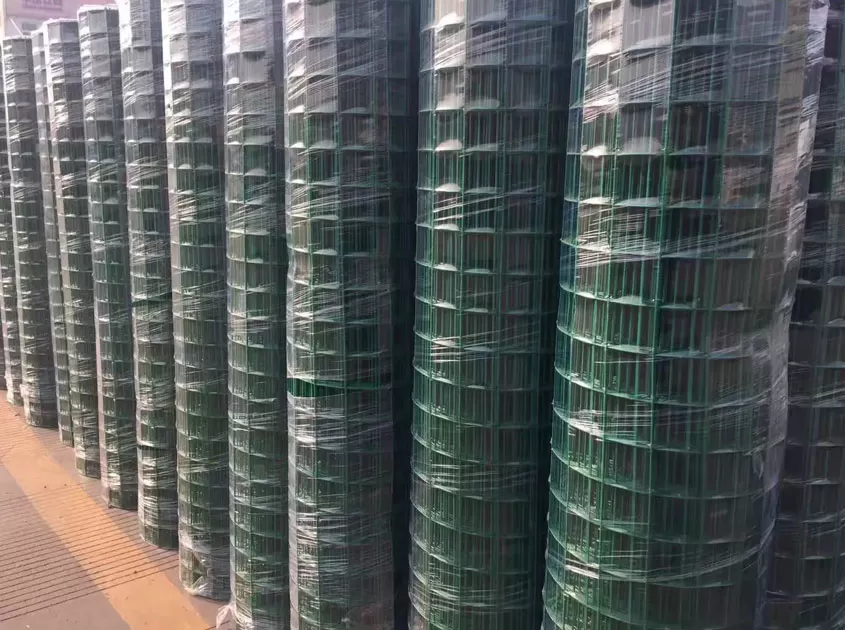
Many galvanized wire mesh products can be supplied in rolls or panels.
Roll products are convenient for:
Large-area fencing
Agriculture
Garden protection
Temporary barriers
Panels provide greater rigidity and are often preferred for:
Construction
Animal fencing
Industrial barriers
Security applications
How Is Galvanized Wire Mesh Made?
The manufacturing process depends on the type of galvanized mesh.
A typical process includes:
Step 1 — Steel Wire Production
Steel rod is drawn into wire with the required diameter.
Step 2 — Galvanizing
The wire receives a zinc coating.
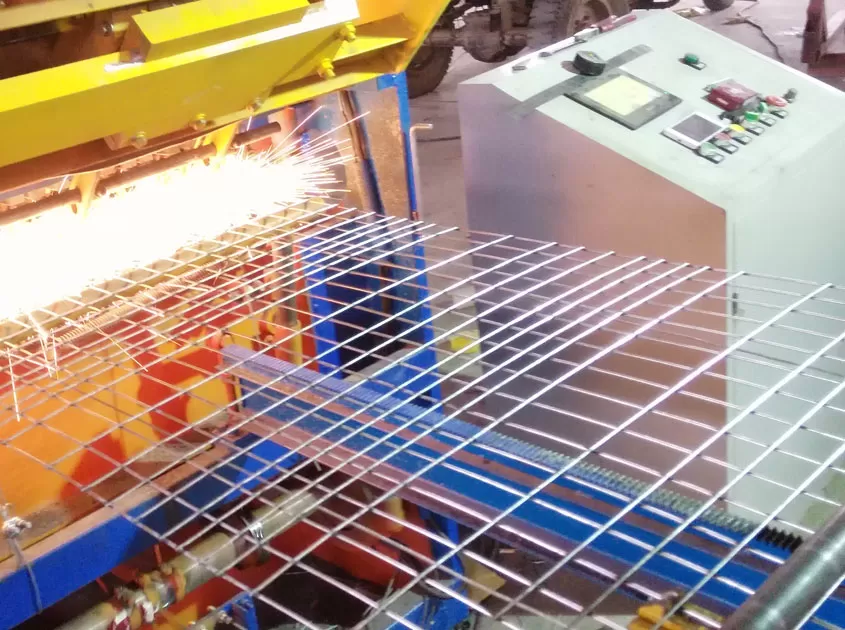
Step 3 — Mesh Production
The galvanized wire is then:
Woven
Welded
Twisted
according to the required mesh structure.
Step 4 — Cutting and Forming
The mesh is produced in rolls or panels according to the required dimensions.
Step 5 — Inspection and Packaging
The finished mesh is inspected for:
Mesh opening
Wire diameter
Dimensions
Coating
Weld or weave quality
It is then packaged for domestic or international transportation.
What Are the Main Types of Galvanized Wire Mesh?
Galvanized Welded Wire Mesh
Welded wire mesh consists of longitudinal and transverse wires welded together at their intersections.
It provides:
High rigidity
Uniform openings
Good dimensional stability
Easy installation
Applications include:
Construction
Animal fencing
Garden fencing
Machine guards
Protective barriers
Galvanized Woven Wire Mesh
Woven wire mesh is produced by interweaving wires.
It can be manufactured in patterns such as:
Plain weave
Twill weave
Dutch weave
Woven mesh is often selected when flexibility, filtration, screening, or precise openings are important.
Applications include:
Screening
Sieving
Filtration
Industrial separation
General-purpose mesh
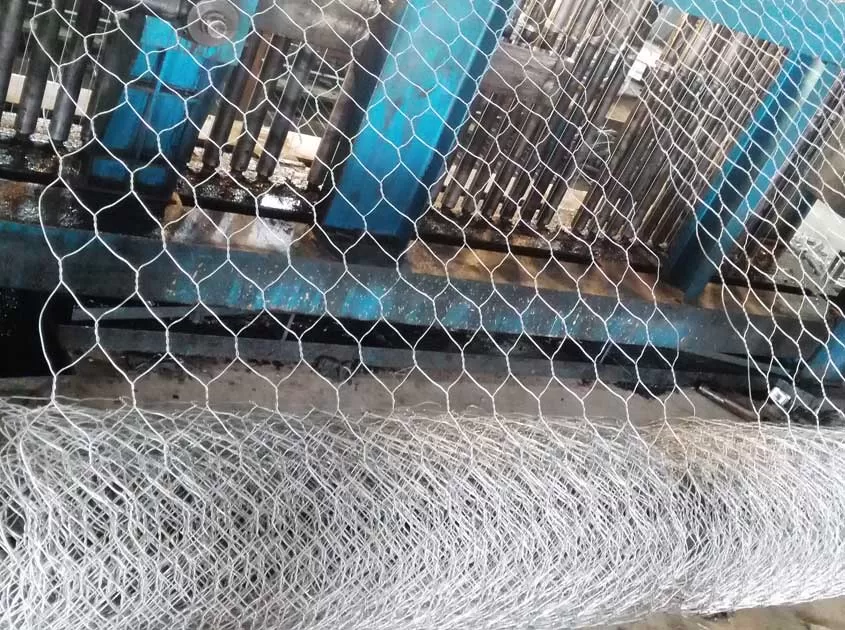
Galvanized Hexagonal Wire Mesh
Hexagonal wire mesh is produced by twisting wires into hexagonal openings.
It is widely known as chicken wire when supplied in lighter specifications.
Applications include:
Poultry fencing
Rabbit cages
Garden protection
Agricultural fencing
Tree protection
Construction applications
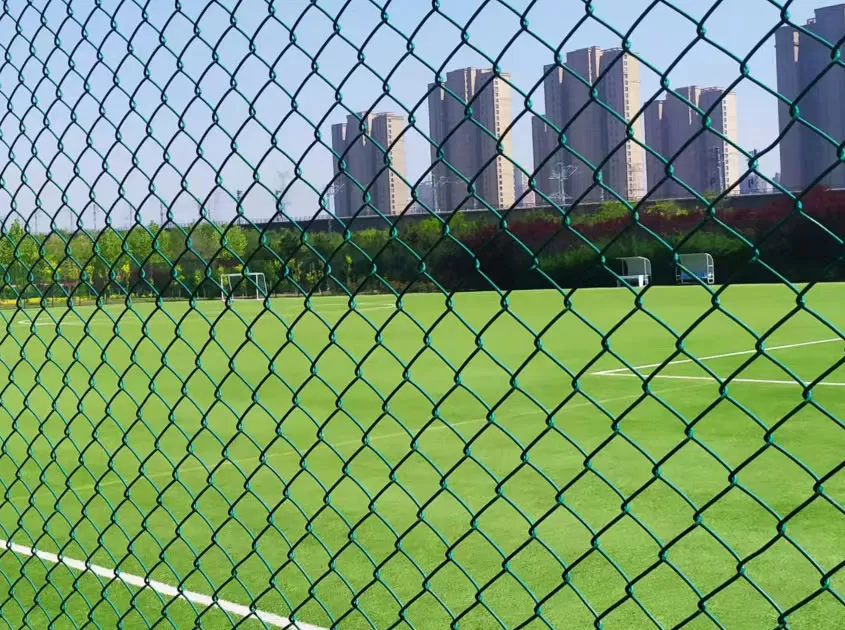
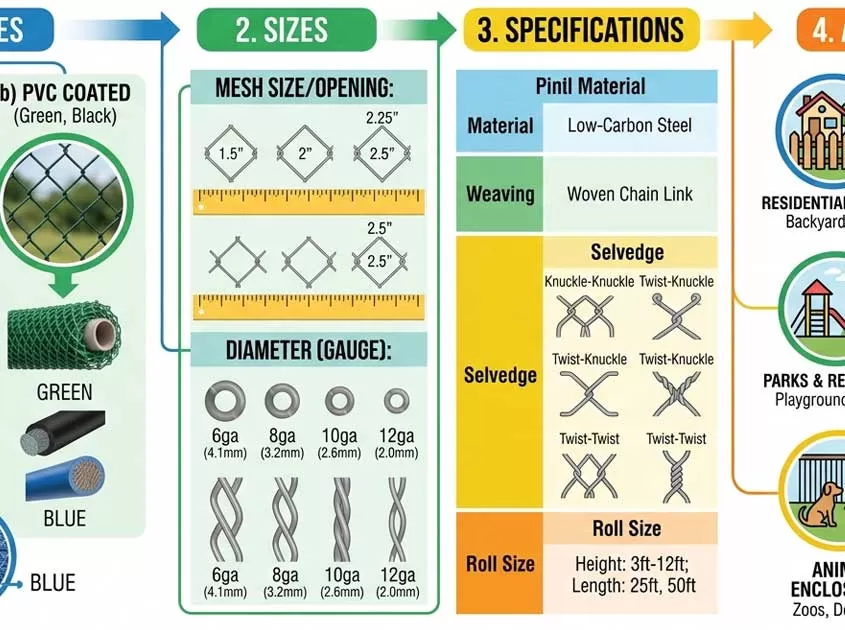
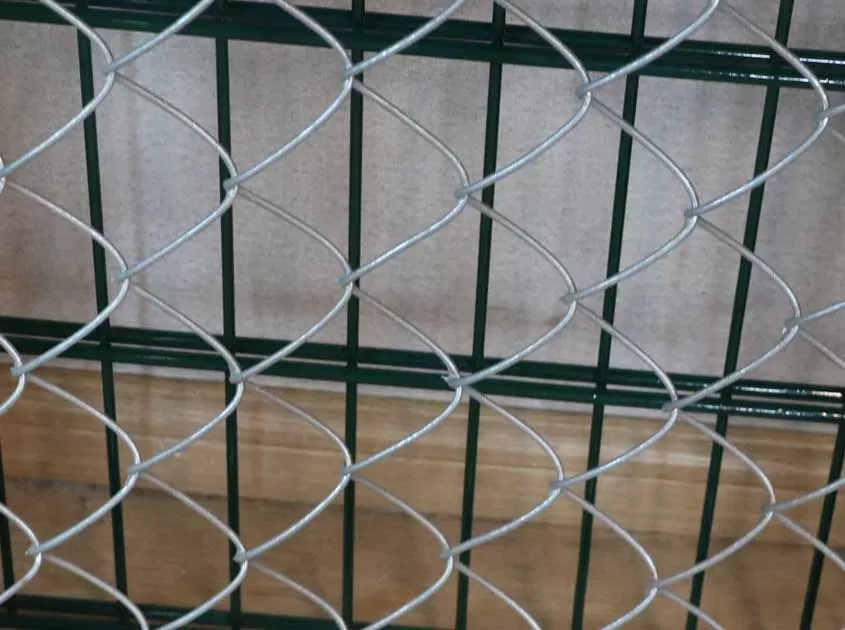
Galvanized Chain Link Mesh
Chain link mesh is manufactured by forming steel wire into continuous diamond-shaped openings.
Galvanized chain link is commonly used for:
Perimeter fencing
Sports facilities
Industrial sites
Construction sites
Agricultural properties
Security boundaries
It is particularly useful when a flexible, economical fence system is required.
What Galvanizing Methods Are Used?
Two common galvanizing methods are:
Hot-Dip Galvanizing
The steel wire or finished mesh is immersed in molten zinc.
Advantages can include:
Relatively thick zinc coating
Good corrosion resistance
Suitable for outdoor applications
Electro Galvanizing
Zinc is applied using an electrochemical process.
Advantages include:
Smooth surface
More uniform appearance
Generally thinner zinc coating
Often lower initial cost
The appropriate method depends on the expected environment and service-life requirements.
Galvanized Before Welding or Weaving vs After
Galvanized mesh can be manufactured using different production sequences.
Galvanized Before Welding
The wire is galvanized first and then welded into mesh.
Advantages
Smooth appearance
Zinc protection over much of the wire surface
Suitable for many general-purpose applications
However, welding can affect the zinc coating around weld points.
Galvanized After Welding
The mesh is welded first and then galvanized.
Advantages
The zinc coating can cover the finished mesh structure, including welded areas.
This can provide enhanced corrosion protection for certain outdoor applications.
The choice depends on:
Environment
Mesh specification
Required service life
Production cost
What Specifications Should You Check?
When purchasing galvanized wire mesh, do not look only at the mesh opening.
Important specifications include:
Wire Diameter
For example:
1.0 mm
1.2 mm
1.6 mm
2.0 mm
2.5 mm
3.0 mm
4.0 mm
The actual available range depends on the mesh type.
Mesh Opening
Common openings vary widely.
Examples include:
6 × 6 mm
12 × 12 mm
25 × 25 mm
50 × 50 mm
100 × 100 mm
Larger openings generally provide greater openness and lower material consumption.
Roll or Panel Dimensions
For roll mesh, specify:
Width
Length
Roll diameter
Packaging
For panels, specify:
Width
Length
Wire diameter
Opening
Zinc Coating
For outdoor projects, the zinc coating level is an important specification.
A higher zinc coating can generally provide better corrosion protection, although actual service life also depends on:
Climate
Humidity
Pollution
Installation
Maintenance
For international orders, buyers should specify the required galvanizing standard or coating weight where applicable.
Where Is Galvanized Wire Mesh Used?
1. Construction
Galvanized wire mesh can be used for various construction purposes, including:
Reinforcement
Plaster support
Wall protection
Insulation support
Concrete-related applications
The exact mesh type should be selected according to the construction system and applicable standards.
2. Agriculture
Agriculture is one of the major application areas.
Galvanized mesh can be used for:
Poultry houses
Animal enclosures
Farm fencing
Crop protection
Garden protection
Storage areas
Its corrosion resistance makes it more suitable for outdoor agricultural environments than untreated steel mesh.
3. Garden and Landscaping
Garden applications include:
Plant protection
Tree guards
Vegetable gardens
Compost areas
Small animal barriers
Lightweight galvanized mesh is easy to cut and form around plants and garden structures.
4. Industrial Applications
Galvanized wire mesh can be used for:
Machine guards
Safety barriers
Storage cages
Equipment protection
Material screening
Ventilation guards
The required wire diameter and opening should be selected according to the mechanical and operational requirements.
5. Animal Fencing
Galvanized mesh is commonly used for:
Poultry
Rabbits
Dogs
Small livestock
Farm animals
Different animals require different opening sizes and wire strengths.
6. Perimeter Fencing
Galvanized welded mesh and chain link mesh are widely used for property boundaries.
Applications include:
Warehouses
Factories
Farms
Construction sites
Sports grounds
Commercial properties
7. Ventilation and Protective Covers
Fine galvanized woven mesh can be used as a protective barrier over:
Ventilation openings
Equipment
Air intake areas
Mechanical systems
The mesh opening can be selected according to the required airflow and protection.
8. Screening and Sieving
Certain galvanized woven wire meshes can be used for screening and separation.
The appropriate mesh should be selected based on:
Particle size
Opening accuracy
Wire diameter
Temperature
Chemical environment
For demanding industrial filtration applications, stainless steel may be more appropriate.
Galvanized Wire Mesh vs Stainless Steel Wire Mesh
This is an important comparison for buyers.
Feature
Galvanized Wire Mesh
Stainless Steel Wire Mesh
Base material Steel + zinc coating Stainless steel
Corrosion resistance Good Excellent
Strength Good Excellent
Cost Generally lower Generally higher
Outdoor use Very common Excellent
Coastal environment Project dependent Often preferred
Maintenance Relatively low Low
Typical applications Agriculture, fencing, construction Industrial, architectural, filtration
A useful rule is:
Choose galvanized wire mesh when you need a cost-effective combination of corrosion resistance and strength.
Choose stainless steel when maximum corrosion resistance, hygiene, or long-term performance is more important than initial cost.
Galvanized Wire Mesh vs PVC Coated Wire Mesh
PVC coated wire mesh adds a polymer layer over the steel wire.
Feature
Galvanized Mesh
PVC Coated Mesh
Corrosion protection Zinc Zinc + PVC
Appearance Metallic Multiple colors
Flexibility Depends on mesh Depends on mesh
Common use Construction, agriculture, fencing Garden, fencing, decoration
Custom colors Limited Many options
PVC coating can be useful when both additional surface protection and a specific color are desired.
How to Choose the Right Galvanized Wire Mesh?
Step 1 — Define the Application
First determine whether the mesh will be used for:
Fencing
Agriculture
Construction
Animal enclosure
Garden protection
Screening
Industrial protection
Step 2 — Select the Mesh Structure
Choose between:
Welded
Woven
Hexagonal
Chain link
Other specialized structures
Step 3 — Determine the Required Strength
Consider:
Wire diameter
Mesh opening
Load
Impact
Animal size
Installation method
Do not select wire diameter based only on price.
Step 4 — Consider the Environment
Ask:
Is it indoors or outdoors?
Is the area humid?
Is it near the sea?
Is there chemical exposure?
How long should the product last?
This determines whether standard galvanizing is sufficient or whether enhanced corrosion resistance is required.
Step 5 — Confirm the Zinc Coating
For professional B2B purchases, specify the required coating weight or applicable standard rather than simply saying "galvanized."
This makes quotations from different suppliers easier to compare.
Step 6 — Confirm Dimensions
Provide:
Wire diameter
Mesh opening
Width
Length
Roll or panel format
Clear specifications reduce misunderstandings between buyer and manufacturer.
Common Mistakes When Buying Galvanized Wire Mesh
Buying Only According to Price
Two products with the same mesh opening can have completely different wire diameters and zinc coatings.
Always compare the complete specification.
Ignoring Zinc Coating
"Galvanized" does not automatically mean that two products have the same corrosion resistance.
The coating level matters.
Using Light Mesh for Heavy Applications
Thin wire may be economical but may not withstand:
Impact
Animal pressure
Wind
Mechanical loads
Choosing the Wrong Mesh Type
For example, chicken wire should not automatically be substituted for welded wire fencing.
Each mesh structure has a different purpose.
Galvanized Wire Mesh Selection Table
Application
Recommended Mesh Type
Typical Material
Main Requirement
Poultry Hexagonal Galvanized steel Small opening
Garden Welded / Hexagonal Galvanized/PVC Easy installation
Farm fencing Welded / Chain link Galvanized steel Strength
Construction Welded / Specialized Galvanized steel Structural performance
Industrial guard Welded Galvanized steel Rigidity
Screening Woven Galvanized steel Accurate opening
Perimeter fence Chain link Galvanized steel Durability
Ventilation guard Woven Galvanized steel Airflow
Why Choose Qunkun Metal Galvanized Wire Mesh?
Qunkun Metal is a wire mesh manufacturer and exporter supplying galvanized wire mesh for international B2B customers.
Available products include:
Galvanized welded wire mesh
Galvanized woven wire mesh
Galvanized hexagonal wire mesh
Galvanized chain link mesh
Galvanized wire
Products can be customized according to:
Wire diameter
Mesh opening
Roll width
Roll length
Panel size
Zinc coating
Packaging
Our galvanized mesh is suitable for:
Construction
Agriculture
Fencing
Animal enclosures
Garden protection
Industrial applications
General-purpose screening
For larger projects, buyers can provide their required mesh opening, wire diameter, dimensions, galvanizing specification, quantity, and destination, allowing the product to be quoted according to the actual project requirements.
Frequently Asked Questions
What is galvanized wire mesh?
Galvanized wire mesh is steel wire mesh protected by a zinc coating to improve corrosion resistance. It can be manufactured in welded, woven, hexagonal, chain link, and other structures.
Is galvanized wire mesh suitable for outdoor use?
Yes. It is widely used outdoors for fencing, agriculture, construction, gardens, and animal enclosures. The appropriate zinc coating should be selected according to the environmental conditions.
Is galvanized wire mesh rust-proof?
No material should be described as completely rust-proof. Galvanizing significantly improves corrosion resistance, but the service life depends on the zinc coating, environment, installation, and exposure conditions.
Which is better, galvanized or stainless steel mesh?
Neither is universally better. Galvanized mesh is generally more economical and provides good corrosion resistance, while stainless steel offers higher corrosion resistance and is often preferred for demanding environments.
How long does galvanized wire mesh last?
Service life varies significantly according to zinc coating, wire diameter, humidity, pollution, salt exposure, and installation conditions. Outdoor service life should therefore be evaluated based on the actual environment rather than a fixed number of years.
Can galvanized wire mesh be customized?
Yes. Manufacturers can customize wire diameter, mesh opening, roll or panel dimensions, galvanizing specifications, and packaging according to project requirements.
Conclusion
Galvanized wire mesh remains popular because it offers a practical combination of corrosion resistance, mechanical strength, versatility, and cost efficiency.
Its biggest advantage is that it provides much of the performance needed for outdoor and industrial applications without the higher material cost associated with stainless steel.
The most important factors to consider when purchasing galvanized wire mesh are:
Mesh Type + Wire Diameter + Mesh Opening + Zinc Coating + Dimensions + Application Environment
For agriculture, fencing, construction, gardens, animal enclosures, and general industrial applications, galvanized wire mesh can provide a reliable and economical solution.
For buyers sourcing from overseas manufacturers, the best approach is to provide a complete specification rather than simply requesting "galvanized wire mesh." Clear requirements help manufacturers offer the correct product, compare quotations accurately, and avoid unnecessary cost or performance problems.
-
 What Is Galvanized Wire Mesh and Why Is It Popular? Aug 26, 2026
 Galvanized Welded Wire Mesh Roll Manufacturer China Jul 21, 2026



- Tel.: +86 311 83077076
- E-mail: sales@qunkunmetal.com
- Skype: qunkunsales01
- WhatsApp: 8618032412189
- Add.: No.69 The Filter Industrial Part of Anping, Hebei, China


