


Hexagonal Wire Mesh for Gabions: How It Works in Retaining Walls, River Protection and Erosion Control
Gabion structures are widely used in civil engineering, landscaping and environmental protection. Filled with natural stones, these wire mesh containers provide a practical way to build retaining walls, stabilize slopes, protect riverbanks and control soil erosion.
One of the most important components of many traditional gabion systems is hexagonal wire mesh. Its interconnected wire structure allows the gabion unit to contain stone while accommodating certain ground movements and structural deformation.
However, not every hexagonal wire mesh product is suitable for gabion applications. Mesh opening, wire diameter, twisting construction, coating protection and connection details all influence the performance of the finished structure.
For contractors, distributors, civil engineering companies and project buyers, understanding how hexagonal wire mesh works in gabions is essential when selecting the right product.
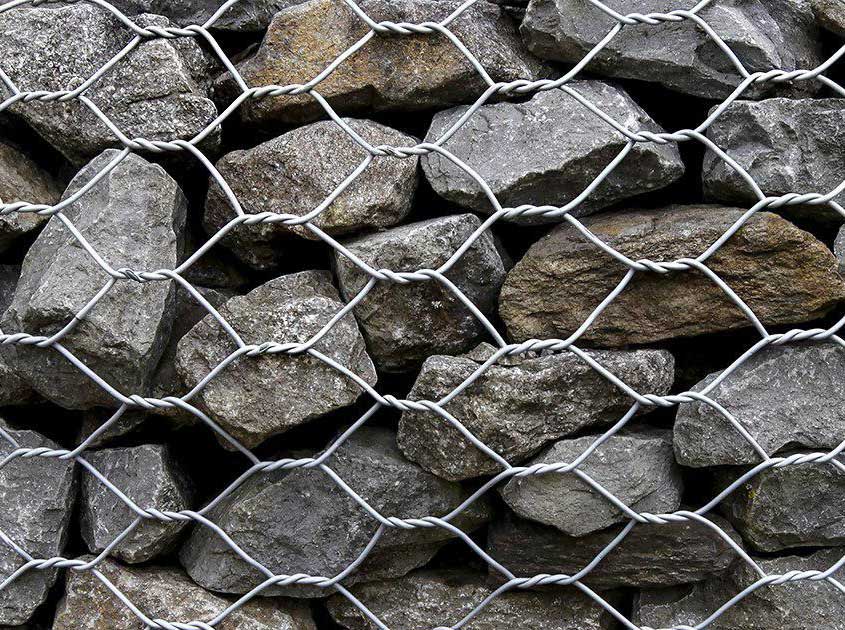
This guide explains the relationship between hexagonal wire mesh and gabion construction, explores major applications and highlights the technical specifications that should be confirmed before purchasing.
1. What Is Hexagonal Wire Mesh Used in Gabion Systems?
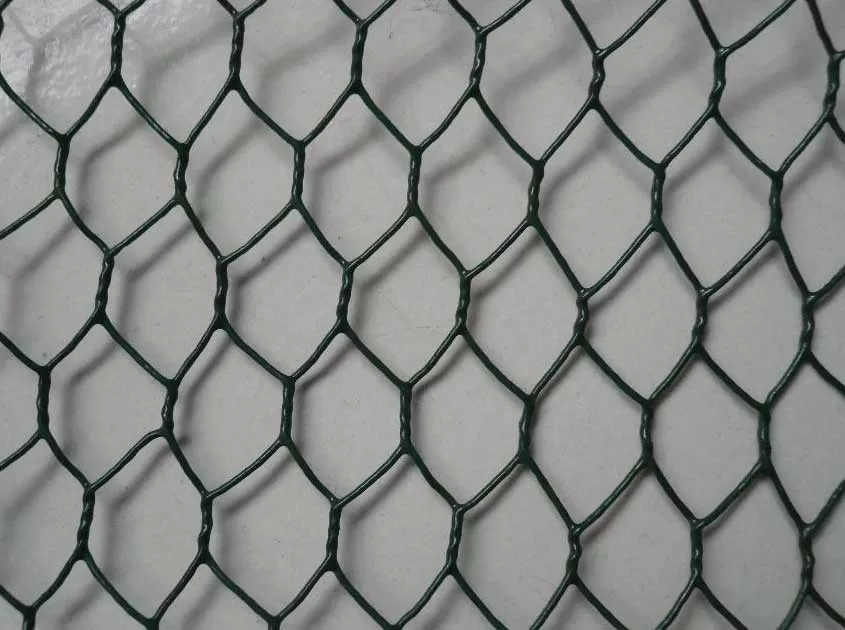
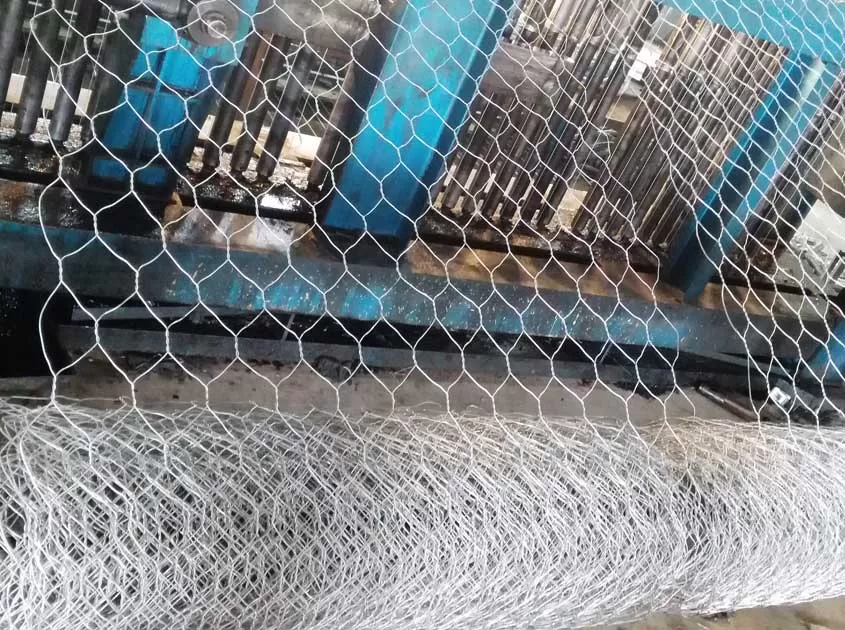
Hexagonal wire mesh is a woven wire structure formed by twisting and interconnecting wires to create a series of hexagonal openings.
In traditional gabion applications, the mesh is commonly manufactured using a double-twisted construction. Multiple wire connections help maintain the integrity of the mesh structure and reduce the risk of a local wire break causing an opening to unravel along its length.
The mesh is formed into panels or continuous sections that can be assembled into gabion boxes or mattresses.
After assembly, the units are filled with suitable stones and installed according to the engineering design.
A typical gabion system includes:
Hexagonal wire mesh panels
Side panels and diaphragms
Lacing wire or approved connection components
Internal bracing or stiffeners where specified
Stone filling material
Foundation and prepared installation area
The mesh forms the flexible containment structure, while the stone filling provides most of the mass and contributes to the system's stability.
It is important to understand that the mesh and stone work together as one engineered system. The wire mesh alone does not determine the structural performance of a gabion wall or erosion-control installation.
2. How Hexagonal Wire Mesh Works Inside a Gabion Structure
The role of hexagonal wire mesh goes beyond simply holding stones together.
Its construction contributes to several important functions.
2.1 Stone Containment
The primary function is to retain the stone filling within the gabion unit.
The mesh opening must be selected in relation to the stone size and grading. If the openings are too large for the selected filling material, smaller stones may escape through the mesh.
For this reason, mesh opening and stone dimensions should be considered together during project design.
2.2 Flexibility and Ground Movement Adaptation
Unlike some rigid retaining structures, traditional gabion systems can accommodate a degree of movement and deformation.
The flexible wire mesh and interconnected stone filling allow the structure to adjust to certain changes in ground conditions without necessarily losing its overall form.
This characteristic is particularly useful in applications where minor settlement or uneven ground movement may occur.
However, allowable deformation depends on the design, foundation conditions, wall geometry and installation quality. Flexibility should never be treated as a substitute for proper engineering.
2.3 Structural Continuity
The double-twisted mesh construction provides interconnected wire connections.
When properly manufactured and assembled, these connections help maintain mesh continuity and improve resistance to localized damage compared with a simple untwisted arrangement.
The mesh must also be connected correctly at panel edges, corners and internal diaphragms.
2.4 Water Passage and Drainage
Stone-filled gabions generally allow water to pass through the spaces between the stones.
This permeability can help reduce water pressure behind certain retaining structures compared with some impermeable wall systems.
However, drainage performance depends on stone grading, soil conditions, filter layers and the complete hydraulic design.
Appropriate geotextile filters or graded filter materials may be required to prevent surrounding soil from migrating through the gabion or its drainage interface.
3. Main Gabion Applications Using Hexagonal Wire Mesh
Hexagonal wire mesh gabions are used in a variety of civil engineering and environmental projects.
The most suitable configuration depends on the site conditions, hydraulic forces, soil characteristics and engineering requirements.
3.1 Gabion Retaining Walls
Gabion retaining walls are used to retain soil and create changes in ground elevation.
They are often selected for:
Roadside retaining structures
Landscape terraces
Embankment stabilization
Residential and commercial landscaping
Selected infrastructure projects
The stone-filled structure provides mass, while the flexible mesh enclosure holds the filling in place.
For retaining walls, important design considerations include wall height, base width, foundation conditions, sliding, overturning, bearing capacity and global slope stability.
Hexagonal wire mesh specifications must be selected as part of the complete structural design rather than independently.
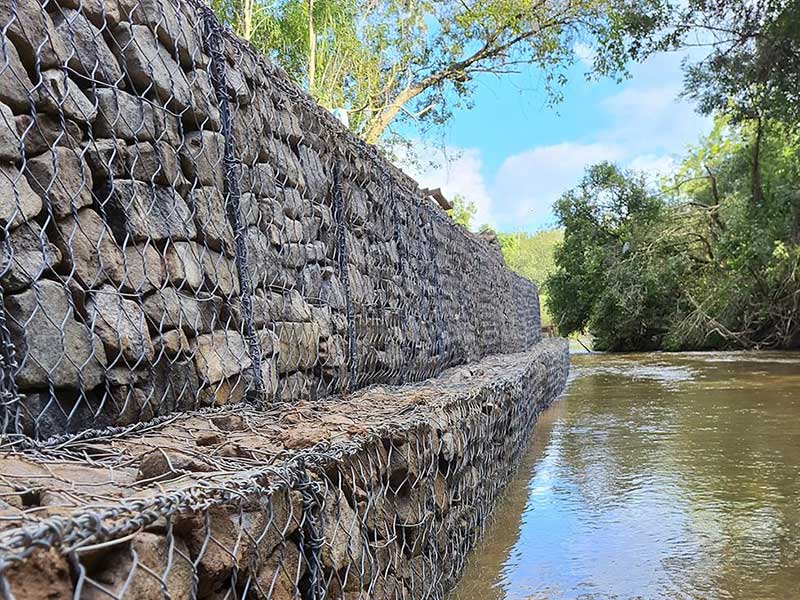
3.2 Riverbank Protection
Riverbanks are exposed to water flow, seasonal changes and erosion.
Gabion baskets and mattresses can be used to protect vulnerable riverbank sections by creating a stone-filled protective layer.
Potential applications include:
Riverbank reinforcement
Channel lining
Drainage channel protection
Embankment protection
Selected flood-control works
The open structure allows water to pass through the stone filling, while the mesh helps retain the stones.
For hydraulic projects, engineers must consider flow velocity, turbulence, water levels, scour depth and possible abrasion. The mesh coating and wire specification should be selected according to the exposure conditions.
3.3 Slope Stabilization
Gabion structures can be used in selected slope-protection and stabilization systems.
They may provide surface protection and help retain stone material on slopes.
Typical applications include:
Road cut slopes
Embankment protection
Landscape slopes
Erosion-prone ground surfaces
The mesh helps contain the stone layer, but it does not automatically stabilize an entire slope.
Where deep-seated instability or significant soil movement is present, geotechnical investigation and engineered stabilization measures are necessary.
3.4 Erosion Control in Drainage Channels
Drainage channels may experience repeated water flow that gradually removes soil and weakens channel surfaces.
Stone-filled gabion mattresses can provide a flexible protective lining for selected channel sections.
They are often considered where:
Water flow causes surface erosion
Channel geometry requires a flexible lining
Natural stone is available
A permeable protection system is preferred
The mattress thickness, mesh opening, stone grading and anchoring arrangements should be designed for the expected hydraulic conditions.
3.5 Coastal and Flood Protection Projects
Gabion systems may also be used in certain coastal, flood-control and shoreline protection applications.
Possible uses include:
Selected shoreline protection works
Temporary or permanent erosion-control structures
Flood-channel reinforcement
Protective embankments
These environments can be highly corrosive, especially where saltwater is involved.
The wire material and coating system must therefore be selected carefully. Heavy zinc coatings or suitable polymer-coated wire systems may be specified depending on the project requirements and applicable standards.
Not every galvanized hexagonal mesh product is suitable for marine exposure.
4. Gabion Baskets vs. Gabion Mattresses: Where Does Hexagonal Mesh Fit?
Hexagonal wire mesh can be used in different gabion configurations, including basket-shaped units and relatively shallow mattresses.
Although both systems use stone-filled wire enclosures, their geometry and typical applications are different.
Feature
Gabion baskets
Gabion mattresses
Shape Box-shaped units Shallow, wide units
Typical application Retaining walls and structural mass Riverbeds, channel linings and slope surfaces
Main function Retain and support stone filling Provide a protective stone layer
Main design factors Wall geometry, stability and connections Hydraulic loading, scour and anchoring
Installation focus Assembly, bracing and staged filling Surface preparation, placement and secure connections
Gabion baskets are generally used where a three-dimensional stone-filled structure is required.
Gabion mattresses are more commonly used where a relatively thin protective layer is needed across a larger surface.
The selected mesh construction and wire specifications must be suitable for the specific product configuration.
5. How to Choose the Right Hexagonal Wire Mesh for Gabion Projects
Selecting gabion mesh requires more than choosing a standard hexagonal opening.
Several specifications should be reviewed together.
5.1 Mesh Opening Size
Mesh opening determines the size of the gaps between the wires.
It affects:
Stone retention
Mesh weight
Flexibility
Appearance
Compatibility with the selected stone grading
The opening should be selected according to the dimensions and grading of the filling stones.
Buyers should confirm whether the stated opening is measured between wire centers or by another specified method.
5.2 Wire Diameter
Wire diameter affects the physical properties and weight of the mesh.
A larger wire diameter generally increases the amount of steel used, but the actual performance also depends on the mesh construction, wire strength, coating and connection design.
For gabion projects, buyers should confirm:
Mesh wire diameter
Selvedge or edge wire diameter
Lacing wire diameter
Applicable tensile-strength requirements
The edge wire is particularly important because it reinforces the boundaries of the mesh panels.
5.3 Double-Twisted Construction
Traditional gabion mesh commonly uses double-twisted hexagonal wire construction.
The twisting arrangement creates interconnected mesh sections and helps maintain continuity when the mesh experiences localized damage.
Buyers should confirm that the product is manufactured to the required construction specification rather than assuming that every hexagonal mesh is a suitable gabion mesh.
5.4 Zinc Coating and Corrosion Protection
Gabion mesh is often exposed to moisture, soil, changing weather and, in some projects, aggressive environmental conditions.
Common coating options include:
Galvanized zinc coating
Heavy zinc coating to specified requirements
Zinc coating with an additional polymer layer
The appropriate system depends on the project environment and the applicable product standard.
Important purchasing details include:
Coating type
Coating mass or thickness requirement
Coating continuity
Wire surface condition
Compatibility with the intended exposure environment
For marine or highly corrosive locations, the design team should evaluate whether a specialized coating system or alternative material is required.
5.5 Gabion Dimensions and Internal Compartments
Gabion baskets are available in different lengths, widths and heights.
Internal diaphragms divide larger baskets into compartments, helping maintain their shape during filling and service.
The required dimensions should be coordinated with:
Wall geometry
Stone filling size
Transportation limitations
Site access
Installation sequence
6. How Hexagonal Wire Mesh Gabions Are Manufactured and Assembled
The manufacturing and installation process can be divided into two stages: producing the mesh and constructing the finished gabion system.
Manufacturing Stage
Step 1: Wire preparation
Steel wire is selected and processed to the required diameter and mechanical properties.
Step 2: Galvanizing or protective coating
The wire receives the specified zinc coating or other approved corrosion-protection treatment.
Where a polymer-coated product is required, the additional coating is applied according to the manufacturer's process.
Step 3: Hexagonal weaving
The wire is fed into a specialized weaving machine that forms the double-twisted hexagonal mesh pattern.
Step 4: Edge reinforcement
Selvedge wires or other specified edge reinforcements are incorporated to strengthen the panel boundaries.
Step 5: Cutting and folding
The mesh is cut into the required dimensions and prepared for basket or mattress fabrication.
Step 6: Inspection and packaging
The finished mesh is checked for opening dimensions, wire diameter, coating condition and overall construction before packaging.
Gabion Assembly and Installation Stage
Step 1: Prepare the foundation
The installation area is excavated, leveled and prepared according to the engineering drawings.
Step 2: Assemble the mesh units
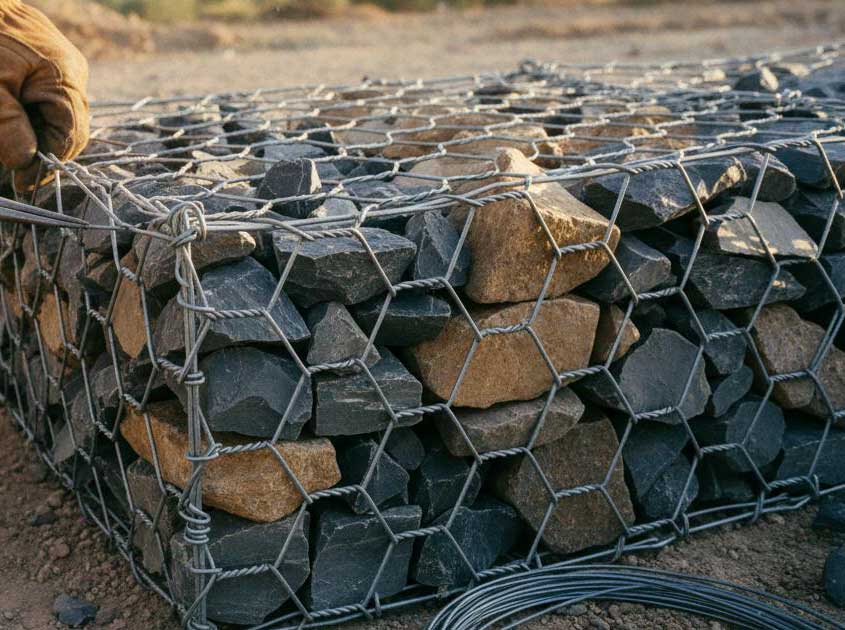
The mesh panels are unfolded and connected to form the required basket or mattress shape.
Step 3: Install diaphragms and connections
Internal partitions and approved lacing or fastening components are installed.
Step 4: Position and align the units
The assembled gabions are placed in the designed location and connected to adjacent units where specified.
Step 5: Fill with stones
Suitable stones are placed in controlled layers. Bracing may be needed to prevent the mesh panels from bulging.
Step 6: Close and secure the lids
After filling and final shaping, the lids are connected securely to the side panels and adjacent units.
Installation must follow the approved engineering drawings and project specifications. The appropriate stone size, placement method and connection details depend on the particular application.
7. Common Quality Problems in Hexagonal Gabion Mesh
Even small manufacturing defects can affect installation efficiency and the reliability of a gabion system.
Buyers should pay attention to the following potential issues.
Potential problem
Possible cause
Inspection focus
Irregular hexagonal openings Incorrect machine settings or wire positioning Mesh dimensions and pattern consistency
Loose or inconsistent twists Improper weaving control Twist construction and mesh continuity
Damaged zinc coating Poor handling or manufacturing damage Coating condition
Weak edge reinforcement Incorrect edge wire or finishing Selvedge wire and panel edges
Incorrect panel dimensions Cutting or production errors Length, width and height
Missing accessories Incomplete packing control Lacing wire and connection components
For project orders, a clear technical specification and pre-shipment inspection can help reduce discrepancies between the approved sample and delivered products.
8. What Should Buyers Include in a Gabion Mesh Inquiry?
A detailed inquiry helps manufacturers recommend suitable specifications and prepare accurate quotations.
For hexagonal gabion mesh, buyers should ideally provide:
Specification
Information to provide
Product type Gabion basket or gabion mattress
Mesh construction Double-twisted hexagonal mesh or specified alternative
Mesh opening Required opening dimensions
Mesh wire diameter Required wire thickness
Edge wire diameter Selvedge wire specification
Coating Galvanized, specified zinc coating or polymer-coated
Unit dimensions Length, width and height
Accessories Lacing wire, diaphragms and connectors
Quantity Number of units or total mesh area
Application Retaining wall, riverbank, slope or channel protection
Destination Country and destination port
For engineering projects, buyers should also provide the applicable standards, drawings and project-specific technical requirements.
9. Why Gabion Mesh Specifications Matter More Than Appearance
Two gabion mesh products may look almost identical in photographs but differ significantly in wire diameter, coating mass, mesh construction and edge reinforcement.
These differences can influence:
Stone retention
Installation efficiency
Resistance to handling damage
Corrosion protection
Compliance with project specifications
For this reason, project buyers should avoid selecting gabion mesh based only on price per unit or product photographs.
A more reliable comparison evaluates the complete specification, including the mesh, accessories, coating and packaging.
The cheapest mesh may not represent the lowest project cost if it requires additional site work, has incompatible dimensions or fails to meet the specified requirements.
10. Hexagonal Gabion Mesh Supply from Qunkun Metal
Choosing the right gabion mesh starts with understanding the project requirements.
Hebei Qunkun Metal Products Co., Ltd. is based in Anping, Hebei, China, a major wire mesh manufacturing center.
With more than 30 years of manufacturing and export experience, Qunkun Metal supplies wire mesh products for distributors, contractors, civil engineering companies and project developers in international markets.
Its product range includes hexagonal wire mesh, gabion-related mesh products, welded wire mesh, chain link mesh and other wire mesh solutions.
For gabion projects, buyers can discuss:
Double-twisted hexagonal mesh specifications
Wire diameter and mesh opening
Galvanized and other available coating options
Basket and mattress dimensions
Edge wire and connection accessories
Bulk export packaging
To receive a more accurate quotation, provide the required mesh specifications, product dimensions, quantity and project application.
Hexagonal wire mesh is not simply a container for stones. It is an important part of a flexible gabion system that combines wire construction, stone filling and engineering design to protect soil, slopes and waterways.
Contact Qunkun Metal to discuss hexagonal gabion mesh specifications and project supply requirements.




- Tel.: +86 311 83077076
- E-mail: sales@qunkunmetal.com
- Skype: qunkunsales01
- WhatsApp: 8618032412189
- Add.: No.69 The Filter Industrial Park of Anping, Hebei, China


