


Galvanized Before Welding vs. Galvanized After Welding Wire Mesh: Which Should You Choose?
When purchasing galvanized welded wire mesh, one important specification can significantly affect the product's corrosion protection, appearance, manufacturing process, and overall cost: whether the steel wire is galvanized before welding or the welded mesh is galvanized after fabrication.
Both manufacturing methods are widely used in wire mesh production. However, they do not provide exactly the same protective characteristics.
Galvanized Before Welding (GBW) uses zinc-coated wire as the raw material for welding. Galvanized After Welding (GAW), on the other hand, starts with uncoated steel wire, which is welded into a mesh structure before the finished product receives a zinc coating.
For distributors, contractors, agricultural buyers, and construction material importers, understanding this difference is essential when selecting the right mesh for a project.
This guide compares the two processes, explains how they affect weld points and corrosion protection, and provides practical advice for choosing the appropriate galvanized welded wire mesh.
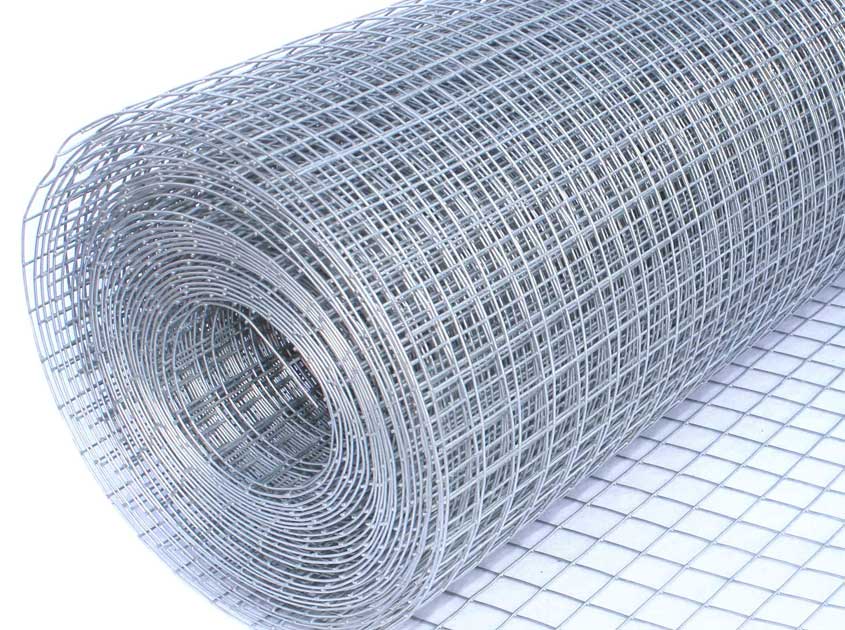
1. What Is Galvanized Before Welding Wire Mesh?
Galvanized Before Welding, commonly abbreviated as GBW, is produced using steel wire that has already received a zinc coating before entering the welding process.
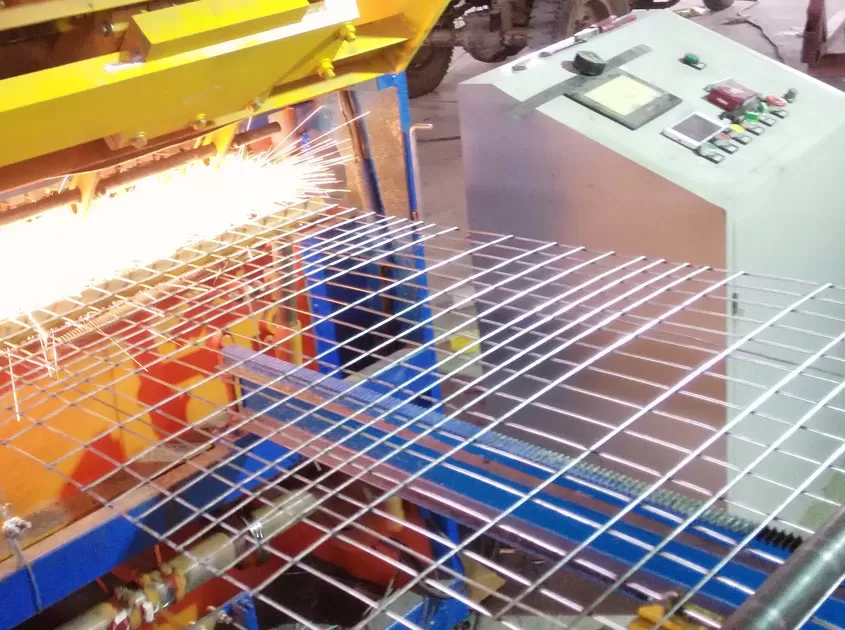
The coated wires are fed into a welding machine, positioned in a regular grid pattern, and joined at their intersections through resistance welding.
Because the zinc coating is applied before welding, the welding process locally affects the protective layer around the welded intersections.
How GBW wire mesh is manufactured
The typical production process includes:
Steel wire preparation and drawing
Galvanizing the wire
Inspecting the zinc coating
Feeding the galvanized wires into the welding machine
Resistance welding at the intersections
Cutting the mesh into rolls or panels
Final inspection and packaging
The finished mesh has a galvanized appearance, but the coating around the welding points may differ from the coating on the surrounding wire.
What happens at the welding points?
During resistance welding, electrical current and pressure generate heat at the wire intersections. This process can disrupt or remove part of the existing zinc coating near the weld.
As a result, the welded area may have a different surface appearance and protective condition from the original galvanized wire.
The extent of coating disturbance depends on the wire coating, welding parameters, electrode condition, and production control.
This is an important consideration when GBW mesh will be used in humid or corrosive environments.
2. What Is Galvanized After Welding Wire Mesh?
Galvanized After Welding, or GAW, follows a different manufacturing sequence.
Instead of using pre-galvanized wire, manufacturers first weld bare steel wires into the required mesh structure. The completed welded mesh is then subjected to a galvanizing process.
For hot-dip galvanized after welding mesh, the fabricated product is immersed in molten zinc under controlled conditions.
This allows zinc to form a protective coating over the accessible surfaces of the completed mesh, including the wire intersections.
How GAW wire mesh is manufactured
The typical process is:
Steel wire preparation and drawing
Cutting and positioning the wires
Resistance welding at the intersections
Inspecting the welded mesh structure
Surface preparation before galvanizing
Hot-dip galvanizing of the completed mesh
Cooling and finishing
Inspection and packaging
The main difference is that the welded intersections are formed before the zinc coating is applied.
Why does this matter?
Because the mesh is galvanized after welding, the zinc coating can cover the accessible surfaces of the welded joints as part of the finishing process.
This helps avoid the specific problem of welding directly through an existing zinc coating.
However, coating quality still depends on the galvanizing process, surface preparation, mesh geometry, drainage, and access of molten zinc to the product surfaces.
GAW should not automatically be assumed to have a thicker or more uniform coating than every GBW product. The actual zinc coating specification and inspection results are what matter.
3. GBW vs. GAW: Key Differences at a Glance
The following table summarizes the main differences between the two manufacturing methods.
Comparison
Galvanized Before Welding (GBW)
Galvanized After Welding (GAW)
Raw material Pre-galvanized steel wire Usually uncoated steel wire
Welding sequence Galvanizing first, welding second Welding first, galvanizing second
Weld-point protection Zinc coating may be disturbed during welding Welded joints receive coating during subsequent galvanizing
Surface appearance May show differences around welded intersections May have a more continuous post-galvanizing appearance
Coating characteristics Depends on original wire coating and welding conditions Depends on the galvanizing process and product geometry
Manufacturing process Welding uses galvanized wire Galvanizing is an additional process after welding
Typical product formats Rolls and panels, depending on production line Panels and other formats suitable for the galvanizing process
Cost considerations Often economical for standard mesh products Additional processing can increase manufacturing and handling costs
Main purchasing concern Coating condition around weld points Coating thickness, coverage, and post-galvanizing quality
The most important distinction is the sequence of welding and galvanizing. Neither process should be judged by its name alone. Buyers should compare the actual zinc coating, product dimensions, welding quality, and intended service environment.
4. Weld Point Protection: The Most Important Technical Difference
For many buyers, the condition of the welded intersections is the most important reason to compare GBW and GAW.
A welded wire mesh product contains many intersections. Each intersection is a potential location where the protective coating may be affected by manufacturing.
In GBW mesh
The wire is galvanized before welding. When two coated wires are welded together, localized heat can disrupt the zinc coating around the joint.
The affected area may have a different appearance from the surrounding wire.
Depending on the production process, the coating disturbance may be relatively limited or more noticeable. This is why welding parameters and quality control are important.
In GAW mesh
The wires are welded before the galvanizing process. The completed mesh then receives its zinc coating.
This allows the galvanizing process to coat the accessible welded intersections after the welding operation.
For applications where coating continuity at welded joints is an important requirement, this can be a significant advantage.
However, the result should still be verified through coating inspection. Poor surface preparation, trapped contaminants, insufficient zinc coverage, or unsuitable product geometry can affect the final result.
Purchasing recommendation: If the mesh will be exposed to rain, condensation, or demanding outdoor conditions, pay particular attention to the coating condition at welded intersections rather than evaluating only the appearance of the straight wire sections.
5. Corrosion Resistance: Which Process Performs Better?
There is no universal answer because corrosion resistance depends on more than the manufacturing sequence.
The most important factors include:
Zinc coating thickness or coating mass
Coating continuity and adhesion
Surface preparation
Weld-point condition
Wire diameter and mesh construction
Environmental exposure
Mechanical damage during transport and installation
Maintenance and service conditions
In general, a properly controlled hot-dip galvanizing process applied after welding can provide coating over the completed mesh, including accessible welded intersections.
However, a well-manufactured GBW product with an appropriate zinc coating may also perform satisfactorily in many applications.
The right comparison should be based on verified coating requirements rather than assumptions.
Consider the installation environment
Indoor dry environments: Standard galvanized mesh may be suitable when exposure to moisture and corrosive substances is limited.
Outdoor agricultural applications: Rain, soil contact, fertilizers, animal waste, and cleaning chemicals can influence corrosion. Buyers should consider the actual exposure and specify an appropriate coating level.
Coastal environments: Salt-laden air can accelerate zinc consumption. More demanding coating requirements or an alternative material may be necessary depending on the project.
Industrial environments: Chemical exposure, humidity, and airborne contaminants can vary considerably. The coating system should be selected according to the actual site conditions.
Concrete and construction applications: Confirm that the mesh specification is suitable for the intended construction use. General-purpose galvanized welded mesh should not automatically be treated as certified structural reinforcement.
6. Does Galvanized After Welding Always Have a Thicker Zinc Coating?
This is a common misunderstanding.
Some buyers assume that GAW always has a thicker zinc coating because the mesh is galvanized after welding. Although post-fabrication hot-dip galvanizing can provide coating over the completed structure, coating thickness is determined by the galvanizing process, material characteristics, and applicable requirements.
It is not guaranteed simply by the production sequence.
For example, two products may both be described as galvanized welded wire mesh, but their zinc coating specifications may be significantly different.
When requesting a quotation, buyers should clarify:
Whether the zinc coating is applied before or after welding
Whether the coating is hot-dip galvanized or electro-galvanized
The required zinc coating mass or thickness
The applicable product or coating standard
The method used to inspect coating quality
Whether the welded intersections are included in the coating inspection
Coating mass versus coating thickness
Zinc coating requirements may be expressed as coating mass per unit area, such as g/m², or as coating thickness, such as micrometers (µm).
These are different ways of describing the coating. They should not be treated as interchangeable without considering the applicable measurement method and standard.
For international procurement, specifying the required coating level and inspection method is more reliable than simply writing "heavy galvanized" or "high zinc coating."
7. Cost Comparison: Is GBW More Economical Than GAW?
Cost is another important consideration, particularly for importers, distributors, and large construction projects.
GBW can often be economical for standard welded mesh products because the manufacturing process uses pre-galvanized wire and does not require galvanizing the completed mesh.
GAW introduces an additional galvanizing stage after welding. This may increase processing, handling, and production costs.
However, the actual price difference depends on several factors:
Wire diameter
Mesh opening size
Roll or panel dimensions
Required zinc coating
Galvanizing method
Production quantity
Manufacturing equipment
Packaging and transportation requirements
It is also important to compare the total project cost rather than the initial product price alone.
A cheaper mesh may not be the most economical option if its coating specification is unsuitable for the intended environment or if premature replacement becomes necessary.
For distributors, the best approach is to compare products with equivalent wire dimensions, mesh specifications, coating requirements, and quality standards.
8. Common Applications: Where Is Each Type Used?
GBW and GAW products serve different market requirements. The appropriate choice depends on the project specification and exposure conditions.
Galvanized Before Welding (GBW)
GBW is commonly considered for:
General-purpose welded wire mesh rolls
Light-duty fencing products
Agricultural mesh applications
Ventilation and protective mesh
General industrial mesh
Indoor partition and enclosure products
Applications where the specified zinc coating and weld-point condition are adequate
Its economical production process can make it attractive for standard mesh products manufactured in large quantities.
Galvanized After Welding (GAW)
GAW may be preferred for projects requiring post-fabrication zinc coating over the completed welded structure.
Potential applications include:
Outdoor welded wire mesh panels
Industrial protective enclosures
Agricultural panels exposed to moisture
Equipment guards and storage systems
General outdoor mesh structures
Projects with specific requirements for coating coverage at welded joints
The final selection should be based on the required coating specification, product geometry, and environmental conditions.
9. How to Choose Between GBW and GAW: A Practical Buyer Checklist
Before ordering galvanized welded wire mesh, buyers should consider the following questions.
1. Where will the mesh be installed?
Identify whether the product will be used indoors, outdoors, in agricultural environments, near the coast, or in an industrial setting.
2. What level of corrosion protection is required?
Specify the zinc coating mass or thickness rather than relying only on descriptions such as standard galvanized or heavy galvanized.
3. How important is weld-point coating continuity?
If the welded intersections are exposed to moisture or corrosive conditions, consider whether post-welding galvanizing is required by the project specification.
4. What are the mesh dimensions?
Confirm wire diameter, opening size, roll width, roll length, panel dimensions, and tolerances.
5. Which galvanizing process is being offered?
Make sure the supplier clearly identifies whether the product is GBW, GAW, hot-dip galvanized, or electro-galvanized.
6. Can the supplier provide quality inspection information?
Ask about zinc coating inspection, welding quality, dimensional inspection, and available test reports.
7. What is the total delivered cost?
Compare material price, packaging, freight, and any additional requirements for inspection or certification.
A clear specification helps prevent misunderstandings between buyers and manufacturers and makes quotations easier to compare.
10. What Should Buyers Ask a Wire Mesh Manufacturer?
When sourcing galvanized welded wire mesh internationally, a detailed inquiry helps suppliers recommend the correct manufacturing process.
A useful inquiry should include:
Product type: galvanized welded wire mesh
Galvanizing method: GBW or GAW
Wire diameter
Mesh opening
Roll or panel dimensions
Zinc coating requirement
Application and installation environment
Required quantity
Packaging and delivery destination
Buyers can also request photographs of the welded intersections and coating surface, along with relevant inspection documentation.
For large projects, approving a production sample before bulk manufacturing is a practical way to confirm the mesh structure, surface finish, and coating expectations.
Frequently Asked Questions
What is the main difference between galvanized before welding and galvanized after welding?
GBW uses zinc-coated wire before resistance welding. GAW uses uncoated wire for welding and applies zinc coating to the completed mesh afterward.
Which has better corrosion resistance, GBW or GAW?
Properly controlled GAW can provide zinc coating over accessible welded intersections after fabrication. However, actual corrosion resistance depends on coating specifications, coating continuity, environmental exposure, and manufacturing quality. The process name alone does not determine performance.
Why can galvanized before welding mesh have different-looking weld points?
Resistance welding generates localized heat that can disturb the zinc coating around the intersections. This may create a visible difference between the weld area and the surrounding wire.
Is galvanized after welding more expensive?
It can be more expensive because galvanizing is performed after the mesh has been fabricated, adding another production stage. Actual costs depend on product dimensions, coating requirements, order quantity, and processing conditions.
Can both GBW and GAW be used outdoors?
Yes, provided the coating specification and product quality are suitable for the intended exposure conditions. Buyers should consider humidity, rainfall, soil contact, salt exposure, and other corrosive factors.
Is hot-dip galvanizing the same as galvanized after welding?
No. These terms describe different aspects of the product.
"Hot-dip galvanizing" identifies a zinc-coating process, while "galvanized after welding" describes when the coating is applied relative to mesh fabrication. A product can be hot-dip galvanized after welding, but the terms should not be treated as identical.
Conclusion: Choose the Galvanizing Process Based on the Project Requirements
Galvanized Before Welding and Galvanized After Welding wire mesh are both established manufacturing options, but they differ in how zinc protection is applied and how the welded intersections are treated.
GBW offers an efficient production route for many standard welded mesh products. GAW provides an opportunity to galvanize the completed mesh structure, including accessible welded joints, after fabrication.
For buyers, the most important decision is not simply choosing one process over the other. It is defining the required corrosion protection, verifying the zinc coating, checking weld quality, and matching the product to its installation environment.
A well-specified galvanized welded wire mesh product should always be evaluated through its actual material specifications, coating requirements, manufacturing process, and quality inspection results.
By understanding these differences, importers, distributors, contractors, and project buyers can make more informed purchasing decisions and source welded wire mesh that meets their intended application requirements.



- Tel.: +86 311 83077076
- E-mail: sales@qunkunmetal.com
- Skype: qunkunsales01
- WhatsApp: 8618032412189
- Add.: No.69 The Filter Industrial Park of Anping, Hebei, China


