


Choosing Chain Link Fence Wire Diameter for Long-Term Performance
When planning a chain link fence installation, one of the most critical decisions that affects the fence’s strength, durability, and lifespan is selecting the appropriate wire diameter. For distributors, project managers, and end-users in industries ranging from residential security to industrial facilities, understanding wire gauge and its impact on long-term performance is essential. As a professional Chinese wire mesh manufacturer with a robust international export network, we provide insights on selecting the ideal wire diameter to ensure long-lasting, high-quality chain link fencing.
1. Understanding Wire Diameter and Its Importance
Wire diameter, often measured in millimeters or gauge (AWG), directly affects:
Tensile Strength – Thicker wires are more resistant to bending, cutting, or deformation.
Durability – Heavier wires withstand environmental stress, corrosion, and UV exposure.
Security – Stronger wire diameters provide higher resistance to intrusion or vandalism.
Choosing the correct wire diameter ensures the fence performs reliably over decades, reducing maintenance costs and replacement frequency.
2. Standard Wire Diameters for Chain Link Fences
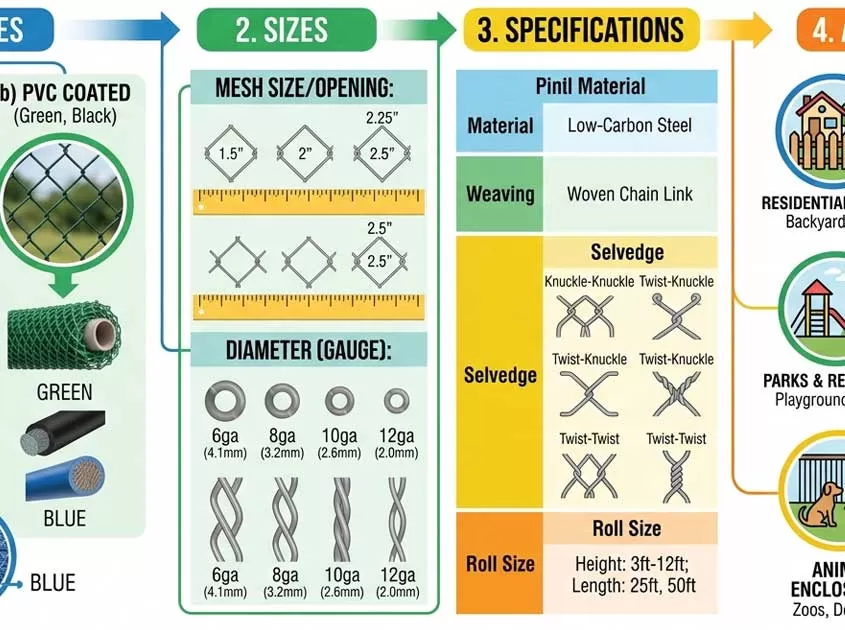
Depending on application and regional preferences, common chain link fence wire diameters include:
Application
Wire Diameter
Recommended Mesh Size
Residential 2.5mm – 3.0mm 50mm x 50mm
Commercial 3.0mm – 3.5mm 50mm x 50mm or 75mm x 75mm
Industrial / High Security 3.5mm – 4.0mm 50mm x 50mm or smaller
Key takeaway: Heavier gauges are recommended for industrial or high-security projects, while standard residential fences can use slightly lighter wires without compromising performance.
3. Material Considerations for Long-Term Performance
Wire diameter works in conjunction with material selection:
Galvanized Steel Wire – Economical and resistant to rust in most climates. Hot-dip galvanizing adds a thick zinc layer for enhanced protection.
PVC Coated Wire – Combines galvanized steel with an additional plastic coating to protect against moisture, UV rays, and scratches.
Stainless Steel Wire – Suitable for coastal or highly corrosive environments, providing the best long-term durability.
Selecting the right combination of wire diameter and material ensures the fence maintains structural integrity in harsh conditions.
4. Matching Wire Diameter with Fence Height and Mesh Size
Fence height and mesh size influence wire stress and performance:
Taller fences require thicker wires to prevent sagging or deformation.
Smaller mesh sizes distribute stress evenly, reducing the likelihood of breakage in lighter wires.
For example, a 2.5mm wire with 50mm mesh is suitable for 1.2m residential fences, while a 4.0mm wire with 50mm mesh is ideal for 3–4m industrial security fences.
This ensures optimal balance between safety, cost, and long-term performance.
5. Surface Treatment and Coating
Even the correct wire diameter can fail if surface protection is inadequate:
Hot-Dip Galvanizing – Provides robust corrosion resistance.
PVC or Polymer Coating – Enhances durability and aesthetics, especially in regions with high humidity or sunlight exposure.
Chromate or Passivation Treatment – Adds extra protection for stainless steel wires.
A combination of adequate wire diameter and protective coating dramatically extends the service life of the fence.
6. Installation Practices to Preserve Performance
Proper installation complements wire diameter selection:
Correct Tensioning – Maintains uniform stress across wires, preventing sagging or overstretching.
Post Anchoring – Deep concrete foundations prevent leaning and reduce stress on wires.
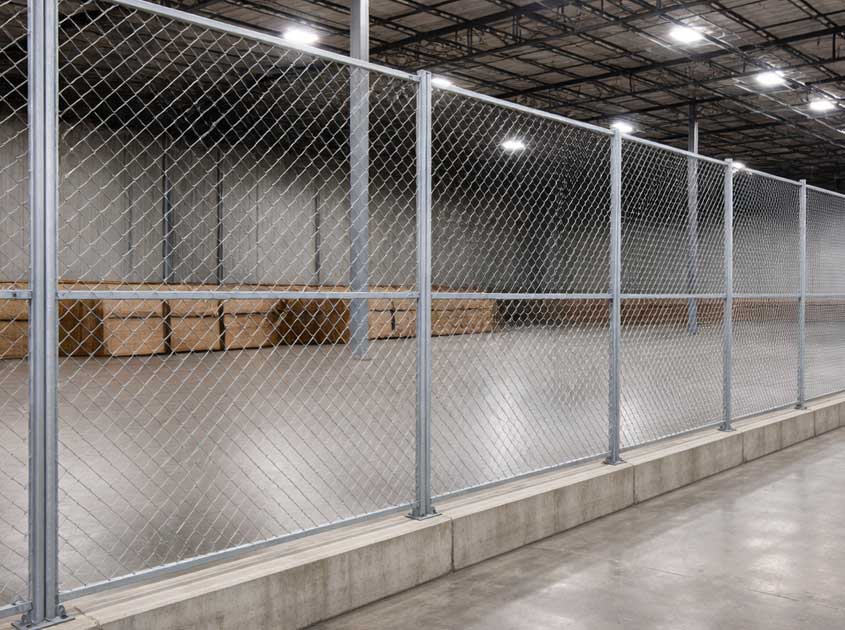
Support Rails and Tension Wires – Provide additional structural support for heavy or high-security fences.
Spacing – Closer post spacing (2–3m) enhances wire performance, especially for taller fences.
Poor installation can compromise even the thickest wire, so attention to technique is critical.
7. Environmental Factors
Environmental conditions can influence how wire diameter performs over time:
Coastal Areas – High salt content accelerates corrosion; thicker galvanized or stainless steel wires are preferred.
Industrial Sites – Exposure to chemicals requires wires with higher corrosion resistance.
Extreme Weather – Strong wind or heavy snowfall increases stress; heavier wires reduce bending or breakage risks.
Choosing wire diameter with the environment in mind ensures durability and reduces maintenance costs.
8. Partnering with a Reliable Supplier
Selecting a trustworthy manufacturer ensures consistent quality:
Certified Materials – ISO, ASTM, or local certifications guarantee wire strength and coating quality.
Custom Solutions – Professional suppliers can recommend wire diameter, mesh size, and coatings suitable for your project.
After-Sales Support – Technical advice, installation guidelines, and maintenance instructions enhance fence longevity.
A reliable Chinese wire mesh manufacturer provides both high-quality products and professional guidance for international projects.
9. Conclusion
Choosing the right wire diameter for chain link fences is essential for long-term performance, security, and durability. By considering application type, fence height, mesh size, environmental factors, and surface treatment, buyers can ensure their fencing investments are resilient and low-maintenance. Partnering with a professional Chinese wire mesh manufacturer ensures access to high-quality materials, customized solutions, and expert advice for residential, commercial, and industrial projects worldwide.
-
 What Is Galvanized Wire Mesh and Why Is It Popular? Aug 26, 2026
 Galvanized Welded Wire Mesh Roll Manufacturer China Jul 21, 2026



- Tel.: +86 311 83077076
- E-mail: sales@qunkunmetal.com
- Skype: qunkunsales01
- WhatsApp: 8618032412189
- Add.: No.69 The Filter Industrial Part of Anping, Hebei, China


